



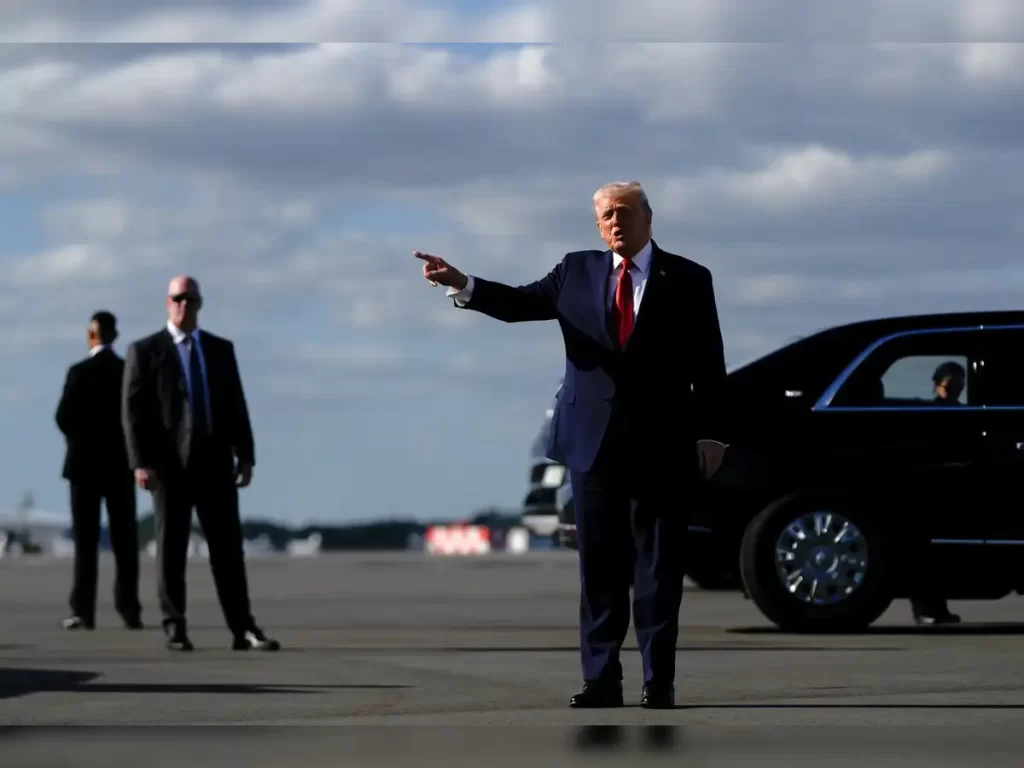
Europe’s patience with Donald Trump appears to have run out after the US president renewed his demand for control of Greenland, citing American national security. When asked whether he would use force, Trump refused to rule it out, alarming Greenlanders and angering European capitals. Greenland is a semi autonomous territory of Denmark, an EU and Nato member, and Trump is now pressuring Denmark’s allies to step aside or face sweeping US trade penalties.
Trump has warned European countries that support Copenhagen that he could impose heavy tariffs on their exports to the United States. The threat has rattled economies already struggling with weak growth, particularly Germany’s car sector and Italy’s luxury goods industry. Germany and France responded sharply, with senior ministers rejecting what they described as economic blackmail and warning that Washington had crossed a line.
Also Read: Israel Tells Iran It Will Use Force Never Seen Before in Case of Assault
Greenland dispute pushes Europe to harden its stance on US pressure
Until now, European leaders had tried to manage Trump with caution since his return to the White House. That approach is fading fast. EU officials are now preparing a dual strategy that combines diplomatic engagement with the credible threat of retaliation. Brussels has signalled it could impose up to €93bn in tariffs on US goods or restrict access for American firms to the EU’s single market if Washington proceeds with what diplomats call “Greenland tariffs”.
The European Union lacks unity in foreign policy but wields significant economic power as the world’s largest trading bloc. Officials hope that Trump will reconsider if he realises the cost of alienating close allies and driving up prices for US consumers. EU leaders stress they want to negotiate rather than escalate, but analysts say Trump’s tactics are forcing Europe to show greater resolve on security and sovereignty.
At the same time, Europe feels trapped. A tougher stance risks deepening the rift with Washington, yet Europe still depends heavily on the US for defence and for any lasting settlement in Ukraine. UK Prime Minister Sir Keir Starmer underlined that dependence, arguing that Britain’s security and nuclear deterrence require a functional relationship with the United States, even while backing Danish and Greenlandic sovereignty.
Rivals such as Russia and China are watching closely as tensions strain the transatlantic alliance. European officials warn that failing to respond would project weakness not only to Washington but also to Moscow. Relations with the US remain damaged but intact, with communication channels still open. European leaders now face a defining choice: absorb the pressure, or stand together and confront it, even at economic cost.


More Stories
खामेनेई की मौत के बाद भारत क्यों साधे हुए है चुप्पी
“कुर्द हमारी लड़ाई नहीं लड़ेंगे”: इराक की फर्स्ट लेडी की बड़ी अपील
C.V. Ananda Bose Resigns Ahead of Bengal Polls