



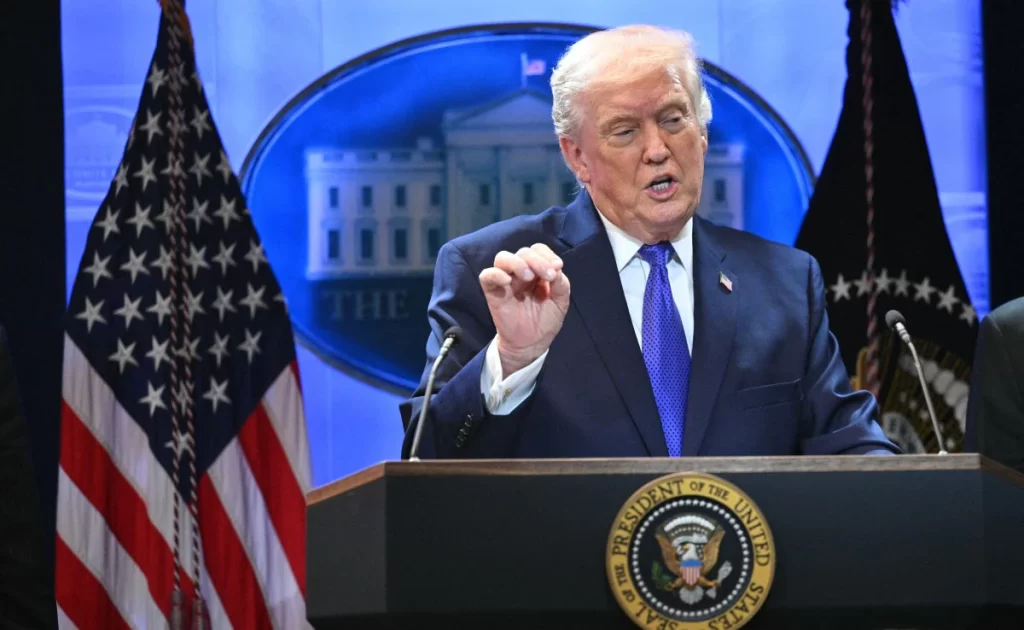
US President Donald Trump implemented new global tariffs at ten percent after the Supreme Court blocked earlier import taxes. He signed an executive order to enforce the tariffs starting 24 February immediately. Trump warned he might increase the rate to fifteen percent but issued no directive yet. The White House has been contacted by the BBC for comment on the decision. This levy uses Section 122 of the 1974 Trade Act, allowing temporary imposition.
Section 122 permits the president to apply tariffs for 150 days without Congress approval. Analyst Carsten Brzeski called the fast-changing tariffs chaotic and disruptive for businesses. He said the uncertainty now resembles conditions from last year, increasing trade instability. Brzeski warned that US trading partners might retaliate against these sudden tariffs. He stressed that the risk of a full-scale trade war is higher now.
Also Read: Union Cabinet Expected to Back Kerala’s Renaming to Keralam
Trump acts quickly with new ten percent import levy
Trump’s executive order says the temporary import duty addresses international payment issues. It also aims to rebalance trade relationships to benefit American workers and manufacturers. The president maintains that tariffs reduce the US trade deficit by limiting imports. However, the trade deficit reached roughly $1.2 trillion last week, worsening two point one percent. The US has already collected over $130 billion in tariffs under prior laws.
Trump criticized the Supreme Court decision, calling it poorly written and anti-American. The 6-3 ruling found that the president overstepped powers with last year’s sweeping tariffs. Following the ruling, Trump threatened higher tariffs on countries manipulating recent trade agreements. Countries worldwide are now reviewing which tariffs and agreements will remain effective. The Supreme Court decision forces administrations and trading partners to reconsider prior commitments.
The UK warned that reciprocal actions remain possible if trade agreements fail. It emphasized that no one seeks a full-scale trade war with the US. The European Union postponed ratification of a trade deal signed last summer. India also delayed previously scheduled talks to finalize an existing trade agreement. Global trade discussions remain uncertain as the US enforces new tariff policies.



More Stories
कौन हैं मोजतबा ख़ामेनेई, जिन्हें अगल सुप्रीम लीडर माना जा रहा है
RSP Leads Nepal Election 2026
Nitish Kumar’s Rajya Sabha Decision Triggers Unease In JD(U), Leaders Seek Review