





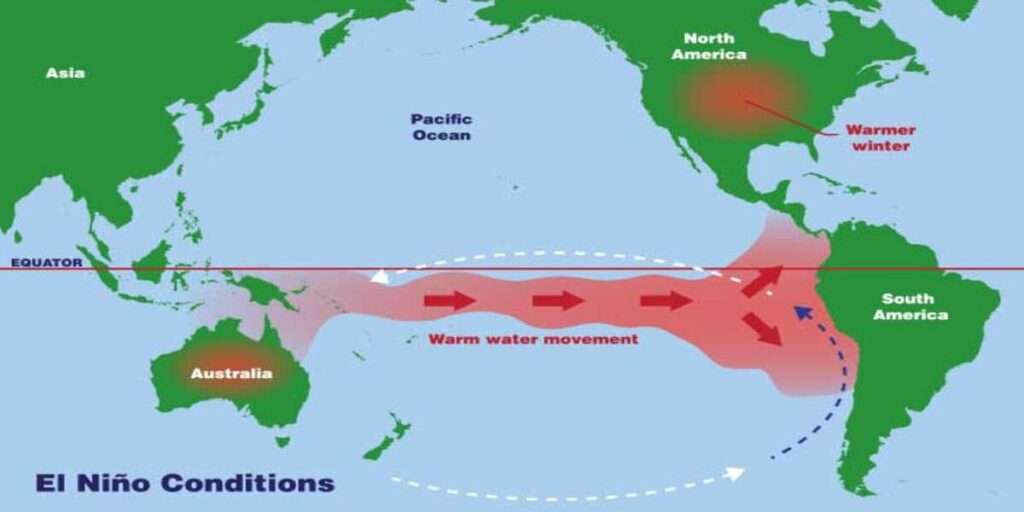
El Nino conditions are now beginning to emerge as the recent cool phase driven by La Niña starts to fade. Earlier, La Niña helped keep global temperatures relatively lower in recent months. This cooling happens due to the equatorial Pacific Ocean losing heat. As a result, overall global temperatures remain slightly suppressed. Because of this, each month from December 2025 to February 2026 ranked only as the fifth warmest on record. However, this cooler phase was relative, not absolute, as the previous period saw extremely high temperatures globally.
In fact, nearly every month from June 2023 to November 2025 ranked among the top three warmest. Therefore, even slightly lower rankings appeared cooler in comparison. However, this trend is now changing. According to recent data, March 2026 became the fourth warmest March on record. Similarly, early April data also shows rising temperatures. This clearly suggests that the impact of La Niña is now fading.
Cool phase ends temperatures rise
Moreover, April temperatures are increasing at a faster pace. March 2026 was still 0.09°C cooler than the third warmest March recorded in 2016. In contrast, April 2026 is just 0.01°C below the third warmest April. Therefore, there is a strong chance that April may climb higher in the rankings. If the trend continues, it could become one of the warmest Aprils ever recorded.
At the same time, April 2026 has already reached about 1.45°C above pre-industrial levels. This is slightly higher than April 2016. Therefore, the remaining days of the month will be crucial. If temperatures stay elevated, the month could match or exceed past records. This clearly shows that the earlier cooling phase is ending.
Also Read : Infosys Drops Out of India’s Top 10 Most Valuable Firms
Shift from La Niña to El Niño conditions
Meanwhile, scientists monitor La Niña using sea surface temperatures in the Niño 3.4 region. When temperatures drop by 0.5°C or more, La Niña conditions are confirmed. On the other hand, a rise of 0.5°C signals El Niño conditions. Recently, this region shifted to neutral conditions by the end of January. However, changes in ocean temperatures take time to affect the atmosphere.
Now, the latest data indicates another shift is underway. El Niño-like conditions were seen in the two weeks ending April 22. Therefore, the cooling effect of La Niña is now wearing off. If this trend continues, El Niño could develop earlier than expected. It may begin as soon as June. This could lead to new global temperature records in the coming months.
Also Read : Mira Road Attack: Radicalised Man, Says Fadnavis




More Stories
Kerala Man Bludgeons 18-Year-Old Lover With Stone, Sets Body On Fire
केरलम: ब्रेकअप से नाराज प्रेमी ने प्रेमिका की पत्थर से कुचलकर हत्या की, शव जलाया
3 साल की बेटी पर झपटा तेंदुआ तो पिता बना ढाल, पीछे से दबोच लिया; ड्रोन और पिंजरे भी रहे बेअसर