




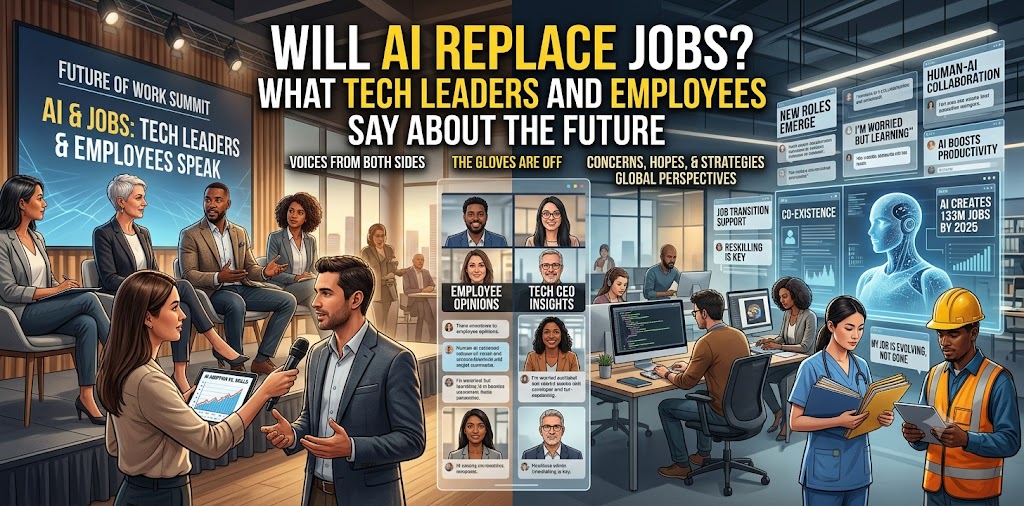
Artificial intelligence is changing workplaces and creating concerns among employees across different industries. From office administration to software development, AI tools are handling tasks that once required human workers. According to the World Economic Forum, technological changes could lead to 92 million jobs being displaced globally by 2030, while also creating new opportunities. Recent layoffs at major technology companies have added to these worries. However, experts believe that learning new skills and adapting to changing technology can help workers prepare for the future.
Also Read : Trump U-Turn: US to Buy Russian Diesel as Zelenskyy Calls Move a ‘Gift to Putin’
What Do Tech Leaders Say About AI and Jobs?
Microsoft co-founder Bill Gates has highlighted the major opportunities and challenges associated with artificial intelligence. He believes AI could make essential services more accessible, but it could also increase inequality if its risks are not managed properly. Gates has raised concerns about protecting people whose livelihoods may be affected by automation. Meanwhile, former Salesforce and Meta AI leader Clara Shih has explained that future workplaces may include people who develop AI, employees who use it, and workers whose activities are managed by AI systems.
AI is increasingly performing administrative work, basic coding, customer support, data processing and content creation. Businesses can use these tools to complete certain tasks faster and reduce operating costs. As a result, some companies may need fewer employees for work that can be automated. This shift has raised concerns among software developers and other professionals about job security. Employees also worry that fewer available positions could increase competition and put pressure on wages across different sectors.
Also Read : 7.6-Magnitude Earthquake Hits Panama Coast, Tsunami Warning Issued for Nine Countries
Which Jobs Could Face the Biggest Challenges?
Jobs involving repetitive, predictable and routine tasks may face greater pressure as AI technology improves. Administrative assistants, data-entry workers and some customer service professionals could see significant changes in their responsibilities. However, the impact will vary depending on the industry, the complexity of the work and how companies adopt AI. Some roles may disappear or shrink, while others could evolve to include new responsibilities. Therefore, employees need to understand how AI affects their specific fields rather than assume that every job will disappear.
Workers can improve their career prospects by learning how to use generative AI tools and developing strong analytical skills. Communication, negotiation, strategic thinking and leadership can also help employees stand out. Instead of competing with AI on tasks it can automate, professionals can focus on decision-making, creativity and solving complex problems. Regular upskilling and practical experience with new technologies will be important in the changing job market. By adapting early, employees can use AI to improve productivity and explore emerging career opportunities.
Also Read : Trump U-Turn: US to Buy Russian Diesel as Zelenskyy Calls Move a ‘Gift to Putin’



More Stories
बच्चे को पीठ पर बांधकर ड्यूटी करती मां का वीडियो वायरल, लोग बोले- ‘आधुनिक झांसी की रानी’
Trump U-Turn: US to Buy Russian Diesel as Zelenskyy Calls Move a ‘Gift to Putin’
CJP प्रोटेस्ट से पहले दिल्ली पुलिस ने YouTuber ध्रुव राठी को हिरासत में लिया