





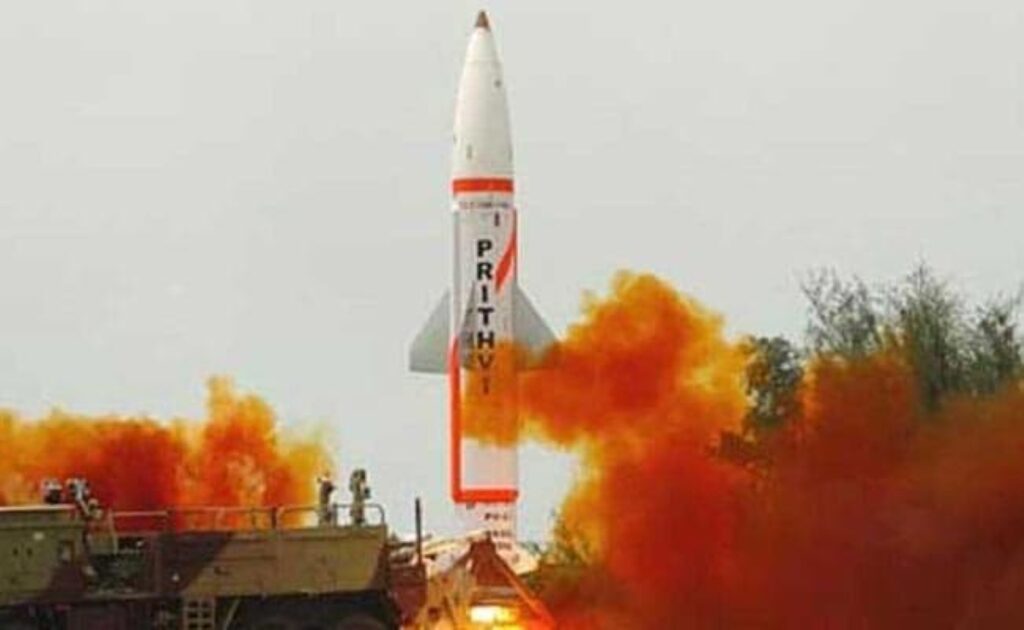
India remains the world’s sixth-largest nuclear power, and this ranking has not changed over the past year. However, the risks surrounding India’s nuclear posture have increased sharply because modern warfare now spans multiple domains. Cyber operations, space systems, and information warfare increasingly blur boundaries between conventional conflict and nuclear escalation.
This warning appears in Addressing Multidomain Nuclear Escalation Risk, released by SIPRI in January 2026. The report argues that nuclear danger depends less on warhead counts and more on crisis speed and complexity. Analysts warn that conflicts can now escalate rapidly across land, sea, air, cyber, and space. As a result, traditional rankings based on nuclear numbers alone often misrepresent actual escalation risks.
The Growing Impact of Conventional Military Operations
Experts from SIPRI, RAND, and CSIS highlight the growing role of non-nuclear actions in escalation dynamics.
Cyber intrusions, satellite interference, and precision conventional strikes can trigger nuclear fears without explicit nuclear threats.
These actions may appear limited but can affect systems linked to nuclear command and control.
This environment increases the risk that states misinterpret intentions during fast-moving crises.
Decision-makers may have minutes, not hours, to judge whether an attack signals nuclear preparation.
Compressed timelines heighten stress, uncertainty, and the possibility of irreversible miscalculation.
Also Read: Global market downturn may keep Sensex and Nifty under pressure today
South Asia as a Nuclear Flashpoint
SIPRI identifies South Asia as one of the fastest-escalating nuclear regions globally.
Short conventional clashes between India and Pakistan can quickly generate nuclear signalling.
Frequent military contact and limited crisis communication channels worsen escalation dangers.
Studies highlight short decision timelines and insufficient hotlines during tense confrontations.
India currently holds an estimated 180 nuclear warheads, maintaining its sixth-place global ranking.
Pakistan follows closely with around 170 warheads, placing seventh worldwide.
Although confidence-building measures exist, they exclude cyber, space, and information operations.
This absence leaves dangerous gaps in regional escalation management frameworks.
Strategic Competition and Shifting Nuclear Balance
China continues to expand its nuclear arsenal faster than India and Pakistan.
Estimates suggest China now possesses around 600 nuclear warheads.
This growth links to advances in missile defense, satellite resilience, and counterspace capabilities.
These developments directly influence India’s threat perceptions and strategic calculations.
Globally, Russia and the United States remain the top nuclear powers.
Together, they hold more than 10,000 nuclear weapons.
Their apparent stability masks deeper risks caused by weakening arms control agreements.
Role of AI, Cyber Warfare, and Hypersonic Weapons
The weakening of the New START treaty increases global nuclear uncertainty.
Analysts stress that arms control erosion encourages arms racing and strategic opacity.
Cyber and space operations increasingly intersect with nuclear infrastructure worldwide.
Attacks on dual-use facilities may appear as preparation for nuclear strikes.
AI-driven decision tools further compress response times and reduce human judgement.
These trends collectively raise escalation risks for all nuclear-armed states, including India.
Also Read: Sinner moves into round two with ease following opponent’s injury




More Stories
CJP आंदोलन पर हरीश साल्वे का बड़ा दावा, बोले- भारत में नेपाल और बांग्लादेश जैसे हालात बनाने की कोशिश
दिल्ली में विपक्ष के मार्च के बीच BJP का प्रदर्शन, कांग्रेस सांसद पर यौन शोषण का गंभीर आरोप, बांसुरी स्वराज ये बोलीं
राहुल के प्रदर्शन से पहले दिल्ली पुलिस अलर्ट, सुरक्षा के किए कड़े इंतजाम