





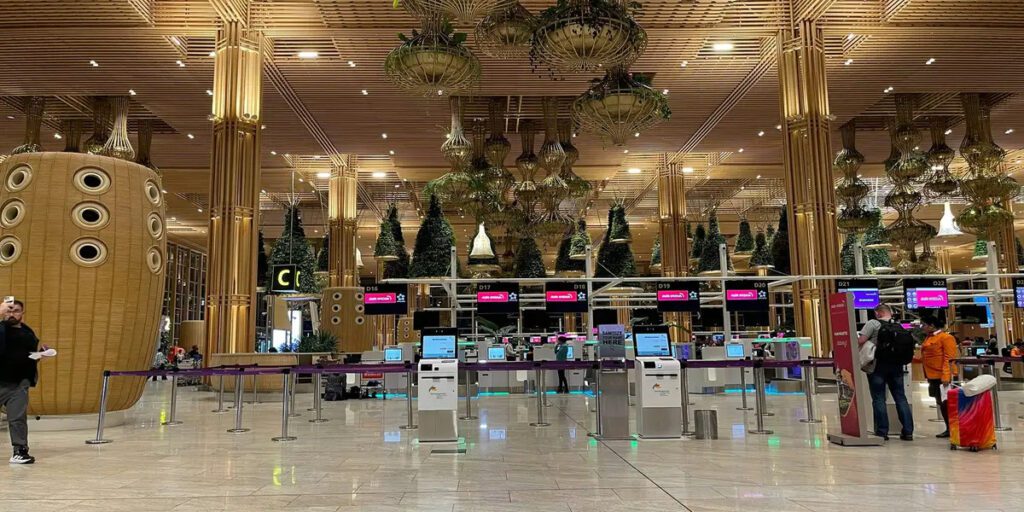
Bengaluru’s Kempegowda International Airport (KIA), operated by Bengaluru International Airport Limited (BIAL), has launched an advanced Smart Airside Safety System, marking a major step toward stronger operational safety and tighter control across critical airside zones. This initiative brings modern technology directly into daily airport operations, improving precision, coordination, and overall efficiency in a fast-paced environment.
Moreover, the system focuses on cross-service roads—high-risk areas where aircraft and ground vehicles move through shared paths. These zones demand constant coordination, and even small delays can disrupt operations. By strengthening safety measures here, the airport aims to ensure smoother traffic flow, better control, and reduced chances of operational conflict during busy periods.
Bengaluru Smart Automation
Earlier, airport teams managed right-of-way at these intersections using manual or semi-automated inset light systems. This approach increased reliance on human decisions, often slowing response times and limiting visibility in critical moments. However, the newly introduced AI-driven system replaces these limitations with faster, more reliable automation.
In addition, the system combines AI-powered computer vision, intelligent automation, and centralized control into a single framework. AI-enabled cameras actively track vehicle and aircraft movement, identify potential right-of-way conflicts, detect rule violations, and confirm zone clearance in real time. This continuous monitoring improves awareness and allows faster, more accurate decision-making.
Also Read : BJP Sets May 9 for Bengal Govt Oath on Rabindranath Tagore Jayanti
Real-Time Intelligence and Efficiency Gains
Furthermore, the system uses real-time situational intelligence to assess risks and trigger actions instantly. It activates inset lights to secure aircraft right-of-way whenever needed and restores normal signals once the intersection becomes clear. This process keeps traffic moving smoothly and reduces unnecessary delays across airside operations.
At the same time, a centralized monitoring and analytics platform records every event digitally, improving transparency, compliance, and operational control. The system reduces human error, especially during night shifts and low-visibility conditions, where mistakes are more likely. It also improves traffic flow, minimizes stoppages, and builds a strong base for predictive safety analytics, including trend tracking, peak-hour planning, and risk forecasting for continuous improvement.
Also Read : No threat to Pandya’s captaincy; MI blame deeper issues




More Stories
Will ( AI ) Artificial intelligence Replace Jobs? What Tech Leaders and Employees Say About the Future
बच्चे को पीठ पर बांधकर ड्यूटी करती मां का वीडियो वायरल, लोग बोले- ‘आधुनिक झांसी की रानी’
Trump U-Turn: US to Buy Russian Diesel as Zelenskyy Calls Move a ‘Gift to Putin’