



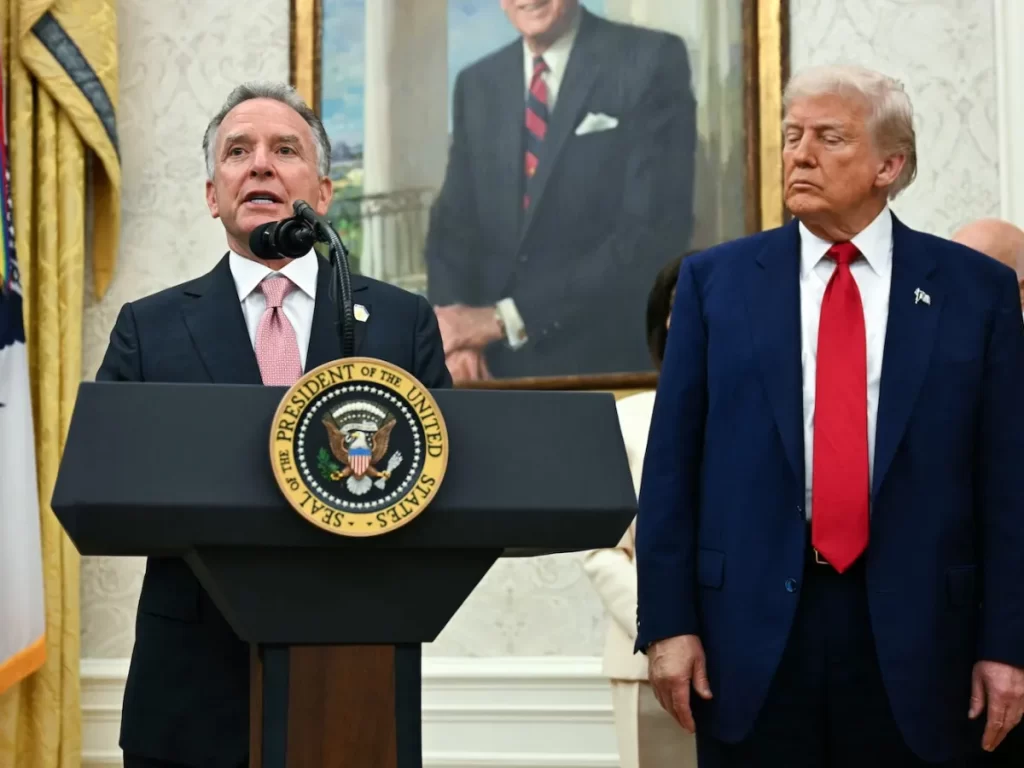
Trump appears to be reassessing his strategy in the ongoing Middle East conflict as tensions continue to rise despite his push for a peace agreement. Nearly four weeks into the war, Trump’s administration has faced strong resistance from Tehran, raising doubts about any immediate diplomatic breakthrough.
Less than a day after Donald Trump claimed that the United States and Iran held “productive discussions” aimed at resolving the conflict, Iranian military officials rejected the statement outright and questioned the credibility of such claims. According to reports by Al Jazeera, Iran’s military leadership dismissed the idea of negotiations and warned that stability in the region would only come through strength, not compromise.
Iranian officials strongly stated that they would not accept any agreement under pressure and emphasized that the situation would not return to normal unless it aligned with their strategic goals. These statements directly contradict Trump’s claims, suggesting that both sides remain far apart in their approach to ending the conflict.
Also Read: Iran permits safe passage for non hostile ships
Trump Strategy Faces Resistance as Iran Rejects Talks
Trump attempted to ease tensions by ordering a temporary pause on military strikes targeting Iran’s energy infrastructure, signaling a willingness to pursue diplomacy. However, Iranian authorities denied that any negotiations were taking place, further complicating efforts to de-escalate the situation.
At the same time, Trump indicated that senior officials, including Vice President JD Vance and Secretary of State Marco Rubio, were actively involved in potential negotiations. Despite this, reports suggest that the United States is also preparing to deploy additional troops to the region, raising questions about whether diplomacy or military pressure remains the primary strategy.
Interestingly, this dual approach highlights how Trump is keeping multiple options open, using both negotiation and military positioning to influence Iran’s decisions. However, analysts believe this strategy may not succeed easily, as Iran has shown resilience despite facing sustained attacks.
Why Iran May Continue the Conflict
Trump now appears to recognize that he may have underestimated Iran’s ability to withstand pressure and retaliate effectively. Initially, many expected that eliminating key leadership figures, including Ali Khamenei, would destabilize the country’s power structure, but Iran’s military forces continued strong counterattacks instead.
Moreover, Iran expanded its response by targeting regional allies of the United States, surprising global observers and increasing pressure on Washington to find a resolution. At the same time, domestic challenges are also mounting for Trump, as declining approval ratings and criticism over foreign policy decisions add to the urgency of ending the conflict.
From Iran’s perspective, continuing the conflict may provide leverage for negotiating stronger terms in the future, especially after facing repeated attacks within a short period. Additionally, control over critical routes like the Strait of Hormuz gives Tehran strategic power, allowing it to influence global energy markets.
However, the situation remains complex, as ongoing conflict has caused significant damage within Iran, including casualties, economic strain, and growing public unrest. Despite these pressures, Iran’s leadership appears determined to avoid any agreement that could be perceived as weakness, making a quick resolution unlikely.
Also Read: Iran signals readiness for peace talks, rejects Trump and Kushner

More Stories
राहुल के प्रदर्शन से पहले दिल्ली पुलिस अलर्ट, सुरक्षा के किए कड़े इंतजाम
CJI Surya Kant Warns Against Politicising Supreme Court Amid Delhi Protests
Maharashtra Drought Crisis: 5,000 Hectares of Orange Orchards Destroyed, Grapevines Wither