


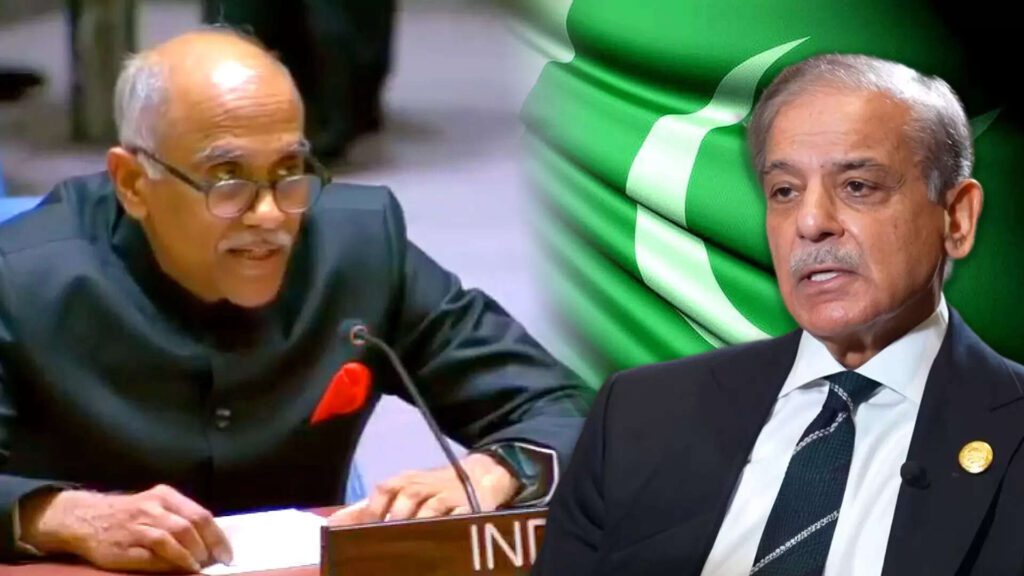
India delivered a strong rebuttal at the United Nations Security Council, rejecting Pakistan’s effort to portray terrorism as a “new normal” in the region and dismissing Islamabad’s claims on Operation Sindoor as misleading and self-serving.
India’s Permanent Representative, Parvathaneni Harish, accused the Pakistani envoy of pushing a distorted narrative about Operation Sindoor carried out in May last year. He said Pakistan continued to use terrorism as a tool of state policy while interfering in India’s internal affairs.
Harish underlined that the facts were clear. Pakistan-backed terrorists killed 26 civilians in a brutal attack in Pahalgam in April 2025. He noted that the Security Council itself had called for accountability against those responsible for the attack. India, he said, acted in line with that call. He stressed that India’s response remained measured, responsible and non-escalatory, and focused solely on dismantling terrorist infrastructure.
He also pointed out that Pakistan threatened further attacks until May 9. The next day, he said, the Pakistani military contacted Indian forces and requested a halt to the fighting.
Rejecting Pakistan’s claims of victory, Harish stated that evidence of damage to multiple Pakistani air bases lay in the public domain. He referred to images showing destroyed runways and damaged hangars as proof of the impact of India’s operation.
Also Read: IND vs NZ 3rd T20I: Early damage to NZ sets the stage for Abhishek’s takeover
India Rejects Terrorism Narrative
Harish strongly opposed Pakistan’s attempt to normalise terrorism. He said terrorism could never become acceptable, regardless of how Pakistan tried to frame it. He accused Islamabad, despite being an elected member of the Security Council, of pursuing a single agenda aimed at harming India and its people.
He added that the UN must not allow itself to become a platform for legitimising terrorism. India, he said, would take all necessary steps to protect its citizens and ensure national security.
Firm Stand on Jammu and Kashmir
Reaffirming India’s long-standing position, Harish said Pakistan had no authority to comment on Jammu and Kashmir. He asserted that the Union Territory had always been, and would remain, an integral and inseparable part of India.
Indus Waters Treaty Under Review
Harish also addressed India’s decision to suspend the Indus Waters Treaty. He said India signed the agreement 65 years ago in good faith, but Pakistan repeatedly undermined its spirit through wars and sustained terror attacks. He noted that thousands of Indian lives had been lost to Pakistan-sponsored terrorism over the decades.
India, he said, had no option but to place the treaty in abeyance until Pakistan credibly and irrevocably ended its support for cross-border terrorism.
In closing, Harish urged Pakistan to reflect on its own commitment to the rule of law. He pointed to constitutional changes that granted lifetime immunity to Pakistan’s military leadership and questioned how such actions aligned with democratic norms.
Also Read: Deadly Winter Storm in US Claims 25 Lives, Triggers Widespread Power Outages


More Stories
कौन हैं मोजतबा ख़ामेनेई, जिन्हें अगल सुप्रीम लीडर माना जा रहा है
RSP Leads Nepal Election 2026
Nitish Kumar’s Rajya Sabha Decision Triggers Unease In JD(U), Leaders Seek Review