





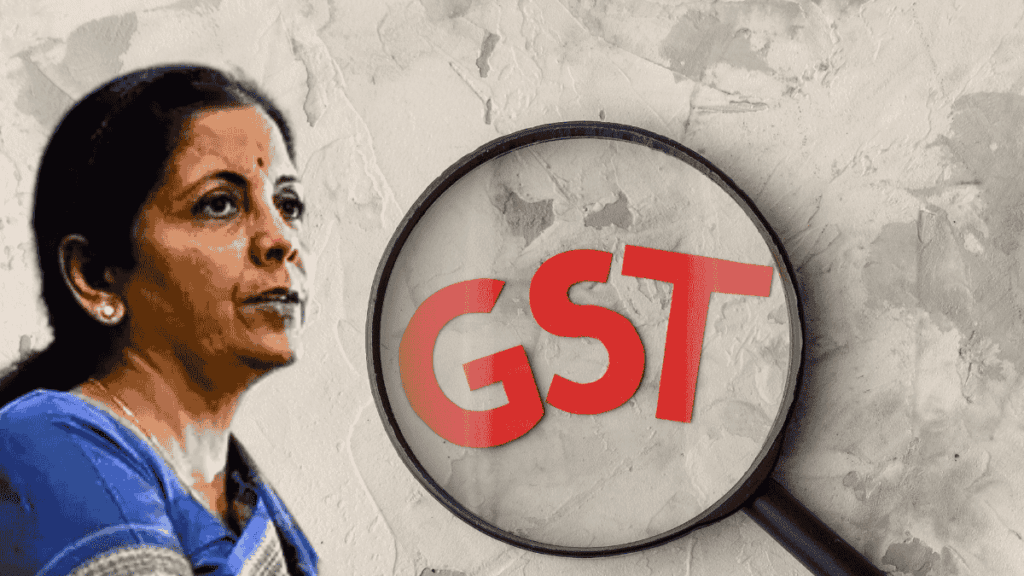
Just two weeks after Prime Minister Narendra Modi announced next-generation GST reforms on Independence Day, the GST Council, chaired by Finance Minister Nirmala Sitharaman, began its two-day 56th meeting in New Delhi today. Representatives from 31 states and union territories will discuss proposals for sweeping tax cuts on essential items and exemptions for welfare services like health and life insurance. The government aims not only to simplify tax rates but also to restructure compliance and reduce classification disputes. The proposal emphasizes making registration, returns, and refunds more technology-driven and time-bound, while correcting the inverted duty structure that burdens businesses. By addressing long-standing disputes such as roti versus parotta or popcorn classifications, reforms seek to stabilize the eight-year-old GST regime.
Also Read : BJP Rally in Patna Turns Violent Amid PM Modi Remark Row
GST Council on Rate Rationalisation and Sectoral Impact
The proposed reforms plan to replace the current four slabs of 5, 12, 18, and 28 percent with a simpler two-slab structure — a 5 percent merit rate and an 18 percent standard rate, along with a 40 percent demerit rate for tobacco, pan masala, and similar products. Nearly 99 percent of goods taxed at 12 percent could move to 5 percent, while 90 percent of items at 28 percent could shift to 18 percent. White goods such as air conditioners and televisions may see rates fall from 28 to 18 percent, while essential foods and health items like milk, paneer, fruit juices, and medical oxygen may drop from 12 to 5 percent. Fertilizer inputs, renewable energy equipment, and textile products are also likely to see sharp reductions. In services, individual health and life insurance may become fully exempt, while hotel tariffs under ₹7,500 could be taxed at only 5 percent.
Challenges, Revenue Loss and States’ Concerns
While reforms promise simplicity, states have raised concerns about significant potential revenue losses. Initial estimates suggest rationalisation could cost ₹70,000–80,000 crore annually, with health and insurance exemptions alone reducing collections by nearly ₹10,000 crore. States project possible losses of up to ₹2 lakh crore, warning of 15–20 percent shortfalls in current GST revenue. They demand a guaranteed compensation mechanism, including additional levies on luxury and sin goods, or loans secured by future tax receipts. The Centre, however, argues that improved compliance, greater consumption, and reduced disputes will offset losses in the long run. Despite concerns, many states have extended support, calling the proposal a “pro-people” reform aimed at easing living costs and boosting economic activity.



More Stories
कौन हैं मोजतबा ख़ामेनेई, जिन्हें अगल सुप्रीम लीडर माना जा रहा है
RSP Leads Nepal Election 2026
AIIMS जोधपुर से पढ़ाई, UPSC में टॉप कर बने मिसाल अनुज अग्निहोत्री