





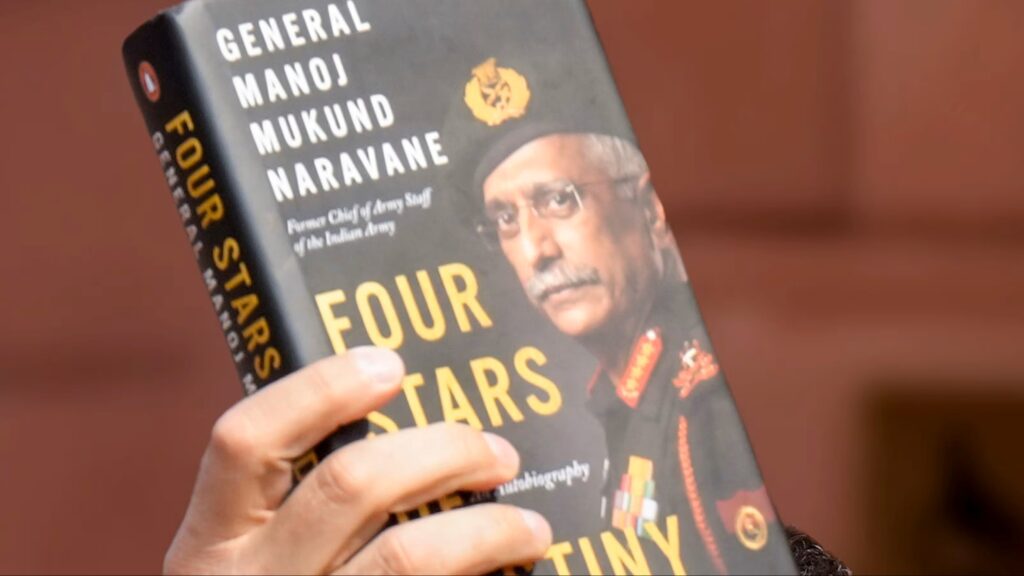
The Defence Ministry is preparing detailed guidelines for serving and retired armed forces personnel who plan to publish books. The move follows the controversy surrounding former Army Chief General (retd.) M.M. Naravane’s unpublished memoir, Four Stars of Destiny. To avoid ambiguity, the Ministry wants to clearly define the approval process for any memoir or manuscript before publication. The objective is to remove confusion and ensure that national security remains fully protected.
Also Read : Gulf Air Flight to Hyderabad Receives Bomb Threat
MoD Plans Clear Publication Framework
A senior defence official confirmed that authorities recently held a meeting to draft a fresh set of rules. During the discussion, a detailed presentation outlined the proposed structure. The upcoming framework will combine existing service regulations with provisions of the Official Secrets Act. Through this move, the Ministry aims to create a structured and transparent clearance system.
Currently, no single consolidated law governs book writing by retired Army officers. Different rules apply to serving personnel and retirees. However, national security remains the top priority in both cases, with protection of classified information acting as the primary boundary.
Official Secrets Act Still Applies
Retired officers do not fall under the Army Act in matters of publication. Even so, the Official Secrets Act continues to apply to them for life. Under this law, revealing classified data or sensitive operational details is a criminal offence. Disclosure of material that could harm national security is also prohibited. When a manuscript contains operational or sensitive content, the author must submit it to the Ministry of Defence for clearance. After verification and cross-checking, approval is granted only if the material meets security norms.
Serving Army personnel must follow stricter rules. Service regulations require prior written permission before undertaking any literary or political activity. Requests move through the chain of command and may require approval from Army Headquarters or the Ministry. Authorities strictly prohibit disclosure of classified information, including operational plans, equipment capabilities, intelligence inputs, and internal procedures. In some cases, even fictional works face restrictions if they closely resemble real missions.
Lt. Gen. (retd.) D.P. Pandey stated that retired personnel become civilians after retirement. However, the Official Secrets Act continues to bind them. He emphasised the importance of maturity and sound judgment while writing. According to him, retirees should avoid discussing classified matters. At the same time, they may express personal opinions on politics and national security, provided they do not violate the law.
Naravane Memoir Controversy
The controversy intensified after reports surfaced about the alleged circulation of Gen. Naravane’s unpublished manuscript. Penguin Random House India clarified that it holds sole publishing rights. It further stated that no copies have been released in print or digital format. Meanwhile, Delhi Police registered an FIR over the alleged leak. Congress leader Rahul Gandhi questioned conflicting claims, prompting further clarification. In response, the publisher said that pre-order listings do not amount to publication.
In 2021, the Centre amended Pension Rules for civil servants. The changes bar retired officials from intelligence and security organisations from publishing related material without approval. If retirees fail to comply, authorities may withhold or withdraw pensions. A similar structured approach could now be introduced for armed forces personnel.
Also Read : OpenAI Researcher Quits, Warns ChatGPT Should Avoid Advertising



More Stories
कौन हैं मोजतबा ख़ामेनेई, जिन्हें अगल सुप्रीम लीडर माना जा रहा है
RSP Leads Nepal Election 2026
AIIMS जोधपुर से पढ़ाई, UPSC में टॉप कर बने मिसाल अनुज अग्निहोत्री