




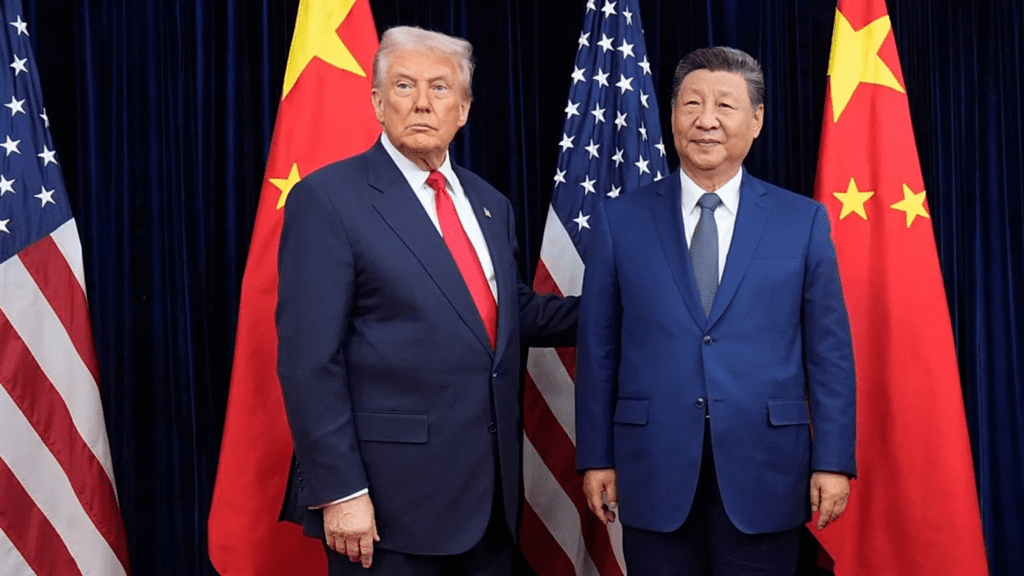
US President Donald Trump has said he wants to replace the expiring US–Russia nuclear arms control agreement with a stronger deal that also brings China to the table. The proposal would reshape a decades-old framework that has governed nuclear limits between Washington and Moscow. Trump argues a broader pact is necessary to address modern security realities. Critics, however, say the plan faces steep diplomatic challenges.
The expiry of the New START treaty has removed the last major restrictions on US and Russian nuclear arsenals in the 21st century. Former US officials warn that negotiating a replacement could take years. They say adding China to the talks would complicate progress even further. Analysts caution that the gap could fuel mistrust between nuclear powers.
Nuclear deal push runs into hurdles over China’s role
Security experts fear the lapse could trigger a new arms race involving Russia and China against a divided Western alliance. With no binding limits or verification mechanisms in place, both sides may expand their nuclear capabilities. The situation has grown more tense as Moscow deepens ties with Beijing amid the Ukraine war. Observers say the lack of clear next steps increases global risk.
US and Russian negotiators have discussed a temporary arrangement to follow New START guidelines, but officials say it would fall short of a formal treaty. Such stopgap measures would likely lack strict inspection and transparency rules. Former negotiators stress that verification systems take years to design and agree upon. They warn quick fixes cannot replace comprehensive arms control frameworks.
Read Also: Tilak Varma surprised by crowd love after early return from injury
Experts warn a broader nuclear deal could face long delays
Trump has promoted nuclear arms control as part of his peacemaker agenda, but his insistence on China’s participation remains a major obstacle. Beijing has said it will not join talks until the US and Russia significantly reduce their stockpiles. Meanwhile, tensions over Ukraine continue to cloud negotiations with Moscow. These factors leave the future of nuclear arms control uncertain.
Past lapses in arms control existed during the Cold War, but experts say today’s environment is far more complex. China’s rise as a nuclear power and strained US–Russia relations have raised the stakes. New START had capped deployed warheads and enabled on-site inspections and data sharing. Replacing it will require political trust, technical expertise, and sustained diplomacy.
Read Also: Rare Planet Parade to Light Up Skies in February 2026: Here How to Watch


More Stories
कौन हैं मोजतबा ख़ामेनेई, जिन्हें अगल सुप्रीम लीडर माना जा रहा है
RSP Leads Nepal Election 2026
AIIMS जोधपुर से पढ़ाई, UPSC में टॉप कर बने मिसाल अनुज अग्निहोत्री