





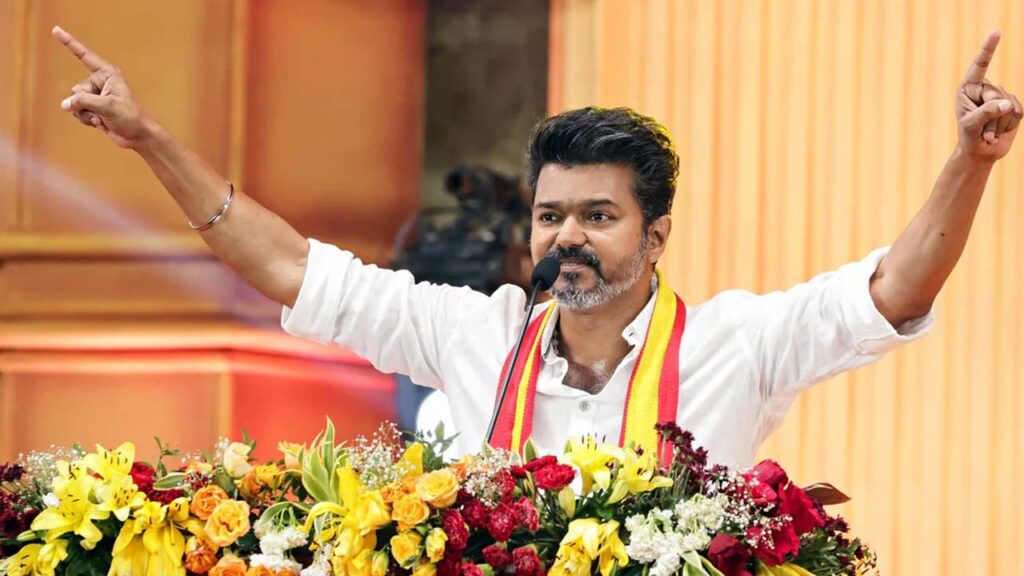
Tamil Nadu has refused to allot land for Jawahar Navodaya Vidyalayas despite the Supreme Court’s recent observations. The court had urged the state to reconsider its position on Hindi. However, the Tamil Nadu government says it will continue following its two-language policy. School Education Minister Rajmohan Arumugam defended the state’s position after the hearing. He said Tamil Nadu would continue prioritising Tamil and English in its education system. He also clarified that the government does not oppose Hindi or any other language. According to him, the state wants to protect Tamil’s importance within Tamil Nadu. Rajmohan also stressed that the Supreme Court’s comments did not constitute a final judgment. He said the government would continue withholding land for Navodaya schools. The dispute has now intensified the larger debate over language and education policy.
Also Read : From Farms to Factories: How AI Is Transforming India’s Food Supply Chain
Tamil Nadu: Why Navodaya Schools Have Become a Major Issue
Jawahar Navodaya Vidyalayas operate as centrally funded residential schools across India. The Navodaya Vidyalaya Samiti administers these institutions under the Union Ministry of Education. These schools follow the three-language formula, which includes Hindi in their language structure. The Centre wants Tamil Nadu to establish Navodaya schools across its districts. However, the state has resisted the proposal because of its language policy. Tamil Nadu follows a longstanding two-language formula based mainly on Tamil and English. The government has therefore refused to provide land for the proposed schools. The state argues that the Central scheme does not match its existing education framework. Tamil Nadu has also raised concerns about its policy-making powers and federal principles. Meanwhile, the Centre has maintained that Tamil Nadu should identify suitable land. The Union government has offered to bear the cost of establishing these schools.
The Supreme Court recently questioned Tamil Nadu’s opposition to Navodaya schools. During the hearing, Justice BV Nagarathna urged the state to reconsider its position. The court questioned whether Tamil Nadu could completely reject Hindi-based language requirements. It also observed that states cannot operate as separate countries within India. The bench highlighted the additional educational opportunities that Navodaya schools could provide. It said the schools would not require Tamil Nadu to close existing institutions. The court also encouraged the Centre and state to resolve their differences through cooperation. However, the observations during the hearing did not settle the entire language-policy dispute. Rajmohan pointed to this distinction while responding to the court’s remarks. The Supreme Court has given Tamil Nadu another three months to identify suitable land. The extended deadline keeps the dispute active while discussions between both sides continue.
Also Read : Swara Bhasker Criticises Padmaavat’s Jauhar Sequence, Questions Its Message About Women
Ruling Government and DMK Find Common Ground
The Navodaya dispute has also created an unusual political alignment in Tamil Nadu. Opposition leader Udhayanidhi Stalin has supported the government’s position on the issue. He welcomed the decision to continue defending the state’s two-language policy. Udhayanidhi also questioned the need for Navodaya schools in Tamil Nadu. He pointed to the state’s existing model and residential schools instead. He argued that these institutions already provide education opportunities to disadvantaged students. The DMK leader also urged the government to maintain its position before the Supreme Court. He suggested calling a special Assembly session if the situation requires further action. The proposed session could consider a resolution opposing Navodaya schools in Tamil Nadu. His support has brought the ruling TVK and opposition DMK closer on this issue. Both sides continue to maintain their differences on other political matters.
The latest developments have placed Tamil Nadu’s language policy at the heart of the controversy. The ruling government says it wants to preserve Tamil’s importance in education. The opposition has also backed the state’s resistance to compulsory language policies. Both sides have maintained that they do not oppose Hindi itself. Instead, they object to what they describe as compulsory language imposition. The Navodaya dispute therefore extends beyond the question of providing land. It also reflects Tamil Nadu’s longstanding political and cultural debate over language. The Supreme Court’s observations have added another important dimension to that debate. The Centre continues to support expanding Navodaya schools across the state. Tamil Nadu, meanwhile, remains committed to its existing education framework. The next three months could determine how both sides approach the unresolved issue. Further discussions may shape the future of Navodaya schools in Tamil Nadu.
Also Read : From Farms to Factories: How AI Is Transforming India’s Food Supply Chain



More Stories
Will ( AI ) Artificial intelligence Replace Jobs? What Tech Leaders and Employees Say About the Future
बच्चे को पीठ पर बांधकर ड्यूटी करती मां का वीडियो वायरल, लोग बोले- ‘आधुनिक झांसी की रानी’
Trump U-Turn: US to Buy Russian Diesel as Zelenskyy Calls Move a ‘Gift to Putin’