




The Aravalli controversy has become a major flashpoint in Rajasthan, as protests spread across the state against a newly accepted uniform definition of the hill range. Activists argue that this definition could expose more than 90 per cent of the Aravallis to mining and construction. The Aravalli range stretches 692 km in total, of which about 550 km run through Rajasthan. The backlash followed the Supreme Court’s November 20 decision to accept a definition proposed by a Centre-appointed panel. Under this definition, only landforms rising 100 metres or more above the local relief qualify as Aravalli hills.
Also Read: Rahul Gandhi Criticizes India’s Election Process Escalates Vote Rigging Claims in Berlin
Environmentalists, rights groups raise alarm over threat to Aravalli range
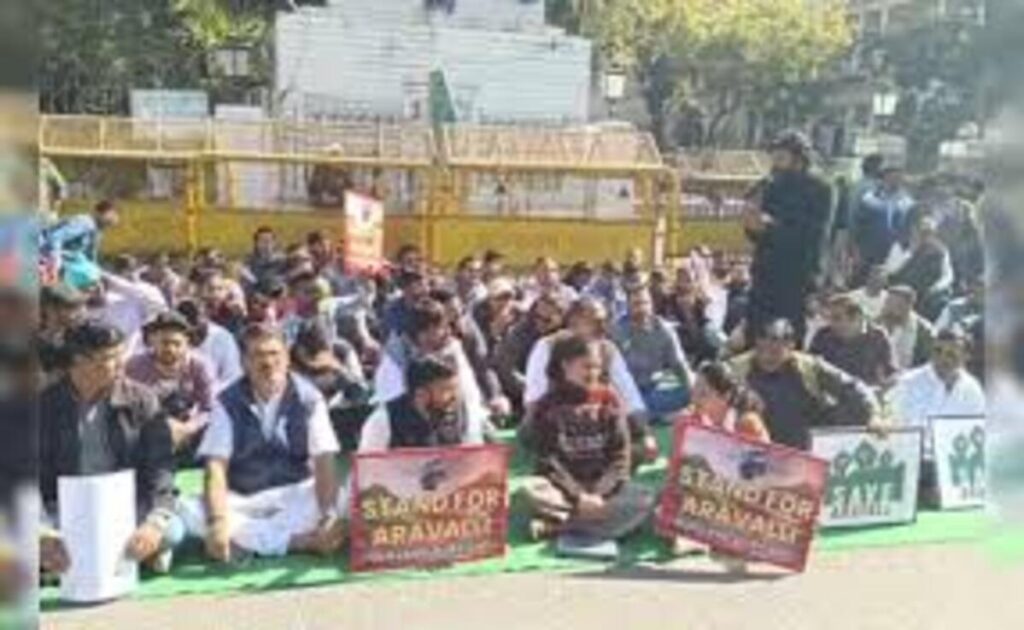
Protesters took to the streets on Monday in cities such as Jodhpur, Udaipur, and Sikar, where clashes broke out between demonstrators and police. In Jodhpur, police resorted to a baton charge and detained several protesters. In Sikar, agitators climbed Harsh Mountain a 945-metre peak in the Aravalli range as part of their protest. Reacting to the growing unrest, Chief Minister Bhajan Lal Sharma said in Jhalawar that his government would not allow any damage to the Aravalli range. He also criticised former chief minister Ashok Gehlot for changing his social media display picture to “Save Aravali.” “Changing a DP is mere theatrics. What matters is strong political will.
I assure you that the Aravalli ranges will not be touched, and illegal mining will not be allowed,” Sharma said. On November 27, The Indian Express reported that the new definition would place more than 90 per cent of the Aravalli region outside legal protection. This change could make the region vulnerable to mining and construction, leading to serious environmental consequences. Amid mounting criticism, Union Environment Minister Bhupender Yadav stated that authorities would permit mining in only 0.19 per cent of the Aravalli region. He added that the government would not issue any new mining leases until it completes a detailed study.
Also Read: Rahul Gandhi Criticizes India’s Election Process Escalates Vote Rigging Claims in Berlin
Legal change could expose over 90% of the ancient mountain range to mining and construction
Human rights activist Kavita Srivastava, national president of the People’s Union for Civil Liberties, urged the Rajasthan government to seek a review of the order. She warned that failure to challenge the decision would spell the death of the Aravalli range. Emphasising Rajasthan’s stake in the issue, she said the state must approach the Supreme Court. She added that decades of development-driven degradation around Delhi and Gurgaon had already caused severe damage to the hills Environmentalists have also warned that the ruling poses a fresh threat to the ancient hill range. In his book Aravali Par Naya Sankat, water conservationist and Magsaysay Award recipient Rajendra Singh traces the long struggle to curb mining in the Aravallis.
Singh said recent reports by the Forest Survey of India, the Geological Survey of India, and a technical subcommittee show that the 100-metre benchmark would exclude most of the Aravalli landscape from protection. Data cited in his book indicates that only 8.7 per cent of the region rises above the 100-metre mark. Activists also fear that the decision could harm tribal and local communities, as most homes, agricultural land, sacred groves, and cultural sites lie below the 100-metre threshold. Protests are likely to intensify in the coming days, as the Congress and other Opposition parties plan rallies in Jaipur to oppose the order.




More Stories
नेपाल में बालेन शाह की पार्टी RSP ने दर्ज की बड़ी जीत अन्य पार्टियां काफी पीछे
IND vs NZ T20 World Cup Final: What Kind of Pitch Will Ahmedabad Offer
कौन हैं मोजतबा ख़ामेनेई, जिन्हें अगल सुप्रीम लीडर माना जा रहा है