




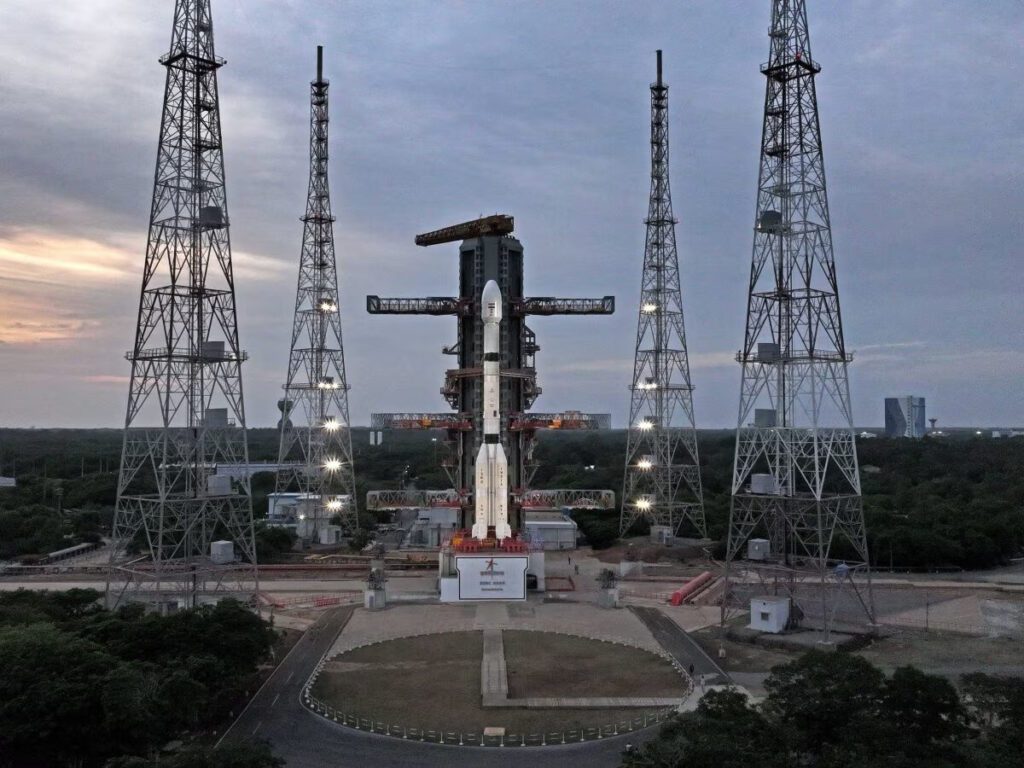
New Delhi: The Indian Space Research Organisation (ISRO) is preparing to launch its next-generation navigation satellite, NVS-03. The GSLV-F18 rocket will lift off from Sriharikota’s Satish Dhawan Space Centre at 11:51 pm.
The mission will place NVS-03 into Geosynchronous Transfer Orbit, strengthening India’s indigenous Navigation with Indian Constellation (NavIC) system. India developed NavIC after the 1999 Kargil War exposed its dependence on foreign navigation systems. The constellation provides positioning, navigation and timing services across India and approximately 1,500 kilometres beyond its borders. However, repeated satellite and atomic clock failures have weakened NavIC’s operational capabilities. India needs reliable navigation infrastructure to support defence operations, civilian transportation, shipping, aviation and disaster management. NVS-03 will strengthen the existing constellation and improve the reliability of India’s strategic space infrastructure. The satellite carries indigenous and procured atomic clocks, supporting precise timing essential for accurate navigation services.
Also Read : Rahul Gandhi Backs IDBI Bank Employees Opposing Rs 53,000-Crore Fairfax Deal
NVS-03 Satellite to Strengthen NavIC, Enhance Strategic Autonomy and Improve Navigation Reliability
ISRO has also introduced the L1 navigation signal alongside existing L5 and S-band signals. This addition could improve compatibility with commercial navigation devices, smartphones and other civilian applications. The launch carries strategic significance amid India’s growing emphasis on technological independence and national security. Operation Sindoor further highlighted the importance of reliable space-based surveillance, communications and navigation capabilities. The GSLV-F18 mission marks another milestone for India’s three-stage launch vehicle programme.
The rocket combines solid, liquid and cryogenic propulsion technologies to deliver heavy satellites into designated orbits. ISRO plans to launch additional NVS satellites to improve NavIC’s coverage, redundancy and operational reliability. Upcoming missions involving NVS-04 and NVS-05 will help strengthen the constellation and support continuity. A dependable indigenous navigation system can reduce India’s reliance on foreign satellite networks during geopolitical tensions. It can also strengthen military coordination, commercial transportation, emergency response and critical infrastructure operations. The successful deployment of NVS-03 would represent another important step towards a resilient, sovereign Indian navigation system.
Also Read : PM Kisan 24th Installment: PM Modi Releases Rs 18,690 Crore to 9.34 Crore Farmers



More Stories
Missing Indian-Origin Woman Found Dead in California Canal After Two Months
Maharashtra Suspends Four FDA Officials Over Lapses in Hookah Tobacco Regulation
सोने-चांदी की कीमतों में बड़ी गिरावट, एक महीने में सोना ₹12,000 और चांदी ₹48,000 तक सस्ती