




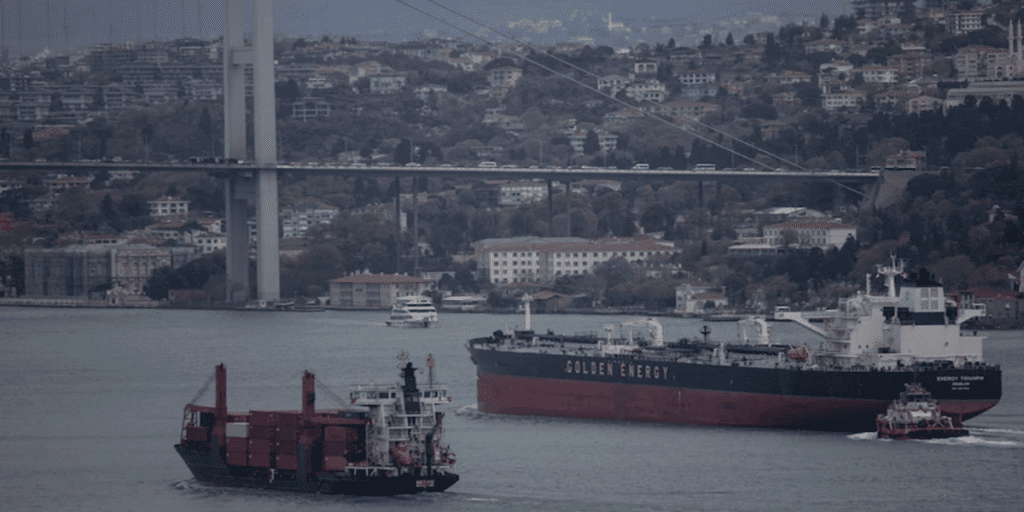
Top US officials spent Monday and Tuesday offering new details on the role the US military will play in helping ships pass through the Strait of Hormuz as part of President Donald Trump’s bid to break Iran’s chokehold over the waterway.Hours later, Donald Trump shelved the operation entirely after advisers warned him it could escalate a conflict he is trying to end
US Project Freedom Aimed to Secure Hormuz Amid Iran Tensions
That decision – which Trump said he made at the request of mediator Pakistan – suggested the president didn’t want to risk another flareup in violence like the one provoked in the first day the operation called Project Freedom went into effect. Back-and-forth developments highlighted how Donald Trump faces mounting pressure to end an increasingly unpopular war. At the same time, he has failed to break Iran’s control of the strait, a goal he needs to reverse a spike in oil and gas prices.
Project Freedom was meant to sit at the center of the next phase of the US approach to Iran. Defense Secretary Pete Hegseth and Dan Caine said the Pentagon deployed destroyers, aircraft, 15,000 personnel, and drones. The initiative would give commercial shippers a “powerful red, white, and blue dome over the strait” enforced by warplanes, helicopters, drones, surveillance aircraft and other military assets, and that “hundreds more ships from nations around the world are lining up to transit,” Hegseth said.
Also Read:IPL 2026: Ryan Rickelton updates on Hardik Pandya’s illness
US Shelves Security Plan Amid Escalating Iran Tensions
Later in the day, Secretary of State Marco Rubio described it as a defensive operation. Shippers would pass through “an enhanced security area on the southern side of the strait,” Caine told reporters. After those officials along with Central Command Commander Admiral Bradley Cooper outlined the idea, Trump abruptly shelved it on Tuesday evening. Donald Trump said he would briefly pause the plan to allow all sides to negotiate a deal, even though they remain far apart and a breakthrough looks unlikely
As part of the effort, the US military helped two vessels exit Hormuz on Monday, repelling multiple attacks by Iranian drones, missiles and irregular navy fast-attack boats. Iran also struck an oil terminal in the United Arab Emirates city of Fujairah.Those attacks shook a ceasefire that has held for nearly a month. Caine told reporters they didn’t signal renewed combat operations. But sending US vessels through the strait with commercial shippers would expose them to further Iranian attacks and force an even greater response.
Hormuz Traffic Drops as US Project Freedom Faces Escalation Risks
The passage remained largely empty of commercial vessels on Tuesday – traffic dropped off dramatically since the US and Israeli war against Iran began on Feb. 28, and has since dwindled even further.”In view of the hostilities over the last 24 hours, the overall security situation has become more tense,” Jakob Larsen, the chief safety and security officer for BIMCO, the world’s largest shipping trade group, said in a statement before Trump paused the project.
AP Moller-Maersk said the US military contacted it and offered protection, allowing one of its ships to exit the Gulf under military escort. A company spokesperson on Tuesday said the vessel was a US support ship.Earlier Tuesday, Hegseth cast Operation Freedom as a “temporary mission” designed to show the world that navigating the strait was possible. Project Freedom “carries significant escalation risks, as the outbreak of fighting Monday illustrates,” said Becca Wasser, an analyst with Bloomberg Economics.
Also Read:Delhi HC to appoint 3 amicus curiae for Kejriwal, Sisodia in excise case



More Stories
Influencer Dies by Suicide; Family Alleges Death Threats and ₹3 Crore Demand by CEO
AAP का दावा: फ्रांस से लौटे CM भगवंत मान को दिल्ली एयरपोर्ट पर 3 घंटे रोका, लगा ₹50 हजार का जुर्माना
Trump’s Tariffs, Visa Curbs Not Targeted at India: Marco Rubio