





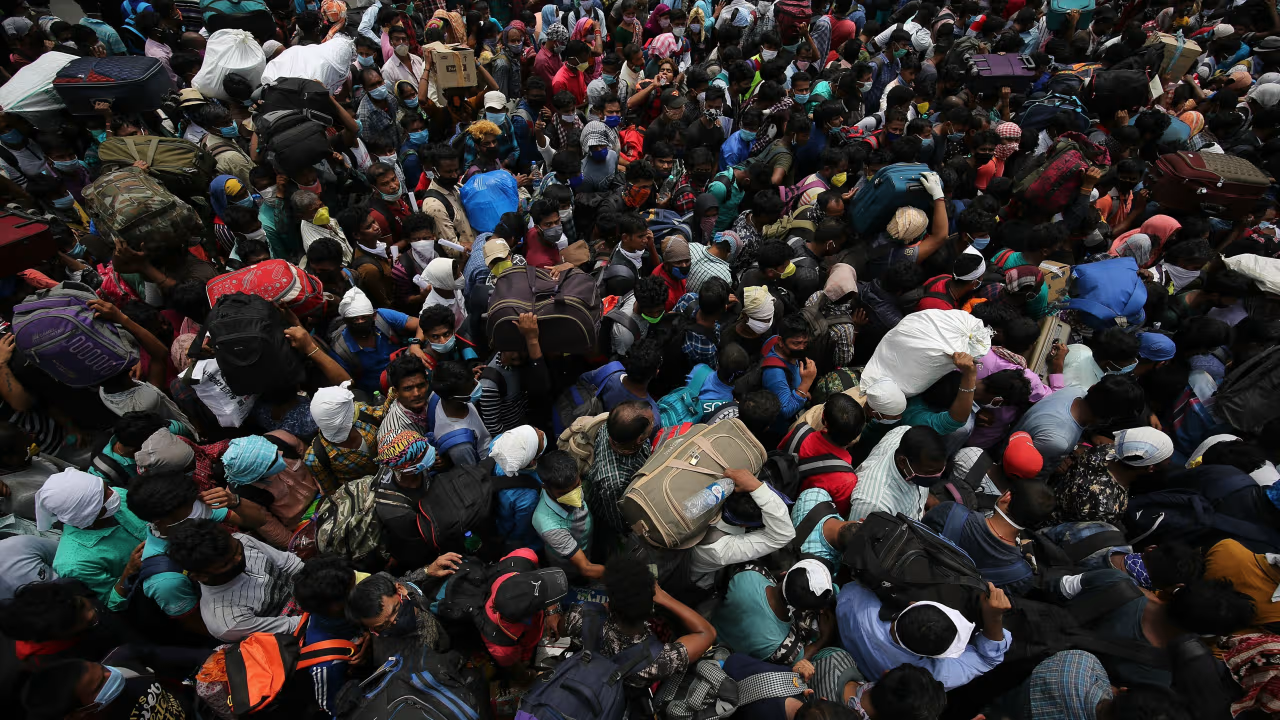
Nearly 10 million Indian with deep ties to West Asia are confronting growing anxiety after the United States and Israel launched strikes on Iran, triggering retaliation across the Gulf. Families describe the unfolding conflict as a personal crisis rather than distant geopolitics. Missiles and drones have streaked across the skies, while mobile phones buzz continuously with alerts. For many, the escalating hostilities have turned routine days into moments of fear and uncertainty.
In Karnataka’s Dakshina Kannada district, a mother anxiously awaits updates from her two sons living in Abu Dhabi and Bahrain. In Manama, a Kerala-based trader watches panic build in public spaces. A Punjabi industrialist in Dubai reaches out to assist stranded air passengers. Across Indian households, relatives remain glued to their phones, hoping for reassurance from loved ones abroad.
Also Read : Class 10 CBSE AI Board Exam 2026: Paper Analysis and Student Reactions
As conflict spreads in the Gulf, Indian expatriates face safety fears and uncertainty
The Indian community forms the largest expatriate group across the Gulf Cooperation Council countries, with over nine million residents, mainly in the UAE and Saudi Arabia. Government data also records more than 100,000 Indians in Israel and over 10,000 in Iran, along with thousands of students. The Reserve Bank of India reports that India received $118.7 billion in remittances in 2023-24. The UAE contributed 19.2 per cent of that total, followed by Saudi Arabia, Qatar, Kuwait and Oman.
Recent drone and missile strikes have disrupted major airports in Dubai, Abu Dhabi and Doha, forcing authorities to cancel over 1,000 flights. Key hubs that handle nearly 90,000 passengers daily have reported operational shutdowns and injuries. Officials in the UAE have advised residents to step out only when necessary as debris from intercepted missiles poses risks. Schools have temporarily shifted to remote learning, and movement restrictions remain in place.
Community organisations have stepped in to support stranded travellers despite logistical challenges. Volunteers are offering temporary accommodation and urging calm among residents. Professionals in the region say misinformation circulating on social media has intensified panic among families in India. Even as governments attempt to stabilise the situation, millions of Indians across the Gulf continue to navigate fear, disruption and an uncertain wait for normalcy.
Also Read : NCERT Books and the Supreme Court’s Intervention




More Stories
Jio Platforms IPO Sets Global Record With Over 1 Crore Applications
Maharashtra Man Chased, Run Over and Beaten to Death on Busy Road; CCTV Captures Brutal Murder
Jio Platforms IPO में निवेशकों की भारी दिलचस्पी, तीसरे दिन सब्सक्रिप्शन 6 गुना के पार पहुंचा