





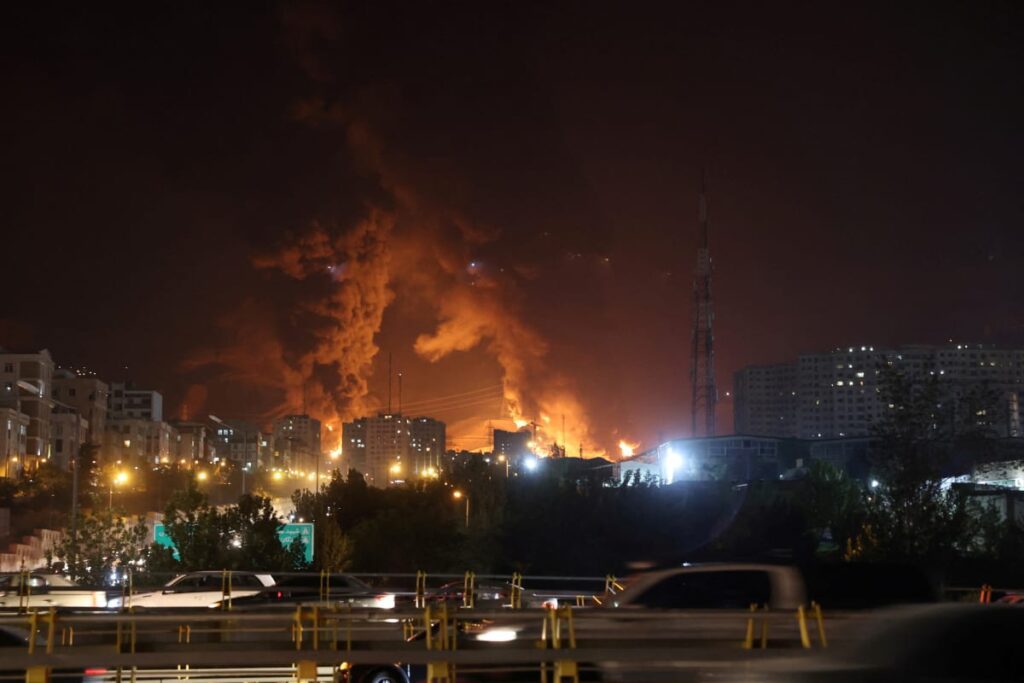
Fresh tensions erupted in the Gulf region over the weekend as the United States and Iran exchanged new rounds of military strikes. The US military said it targeted Iranian radar installations and drone command centers located in Goruk and on Qeshm Island. American officials described the operation as a defensive response to threats against international shipping routes. The attacks marked another escalation despite ongoing diplomatic efforts. Both countries continue to accuse each other of provoking instability in the region.
The United States said its forces launched the strikes after Iran allegedly shot down an American MQ-1 drone flying over international waters. US fighter jets reportedly hit air-defense systems, a drone control station, and two drones that military officials considered threats to commercial vessels. American authorities stated that the operation achieved its objectives without causing any injuries to US personnel. The military emphasized that it acted to protect freedom of navigation. The Gulf remains a critical route for global trade and energy supplies.
Iran quickly responded by claiming it had targeted an air base used by US forces. Iranian military officials said they struck a communications facility connected to the American operation near Sirri Island in the Gulf. The Islamic Revolutionary Guard Corps warned that it would deliver a stronger response if similar attacks occurred again. Iranian leaders accused Washington of violating regional security. They also insisted that their actions were defensive in nature.
Also Read: Dharmendra Pradhan on CBSE Concerns
US-Iran tensions rise after fresh Gulf strikes
Regional tensions spread beyond Iran and the United States as Kuwait reported intercepting hostile missiles and drones using its air-defense systems. Kuwaiti authorities did not disclose the exact locations of the interceptions. The incident followed earlier Iranian strikes against facilities in Kuwait, which Tehran said were retaliation for previous US military operations. Governments across the Gulf continue to monitor the situation closely. Security concerns have increased as military activity intensifies.
Diplomatic efforts to secure a lasting ceasefire have so far failed to produce a breakthrough. Although a temporary ceasefire took effect in April, both sides have continued military operations and public threats. Recent proposals reportedly included a 60-day halt to violence and plans to reopen the Strait of Hormuz. Negotiators also discussed restarting talks on Iran’s nuclear program. However, neither side has formally accepted a comprehensive agreement.
The ongoing conflict has raised concerns about global energy markets because the Strait of Hormuz serves as one of the world’s most important shipping routes. A significant share of international oil and liquefied natural gas exports passes through the waterway. Any disruption could increase fuel prices and affect economies worldwide. Recent reports suggested new discussions over a possible peace framework, but Iran rejected speculation about imminent progress. As military and diplomatic developments continue, uncertainty remains high across the region.
Also Read: Hyderabad Crime Case: Educators Allegedly Hired Assassins to Eliminate Lawyer




More Stories
लहंगे में 18 KM पैदल चली दुल्हन, 4 घंटे में पहुंची ससुराल; CM धामी से बोली- सड़क बनवा दो
A.R. Rahman Recalls Fan Who Predicted His Ramayana Collaboration 12 Years Ago
दिलजीत दोसांझ के शो के लिए दिल्ली पुलिस ने नहीं दी परमिशन, जवाहर लाल नेहरू स्टेडियम में होना था शो