



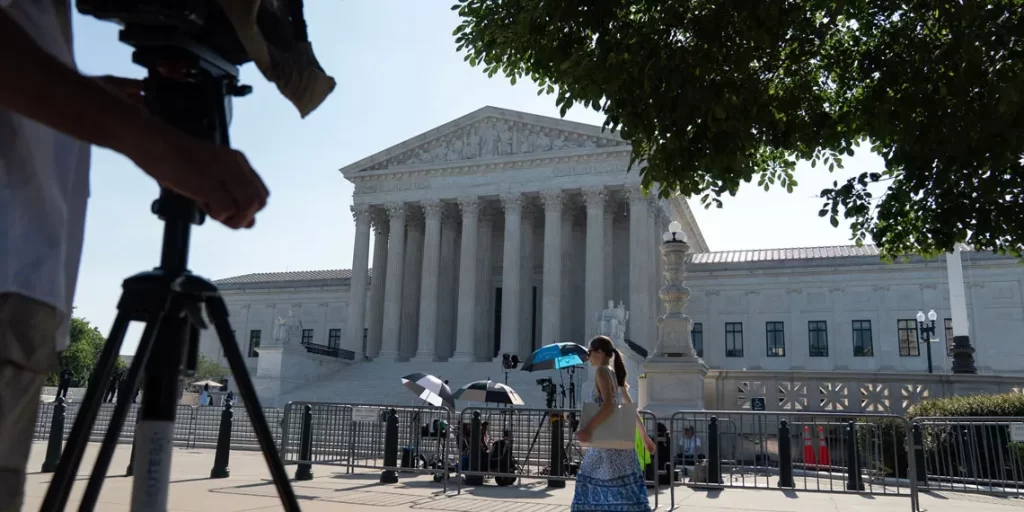
The United States Supreme Court upheld birthright citizenship and rejected President Donald Trump’s executive order restricting citizenship rights.
The Court confirmed longstanding constitutional protections guaranteeing citizenship to nearly everyone born within United States territory today. Justices relied on the Fourteenth Amendment and established federal laws supporting automatic citizenship for eligible newborns nationwide. They emphasized historical interpretations developed after the Civil War and reinforced through consistent judicial precedent nationwide.
Also Read:Student Killed, Four Injured After Tree Crashes Onto School Bus in Mumbai
The ruling excluded only limited exceptions involving foreign diplomats and hostile occupying military forces operating domestically. Lower federal courts previously blocked Trump’s executive order before officials implemented the proposed citizenship restrictions nationwide. The Supreme Court agreed those earlier rulings correctly interpreted constitutional protections guaranteeing citizenship for qualifying children born.
During oral arguments, conservative and liberal justices questioned the executive order’s legality under established constitutional principles carefully. Their decision preserved birthright citizenship and prevented significant changes affecting thousands of families across America annually. The ruling reaffirmed constitutional protections while limiting executive authority over citizenship established through constitutional amendment and precedent.
President Trump signed the executive order during his second presidential term as part of broader immigration enforcement efforts. His administration argued children born to undocumented immigrants lacked constitutional eligibility for automatic United States citizenship protections.Government lawyers claimed these children remained outside constitutional jurisdiction despite their birth within American national territory.
The administration challenged traditional interpretations supporting birthright citizenship under the Fourteenth Amendment since the nineteenth century consistently. Officials also extended proposed restrictions toward temporary visa holders, international students, and permanent residency applicants nationwide. Critics argued the executive order contradicted constitutional language, judicial precedent, and established congressional immigration laws completely.
The Supreme Court rejected those arguments after examining constitutional history and previous landmark judicial decisions carefully. Justices concluded executive authority cannot override constitutional guarantees protecting citizenship rights established through formal constitutional amendments. Their ruling preserved existing citizenship practices affecting thousands of newborn children born throughout the United States annually. The decision reinforced constitutional stability while rejecting executive attempts limiting citizenship through presidential authority without congressional approval.
Also Read:Indian family creates chaos at Vietnam eatery after staff warns about child’s behaviour



More Stories
CJP आंदोलन पर हरीश साल्वे का बड़ा दावा, बोले- भारत में नेपाल और बांग्लादेश जैसे हालात बनाने की कोशिश
दिल्ली में विपक्ष के मार्च के बीच BJP का प्रदर्शन, कांग्रेस सांसद पर यौन शोषण का गंभीर आरोप, बांसुरी स्वराज ये बोलीं
राहुल के प्रदर्शन से पहले दिल्ली पुलिस अलर्ट, सुरक्षा के किए कड़े इंतजाम