





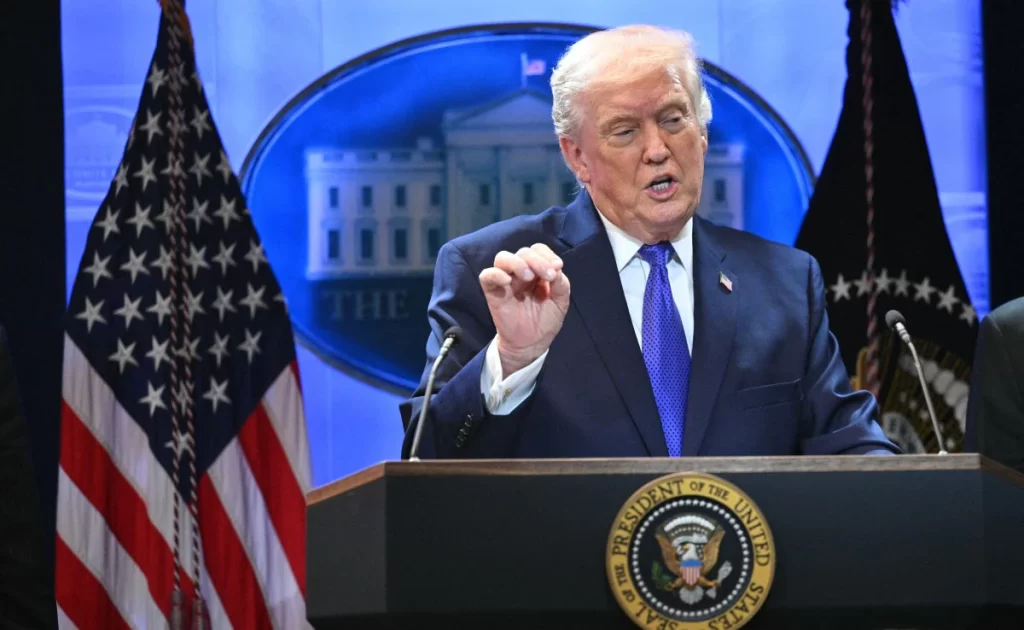
US President Donald Trump has announced plans to secure large diesel supplies from Russia, drawing sharp criticism from Ukrainian President Volodymyr Zelenskyy. The announcement marks a significant shift in Washington’s approach to Russian energy exports amid rising fuel prices and growing pressure on American consumers. Trump said Russia had agreed to supply more than 300,000 metric tons of diesel immediately, followed by another 500,000 metric tons in November and one million metric tons later. He argued that the arrangement could ease fuel costs for farmers, ranchers, truckers and other American consumers. However, Zelenskyy warned that the deal could provide Moscow with additional revenue to sustain its war against Ukraine.
Trump Says Lower Fuel Prices Remain His Priority
Zelenskyy strongly criticised the proposed arrangement, arguing that Russian energy revenue could prolong the conflict instead of advancing peace negotiations. In a post on X, he described the agreement as an investment in a war that needed to end rather than continue. He also warned that additional money from petroleum exports could help Moscow sustain military operations against Ukraine. Speaking later, Zelenskyy questioned Washington’s approach and expressed concern about how American officials handled discussions with Ukrainian representatives. His criticism came as a Ukrainian delegation visited the United States for talks aimed at resolving the conflict, which began with Russia’s full-scale invasion in February 2022. According to an Axios report, US envoys Steve Witkoff and Jared Kushner discussed possible changes to Russian diesel sanctions with Ukrainian negotiators during meetings in Miami
Trump defended the proposed imports by highlighting the pressure that rising diesel prices have placed on American households and businesses. He said reducing fuel costs remained a priority, particularly for farmers, ranchers and truckers who depend heavily on diesel. Prices have increased sharply amid disruptions linked to the conflicts involving Iran and Ukraine. The Group of Seven countries also agreed to release 100 million barrels of oil and diesel to help address supply pressures. According to figures cited in the report, the American Automobile Association recorded average US diesel prices above $6 per gallon. The US Treasury Department also issued a general licence allowing Russian diesel imports until April 7, according to the supplied report. Trump’s decision drew attention because his administration had previously imposed sanctions on Russian energy interests and criticised countries that continued purchasing Russian oil.
Analysts Question Whether Russian Supplies Can Cut Prices
Energy analysts have questioned whether the proposed Russian shipments will significantly reduce diesel prices across the United States. Rory Johnston, founder of CommodityContext.com, argued that the arrangement would have little overall impact on the market. Jim Mitchell of Wood Mackenzie offered a more measured assessment, saying the additional supplies could help a market already facing tight conditions. The proposed initial shipment of 300,000 metric tons would amount to approximately 2.25 million barrels, according to the report. By comparison, the United States exports around 1.5 million barrels of diesel daily. These figures suggest that the announced volume may offer some relief without resolving broader supply challenges. Diesel prices affect freight transportation, agriculture, heating and several other essential sectors, making sustained reductions difficult without wider market improvements. Meanwhile, reports said US diesel futures declined following news of the agreement.
The Trump administration is also considering additional measures to increase domestic energy production and contain fuel costs. According to the supplied report, industry sources said Trump could direct government departments to examine regulations that restrict energy production at state and local levels. Officials may also consider invoking the Defense Production Act, a Cold War-era law that allows the president to support essential manufacturing and prioritise certain government contracts. The administration has reportedly discussed expanding refining capacity as international conflicts expose vulnerabilities in global fuel supply chains. Refinery executives have advised officials that upgrading existing facilities or expanding current plants could prove more practical than constructing entirely new refineries. Such projects would still require time and investment before increasing output. The proposed Russian diesel imports therefore form part of a broader effort to address immediate supply concerns while exploring longer-term domestic solutions.



More Stories
CJP प्रोटेस्ट से पहले दिल्ली पुलिस ने YouTuber ध्रुव राठी को हिरासत में लिया
Noida International Airport to Be Named After PM Narendra Modi, Says CM Yogi Adityanath
रील बनाने पर पति ने डांटा, महिला की फर्राटेदार अंग्रेजी की प्रियंका चोपड़ा भी हुईं फैन