





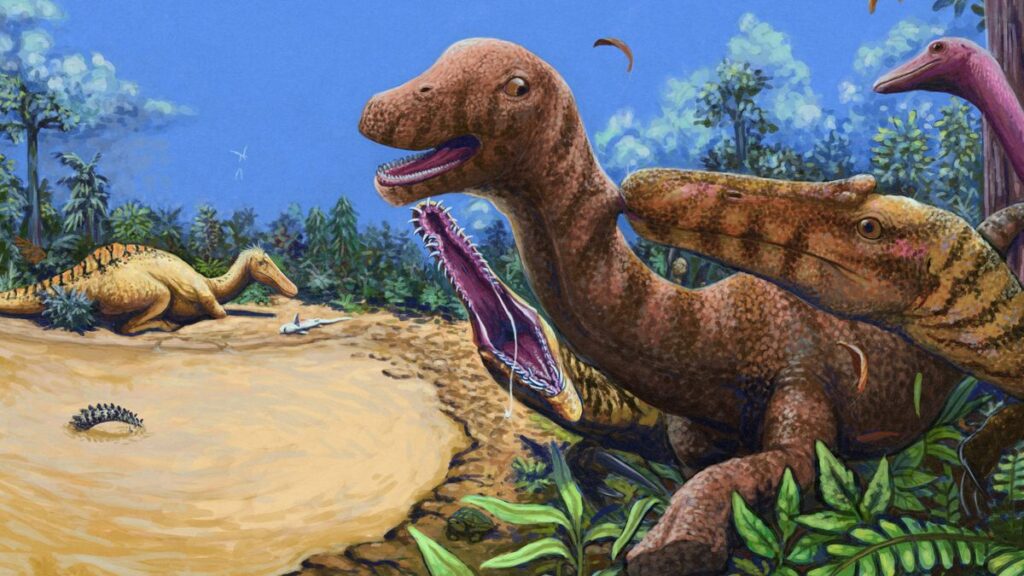
Scientists have identified a new species of giant long-necked dinosaur from fossils discovered in north-eastern Thailand. The dinosaur, named Nagatitan chaiyaphumensis, is now considered the largest dinosaur ever found in South-East Asia. Researchers estimate it weighed nearly 27 tonnes, equal to about nine adult Asian elephants, and stretched around 27 meters in length. The species belonged to the sauropod group, famous for their long necks and plant-based diet. Experts say the dinosaur lived more than 100 million years ago during the age of giant reptiles.
A joint team of researchers from Thailand and the United Kingdom studied the fossils that workers first uncovered near a pond nearly a decade ago. Scientists later analyzed the remains in detail and confirmed that they represented a completely new dinosaur species. The discovery has provided important information about prehistoric life in South-East Asia. Researchers believe the findings can help explain how environmental and climate conditions allowed massive dinosaurs to evolve. The study has also strengthened Thailand’s growing importance in dinosaur research.
Researchers selected the name Nagatitan chaiyaphumensis using references from mythology and geography. The word “naga” comes from the serpent creatures of South-East Asian folklore, while “titan” refers to powerful giants in Greek mythology. The final part of the name honors Chaiyaphum province, where scientists discovered the fossils. Experts say the dinosaur lived between 100 and 120 million years ago, making it far older than Tyrannosaurus rex. According to researchers, the species was nearly twice the size of T. rex.
Also Read: Prateek Yadav’s Funeral To Take Place In Lucknow Today
Giant Dinosaur Fossils Found in Thailand
Lead researcher Thitiwoot Sethapanichsakul described the dinosaur as “the last titan” of Thailand because scientists found the fossils in the country’s youngest dinosaur-bearing rock formation. He explained that younger rock layers in the region later became shallow seas, reducing the chances of preserving dinosaur remains. Because of this, scientists believe Nagatitan could be one of the last giant sauropods discovered in South-East Asia. Sethapanichsakul also shared that naming a dinosaur fulfilled a childhood dream. The study marked an important achievement for Thai paleontology.
Thailand has now officially named 14 dinosaur species, highlighting the country’s rich prehistoric history. Paleontologists say Thailand contains one of Asia’s most diverse collections of dinosaur fossils. Experts believe the region may rank among the top areas in Asia for dinosaur remains. Scientists continue to explore fossil sites across the country in search of more discoveries. Researchers say each new finding improves understanding of ancient ecosystems and dinosaur evolution in the region.
Scientists also linked the giant dinosaur’s growth to changing climate conditions millions of years ago. During the time Nagatitan lived, Earth experienced rising carbon dioxide levels and warmer global temperatures. Researchers found it surprising that giant sauropods managed to survive in such hot environments because large animals retain heat more easily. Experts believe climate changes may have affected the vegetation that these massive herbivores depended on for food. The study suggests that environmental shifts played a major role in shaping dinosaur evolution.
Also Read: NEET-UG 2026 Leak Case Expands Across Three States




More Stories
Indian Developers to Present Projects at Moscow International Game Week
महाराष्ट्र के 1.5 करोड़ किसानों को इसी हफ्ते मिलेंगे 5,000 रुपये, CM फडणवीस ने दिए निर्देश
Odisha, Andhra Pradesh on High Alert as Severe Cyclonic Storm Arnab Approaches