





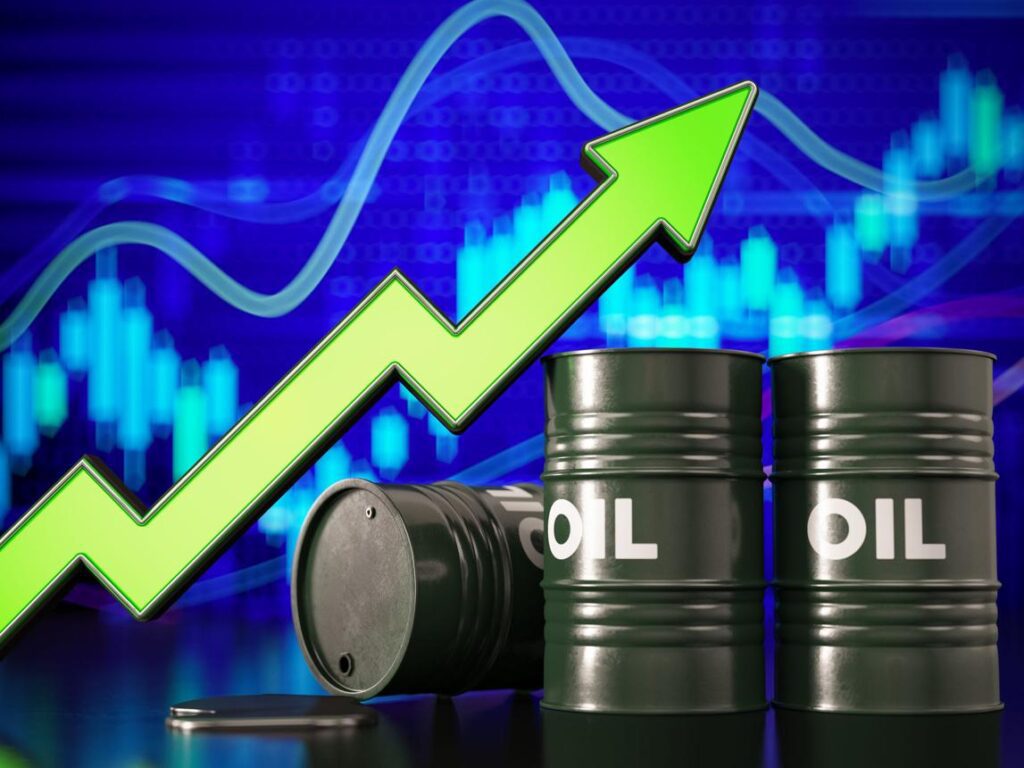
Brent crude oil prices eased on Monday after briefly climbing above the $90-a-barrel mark, as investors weighed fresh diplomatic signals from Iran alongside continuing military tensions with the United States. Brent futures rose as high as $90.75 per barrel, their highest level in more than five weeks, before retreating to around $88.26. Meanwhile, U.S. West Texas Intermediate (WTI) crude slipped 0.4% to $82.18 per barrel. Market participants closely monitored developments in the Middle East, where military exchanges between Washington and Tehran continued for a ninth consecutive day. Although escalating conflict initially pushed prices higher, hopes that diplomatic talks could resume prompted traders to lock in profits, causing oil prices to pull back from their session highs.
Diplomatic Talks Offer Hope for Stability
Military tensions remained a major driver of market sentiment. U.S. forces continued operations against Iranian targets, while Iran reported that attacks had damaged and immobilized two oil tankers. The Islamic Revolutionary Guard Corps (IRGC) claimed responsibility for strikes targeting U.S. aircraft at an airport in Jordan and military assets in Kuwait and Syria. Bahrain also activated emergency sirens after regional security concerns intensified. These developments fueled fears that the Strait of Hormuz, one of the world’s most important oil shipping routes, could remain partially disrupted. Any prolonged interruption in tanker traffic through the strategic waterway threatens global crude supplies, prompting traders to remain cautious despite the day’s decline in oil prices.
Energy analysts said the supply outlook remained tight even though the recent rally lost momentum. According to ANZ analysts, expectations for a recovery in shipping activity through the Strait of Hormuz have weakened, with transit volumes dropping sharply. They added that increased U.S. crude production has not significantly changed the overall market balance because global oil inventories continue to decline. As a result, supplies of crude oil and refined petroleum products remain constrained, supporting prices despite short-term fluctuations. Investors continued to evaluate supply risks against demand expectations, while ongoing geopolitical uncertainty prevented any sustained decline in oil prices. Analysts believe volatility will likely remain elevated as long as regional tensions persist.
Also read :BJP Sends Clear Message to Sharad Pawar Amid NCP Merger Buzz: Reunification Before NDA
Strait of Hormuz Supply Risks Persist
Brent crude has experienced significant price swings since the conflict intensified earlier this year. Prices surged above $110 per barrel following the start of the joint U.S.-Israeli military campaign against Iran before falling back toward $70 after both sides agreed to a ceasefire framework in June. However, renewed military action in recent weeks has once again increased uncertainty across global energy markets. Traders remain highly sensitive to every new military development because any escalation could threaten oil exports from the Gulf region. The repeated cycle of attacks and counterattacks has made geopolitical headlines one of the strongest influences on daily movements in international crude oil prices.
Despite the ongoing conflict, both Washington and Tehran signaled that diplomacy remains possible. U.S. Secretary of State Marco Rubio said the United States remains willing to resume negotiations if the opportunity arises. Iranian Foreign Minister Abbas Araghchi also indicated that discussions could move forward once Iran secures what he described as its strategic objectives. In addition, Iran’s foreign ministry confirmed that international mediators have proposed new initiatives aimed at preventing further escalation between the two countries. These diplomatic efforts offered markets some optimism and helped ease immediate concerns over a broader regional conflict. However, investors continue to monitor developments closely, as any setback in negotiations could quickly reignite volatility in global oil markets.
Also read :PM Modi Says Young Innovators, Not a 56-Year-Old, Drove Skyroot’s Launch



More Stories
Will ( AI ) Artificial intelligence Replace Jobs? What Tech Leaders and Employees Say About the Future
बच्चे को पीठ पर बांधकर ड्यूटी करती मां का वीडियो वायरल, लोग बोले- ‘आधुनिक झांसी की रानी’
Trump U-Turn: US to Buy Russian Diesel as Zelenskyy Calls Move a ‘Gift to Putin’