



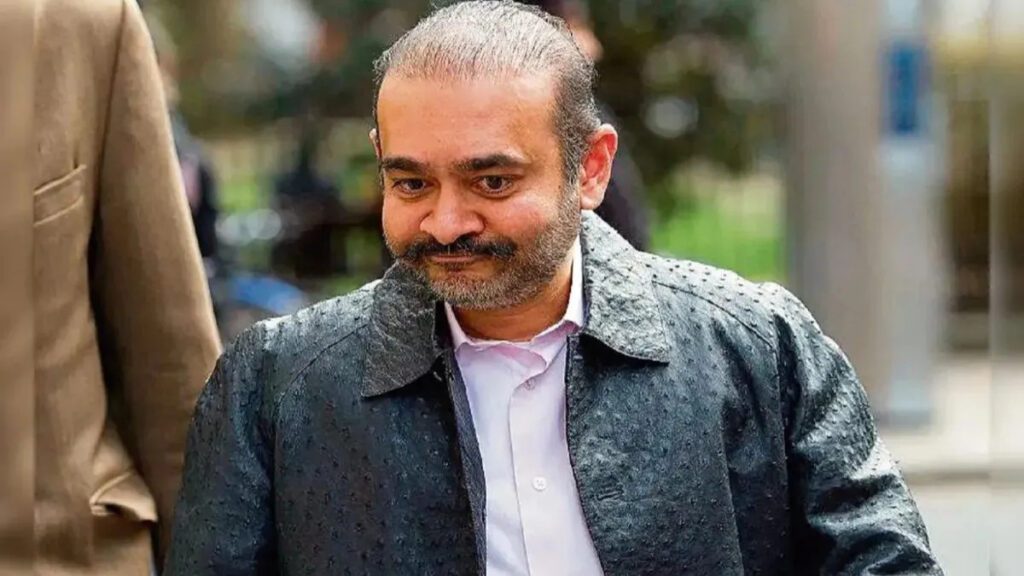
Nirav Modi, accused of defrauding Punjab National Bank of ₹6,498 crore, has remained lodged in a UK prison since his arrest by Scotland Yard in March 2019. He has been contesting his extradition to India for several years. The case continues to draw attention from authorities in both countries.
A court in the United Kingdom on Wednesday rejected Modi’s plea to reopen his extradition case. The judges upheld earlier rulings and accepted assurances given by the Indian government. These assurances stated that Modi would not be interrogated by investigating agencies if extradited. The ruling marks a major setback for his legal efforts.
The High Court of Justice in London, led by Lord Justice Jeremy Stuart-Smith and Justice Robert Jay, ruled that the grounds to reopen the case were not “exceptional.” The bench described India’s assurances as specific and credible. It noted that the commitments were made in good faith and intended to be binding. This reinforced the court’s decision to deny relief.
Also Read: Bus plunges into river in Bangladesh, 24 dead
UK court blocks Nirav Modi’s extradition review
Following the judgment, the Central Bureau of Investigation successfully countered Modi’s legal challenge. The agency credited coordinated efforts and strong representation in court. It highlighted the role of the Crown Prosecution Service and its advocate Helen Malcolm. CBI officials also travelled to London to support the proceedings.
In his August 2025 appeal, argued by lawyer Edward Fitzgerald, Modi claimed that he would face interrogation, torture, and ill-treatment if sent back to India. He cited concerns about prison conditions and investigative practices. His legal team attempted to draw parallels with other extradition cases. The argument aimed to question the safety of his return.
Modi’s defence referred to a previous UK High Court ruling in the case of Sanjay Bhandari, where extradition was denied due to risks in Tihar jail. They argued that similar risks applied to Modi as well. Witnesses, including Indian lawyer Ashul Agarwal and former Supreme Court judge Deepak Verma, supported these claims. They raised concerns about potential treatment after extradition.
The Indian government formally assured that it would not allow Modi to be interrogated after extradition. It clarified that agencies like the CBI and ED have no intention or legal basis to question him further. Authorities stated that the cases are ready for trial. These assurances ultimately played a key role in the UK court’s decision.

More Stories
CJP आंदोलन पर हरीश साल्वे का बड़ा दावा, बोले- भारत में नेपाल और बांग्लादेश जैसे हालात बनाने की कोशिश
दिल्ली में विपक्ष के मार्च के बीच BJP का प्रदर्शन, कांग्रेस सांसद पर यौन शोषण का गंभीर आरोप, बांसुरी स्वराज ये बोलीं
राहुल के प्रदर्शन से पहले दिल्ली पुलिस अलर्ट, सुरक्षा के किए कड़े इंतजाम