




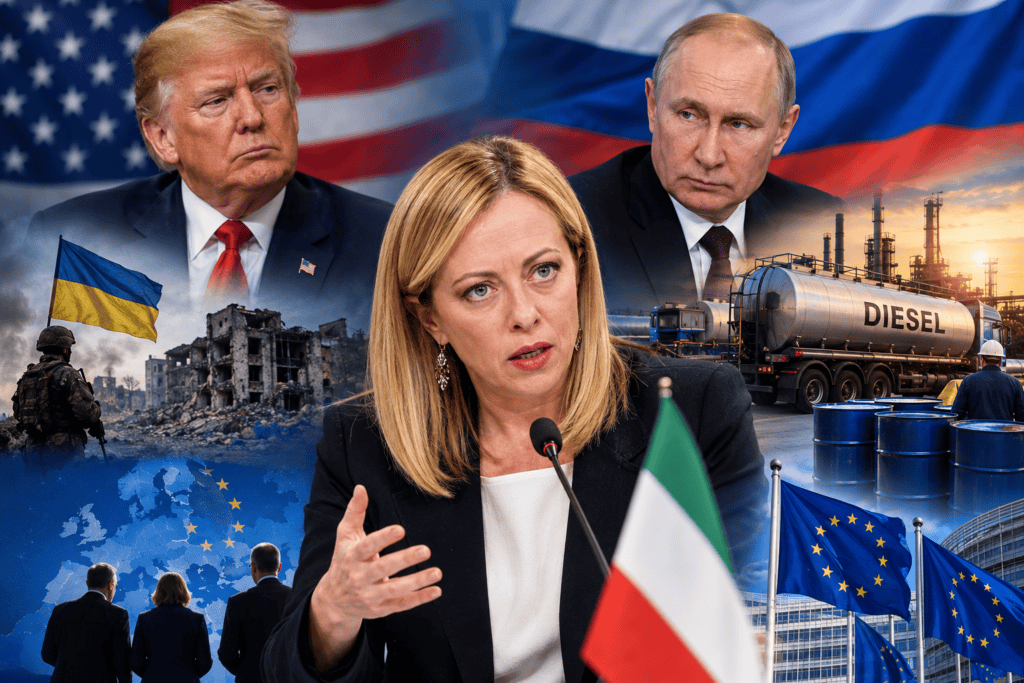
Italian Prime Minister Giorgia Meloni criticised the United States-Russia diesel agreement on Wednesday, October 14, calling it a risky decision. She warned that the deal could undermine international efforts to bring Russian President Vladimir Putin to negotiations with Ukraine. The agreement, reached last week, allows Moscow to supply more than 300,000 metric tons of diesel to American and global markets initially. Meloni expressed concern that the arrangement could weaken diplomatic pressure on Russia amid the ongoing war. She addressed the Italian parliament ahead of a European Union summit scheduled for this week. According to Meloni, the consequences of the decision remain uncertain, but its potential risks are already apparent. Her remarks highlighted growing disagreements over how Western countries should manage energy supplies while maintaining pressure on Moscow. The agreement has also raised questions about the balance between economic interests and international diplomatic objectives.
Also read :Bittu Tabahi Spent 8 Months Cleaning Ajnar River, but It Turned Filthy Again Within Weeks
Meloni Questions the Risks of Russian Diesel Supplies
Meloni told Italian lawmakers that the potential consequences of the diesel agreement remain unclear, while its risks deserve serious consideration. She argued that Western countries should carefully assess whether increased energy cooperation with Moscow could weaken their diplomatic strategy. The United States and Russia reached the agreement last week, with initial supplies exceeding 300,000 metric tons of diesel. US President Donald Trump defended the arrangement, saying it could help reduce American energy prices. Lower fuel costs could offer political benefits to Trump’s Republican Party ahead of important midterm elections. Those elections will determine which party controls Congress and could influence the president’s ability to advance his legislative agenda. However, Meloni questioned whether the economic advantages justified the possible diplomatic consequences. Her comments reflected tensions between energy affordability and efforts to pressure Russia over its invasion of Ukraine. The debate could influence discussions among European leaders during their upcoming summit.
Meloni urged the 27 European Union member states to appoint an influential representative to coordinate negotiations concerning the Russia-Ukraine war. She argued that Europe needed a stronger and more organised diplomatic approach to the conflict. The Italian prime minister also discussed the possibility of authorising the E3 group to represent European interests. The group comprises Germany, France and the United Kingdom, which have played important roles in European security discussions. Meloni said these countries could negotiate on behalf of the entire European Union if they believed their smaller group would achieve better results. However, she insisted that such negotiations should receive an official mandate from European countries. Her proposal aimed to prevent separate diplomatic initiatives from weakening Europe’s collective position. Meloni’s comments highlighted ongoing discussions about leadership, coordination and representation in negotiations surrounding the war. European leaders now face the challenge of balancing national interests with broader regional security objectives.
European Leaders to Discuss Russian Hybrid Attacks
Meloni said the upcoming European Union summit would address what she described as an escalation in Russian hybrid attacks. These activities reportedly include drone incursions, cyberattacks, sabotage and other covert operations. Such incidents can threaten national security while creating uncertainty without triggering conventional military confrontation. European governments have increasingly focused on protecting essential infrastructure against these potential threats. Meloni emphasised that European countries must strengthen their ability to identify, prevent and respond to hostile activities. She also connected these security concerns with efforts to maintain support for Ukraine. According to her remarks, covert operations could aim to weaken public and political backing for Kyiv. The summit will provide European leaders an opportunity to discuss possible responses and improve cooperation. However, the specific measures that member states might adopt remain uncertain. The discussions are expected to focus on strengthening security coordination and protecting infrastructure against emerging risks across the region.
Meloni stressed that European countries must protect critical infrastructure from sabotage, cyberattacks and other emerging security threats. She specifically identified energy networks, undersea communication cables, ports and airports as important assets requiring stronger protection. She also highlighted the strategic importance of underwater infrastructure, where Italy possesses considerable technical expertise. Damage to these systems could disrupt essential services, international communications and economic activity across Europe. Her remarks underlined the need for governments to improve surveillance, strengthen cybersecurity and coordinate responses to potential threats. The Italian prime minister also linked infrastructure protection with Europe’s broader security priorities amid tensions with Russia. Meanwhile, the diesel agreement between Washington and Moscow continues to raise questions about Western energy policy. European leaders must now consider how to maintain affordable energy supplies without undermining diplomatic pressure on Russia.



More Stories
मेरठ ब्लू ड्रम हत्याकांड: मुस्कान और साहिल को मृत्युदंड, सौरभ राजपूत की हत्या में कोर्ट का बड़ा फैसला
बिहार के राघोपुर में नाव पलटने से 13 बच्चों की मौत, स्थानीय लोगों ने क्या बताया?
Bittu Tabahi Spent 8 Months Cleaning Ajnar River, but It Turned Filthy Again Within Weeks