

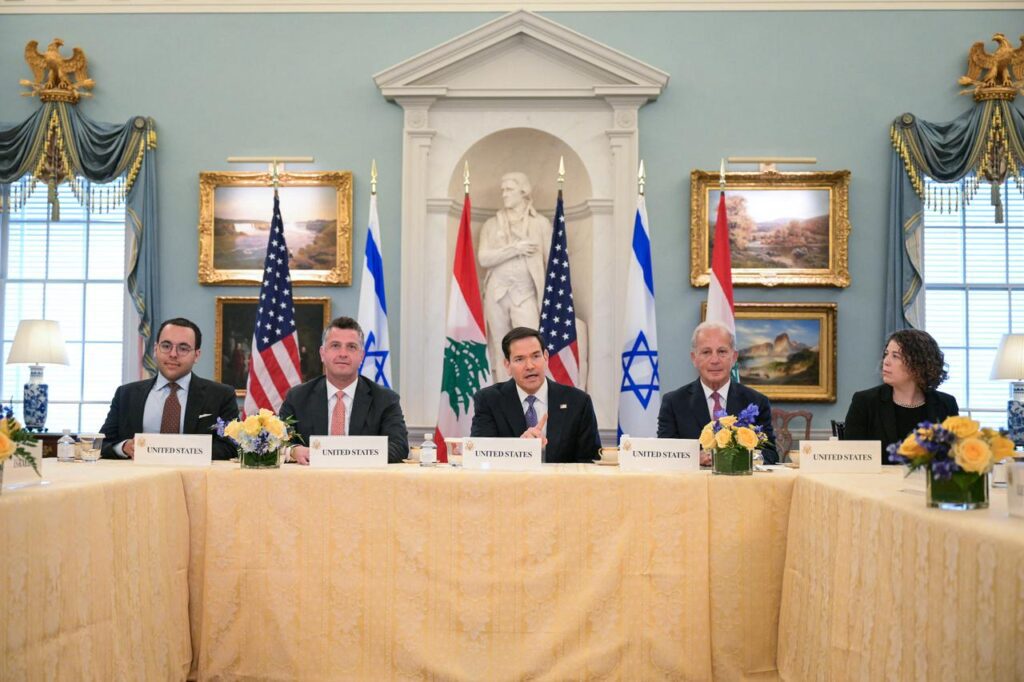
Lebanon and Israel have entered direct diplomatic talks for the first time in more than three decades, aiming to reduce tensions and end ongoing clashes with the Iran-backed Hezbollah group. The United States facilitated the meeting, with Secretary of State Marco Rubio calling it a historic opportunity to curb Hezbollah’s influence. Both sides agreed to move forward with structured negotiations at a mutually decided time and place. Israel emphasized its goal of disarming non-state militant groups, while Lebanon pushed for an immediate ceasefire. Despite the absence of formal diplomatic ties, the talks signal a rare moment of engagement between the two nations.
The conflict has caused significant devastation since Israel launched military operations in Lebanon on 2 March, shortly after joint US-Israeli strikes in Iran. More than 2,000 people have lost their lives, and nearly a million have been displaced due to the escalating violence. During the talks in Washington, Hezbollah continued its attacks, claiming responsibility for multiple strikes on Israeli forces and territories. Northern Israel experienced frequent drone and rocket alerts throughout the day. Israel maintains that its operations focus on dismantling Hezbollah’s military capabilities and preventing further threats.
Officials from the United States confirmed that both countries have agreed to work toward reducing Hezbollah’s influence in the region. Lebanon urged for concrete steps to address its worsening humanitarian crisis alongside a ceasefire agreement. At the same time, the US reiterated its support for Israel’s right to defend itself against ongoing attacks. Leaders acknowledged that the negotiation process would take time and require sustained effort. The talks represent a starting point rather than an immediate resolution to the conflict.
Israel-Lebanon hold first talks in decades
Lebanese President Joseph Aoun expressed hope that these discussions would ease the suffering of the Lebanese population, especially those in the southern regions. He stressed that the Lebanese armed forces should hold sole responsibility for maintaining security in the country. However, the government faces limitations in confronting Hezbollah, which remains a powerful and influential force. The group maintains strong control in southern Lebanon and holds political representation within the government. These internal dynamics complicate efforts to reach a unified national position.
Hezbollah leaders have openly rejected any agreements reached during the Washington talks, stating they do not consider themselves bound by such decisions. The group continues to assert its independence and military strength despite international pressure. Its involvement in the broader conflict between Israel and Iran has further strained Lebanon’s internal stability. Meanwhile, parallel discussions between the US and Iran have introduced additional complexity, with Iran pushing for Lebanon’s inclusion in ceasefire negotiations. Both the US and Israel, however, have resisted expanding the scope of those talks.
The ongoing conflict has triggered a severe humanitarian crisis, displacing large populations and causing widespread destruction. Communities in both Lebanon and northern Israel continue to face daily threats from cross-border attacks. While diplomatic efforts have resumed after decades, significant challenges remain before any lasting peace can be achieved. The situation demands coordinated international engagement and sustained dialogue. The outcome of these talks could shape the region’s stability in the coming months.
Also Read: Apple Inc. Tests New AI Smart Glasses Designs for 2026 Launch

More Stories
CJP आंदोलन पर हरीश साल्वे का बड़ा दावा, बोले- भारत में नेपाल और बांग्लादेश जैसे हालात बनाने की कोशिश
दिल्ली में विपक्ष के मार्च के बीच BJP का प्रदर्शन, कांग्रेस सांसद पर यौन शोषण का गंभीर आरोप, बांसुरी स्वराज ये बोलीं
राहुल के प्रदर्शन से पहले दिल्ली पुलिस अलर्ट, सुरक्षा के किए कड़े इंतजाम