





Indus Waters Treaty: Everything You Need to Know
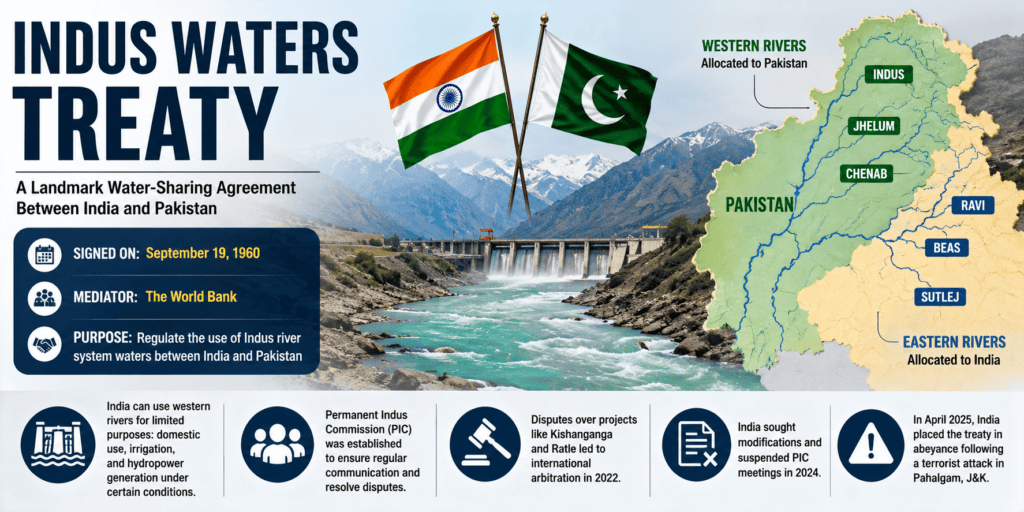
The Indus Waters Treaty stands as one of the most important water-sharing agreements between India and Pakistan. The two countries signed the treaty on September 19, 1960, with the World Bank facilitating the negotiations. For decades, the agreement continued despite political tensions and armed conflicts. It established a structured framework for sharing the waters of the Indus River system. Even today, it remains a significant topic for current affairs and competitive examinations.
Also Read : Monsoon Havoc: Flood Hits Manali-Leh Highway, Cloudbursts Disrupt Doda
How Does the Indus Waters Treaty Divide River Waters?
The treaty clearly divided the six rivers of the Indus basin between the two countries. Pakistan received the rights to the western rivers—Indus, Jhelum, and Chenab—while India gained control over the eastern rivers—Ravi, Beas, and Sutlej. At the same time, the agreement allowed India to use the western rivers for domestic needs, irrigation, and hydropower generation under specific conditions. It also created the Permanent Indus Commission to promote cooperation and resolve disputes through regular dialogue.
In recent years, disagreements over India’s hydroelectric projects increased tensions between the two nations. Pakistan objected to projects such as Kishanganga and Ratle, leading both countries to seek international mechanisms for dispute resolution in 2022. Later, India proposed changes to certain provisions of the treaty, but Pakistan rejected the proposal. India also halted meetings of the Permanent Indus Commission in 2024, adding to the growing diplomatic strain.
Why Has the Indus Waters Treaty Returned to the Spotlight?
The situation changed significantly in April 2025 after a deadly terrorist attack on civilians in Pahalgam, Jammu and Kashmir. Following the incident, the Government of India announced that it had placed the Indus Waters Treaty in abeyance. This decision marked the first major interruption to the agreement since its signing in 1960. The move attracted international attention because the treaty had survived several wars and decades of political tensions.
The Indus Waters Treaty continues to hold immense strategic, political, and environmental importance. It demonstrates how neighboring countries can establish long-term agreements to manage shared natural resources. At the same time, recent developments show how security concerns can affect international treaties. Understanding the treaty’s history, river allocation, and current challenges helps students prepare for competitive examinations and stay informed about important global and regional affairs.
Also Read : Monsoon Havoc: Flood Hits Manali-Leh Highway, Cloudbursts Disrupt Doda




More Stories
CJP आंदोलन पर हरीश साल्वे का बड़ा दावा, बोले- भारत में नेपाल और बांग्लादेश जैसे हालात बनाने की कोशिश
दिल्ली में विपक्ष के मार्च के बीच BJP का प्रदर्शन, कांग्रेस सांसद पर यौन शोषण का गंभीर आरोप, बांसुरी स्वराज ये बोलीं
राहुल के प्रदर्शन से पहले दिल्ली पुलिस अलर्ट, सुरक्षा के किए कड़े इंतजाम