



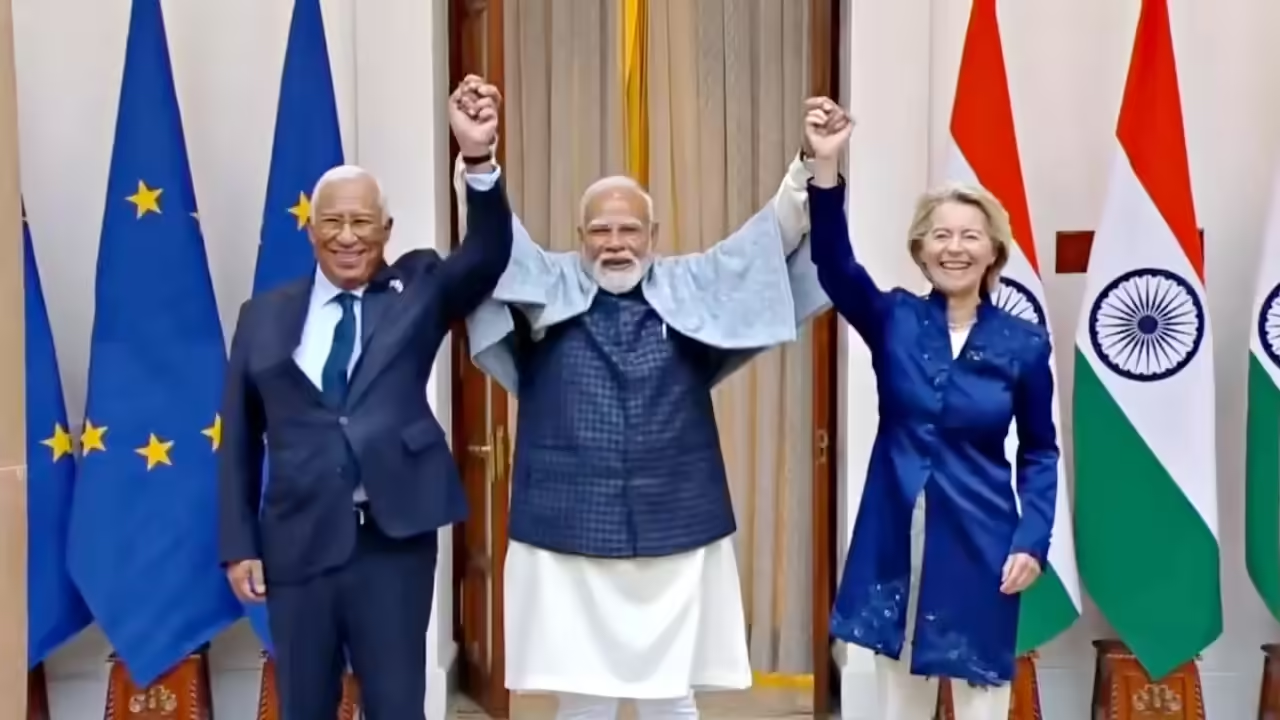
India and the European Union have officially signed a landmark Free Trade Agreement (FTA), aimed at significantly boosting bilateral trade. Under the deal, tariffs on more than 96 per cent of EU exports to India will be eliminated or reduced. Because of its scale and impact, the agreement is being described as the “mother of all trade deals”.
Prime Minister Narendra Modi confirmed the signing on Tuesday. Soon after, the deal drew global attention, especially from the United States. This came as US Treasury Secretary Scott Bessent repeated allegations linking India’s oil trade with Russia to the Ukraine war. Notably, this is the largest trade agreement ever concluded by both India and the EU.
Why the India-EU trade deal matters
Importantly, this agreement ends nearly nine years of stalled negotiations that resumed in June 2022. Once implemented, it will create a combined market of nearly two billion people and account for around 25 per cent of global GDP. At present, the EU is India’s biggest trading partner, with goods trade worth $135 billion in 2023–24.
Moreover, the deal comes at a time when countries are seeking to reduce supply-chain risks amid global trade disruptions. According to the European Union, tariffs on 96.6 per cent of EU goods exports will be cut or removed. As a result, European exporters are expected to save nearly €4 billion annually in duties.
In addition, the agreement offers EU firms a competitive edge in India. It provides easier access for service providers in sectors such as finance and maritime services. It also simplifies customs procedures, strengthens intellectual property protection, and includes a dedicated chapter for small businesses.
Also Read : IND vs NZ 3rd T20I: Early damage to NZ sets the stage for Abhishek’s takeover
What gets cheaper for Indian consumers
Meanwhile, Indian consumers are likely to benefit from lower prices on several European products. For instance, import duties on EU cars will be reduced gradually from 110 per cent to as low as 10 per cent. Similarly, tariffs on wines will fall from 150 per cent to about 20 per cent over time.
Furthermore, duties on processed foods like pasta and chocolates, currently at 50 per cent, will be fully eliminated. Several EU agri-food products are also set to become cheaper in the Indian market.
At the same time, the agreement is expected to help India’s labour-intensive sectors such as textiles, leather, chemicals, electronics and jewellery. These sectors do not directly compete with European manufacturers. Consequently, Indian exporters will gain relief from competition posed by duty-free imports from least-developed countries like Bangladesh.
Finally, Prime Minister Modi said the deal reflects a strong partnership between two major democratic economies. He added that it will create new opportunities for people on both sides. EU Commission President Ursula von der Leyen also welcomed the pact, calling it historic and saying it marks just the beginning of deeper cooperation.
Also Read : Trump Shifts Immigration Leadership After Minneapolis Shooting



More Stories
AIIMS जोधपुर से पढ़ाई, UPSC में टॉप कर बने मिसाल अनुज अग्निहोत्री
IAF Fighter Jet Crash in Karbi Anglong Kills Two Pilots
AP considers social media ban for minors following Karnataka