





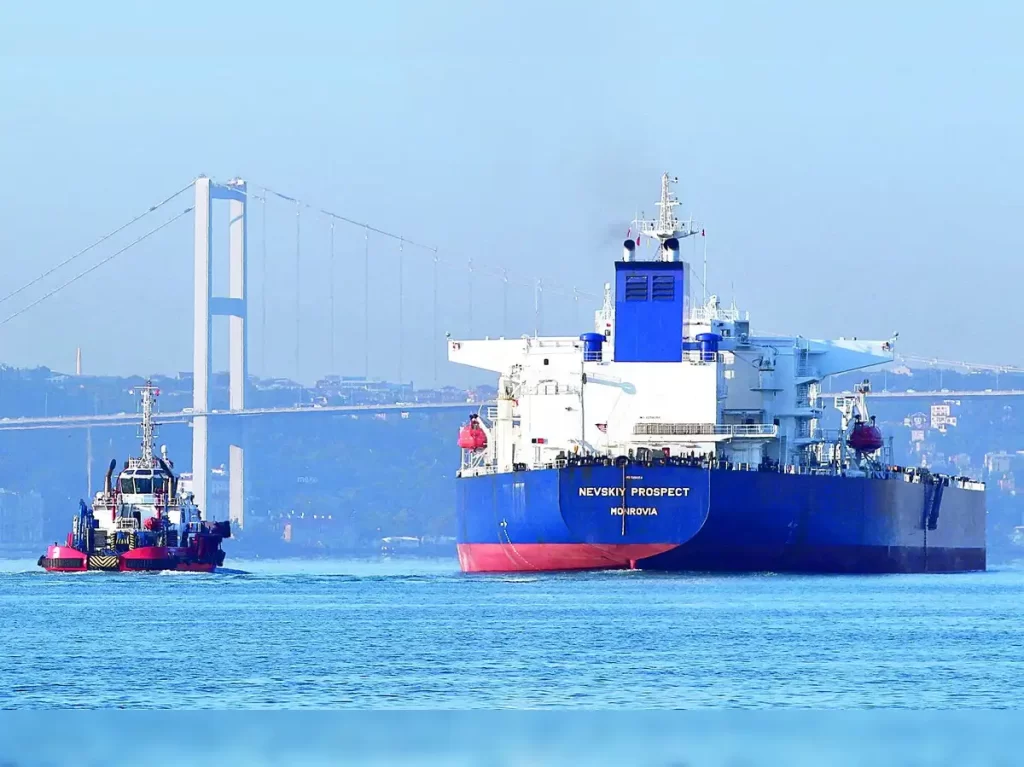
The United States seized the oil tanker now known as Marinera in the North Atlantic on Wednesday after pursuing it for more than two weeks. The vessel, earlier called Bella 1, tried to evade U.S. sanctions on oil shipments linked to Venezuela, Iran and Russia.
The U.S. military said it seized the ship for violating American sanctions. The Coast Guard boarded the tanker after tracking it across several regions, even after Russia deployed a naval vessel to escort it.
U.S. officials described the operation as the first seizure of a Russian-flagged vessel by the United States in recent years.
The tanker began its journey in Iran and left the Gulf of Oman in November. It crossed the Suez Canal and the Strait of Gibraltar before entering the Atlantic Ocean in early December. The vessel headed toward Venezuela to collect oil while Washington intensified enforcement of sanctions on Venezuelan energy exports.
On December 21, the U.S. Coast Guard stopped the tanker in the Caribbean Sea while it still operated under the name Bella 1. U.S. authorities said they held a seizure warrant because the ship did not fly a valid national flag. The crew refused to allow boarding and sailed the tanker into the Atlantic, where U.S. forces continued to monitor it.
During the pursuit, the crew changed the vessel’s identity. They painted a Russian flag on the hull because international law treats ships as protected by the country whose flag they fly. U.S. officials rejected the move, saying the ship did not display a valid flag when authorities first approached it.
Soon after, the crew renamed the ship Marinera and registered it in Russia’s shipping registry, listing Sochi on the Black Sea as its home port.
Russia later made a diplomatic request asking the United States to halt the pursuit. Reports said Russian officials delivered the request to the U.S. State Department late on New Year’s Eve. Despite the appeal, U.S. authorities continued tracking the vessel and accused it of transporting Iranian oil.
As Washington increased pressure on Venezuelan oil exports, the tanker reversed its route in mid-December and headed back toward Europe.How the tanker repainted its flag, changed its name and sought Russian protection before the U.S. seizure
Western surveillance aircraft flew over the vessel in the hours before the operation, including planes from U.S. bases in Iceland and surveillance aircraft operated by the United Kingdom.
The U.S. Coast Guard finally boarded and seized the tanker in the North Atlantic on Wednesday. The U.S. military confirmed the action and said the ship breached sanctions.
Russia’s Ministry of Transport said the UN Convention on the Law of the Sea prohibits the use of force against vessels registered under another state’s jurisdiction.
How the tanker repainted its flag, changed its name and sought Russian protection before the U.S. seizure
Authorities believe the tanker belongs to a so-called “shadow fleet” that transports oil for Russia, Iran and Venezuela. The United States sanctioned the vessel in 2024 over allegations that it carried illicit cargo for a Hezbollah-linked company and that a Turkey-based firm with alleged ties to Iran’s Revolutionary Guards owned it.
Although the tanker carried no cargo at the time of seizure, Moscow’s diplomatic and military efforts to protect it raised questions, especially as tensions between Russia and the United States remain high.
Read Also: Infosys Partners with AWS to Accelerate Adoption of Generative AI
Bengaluru-based IT major Infosys on Wednesday announced a strategic partnership with Amazon Web Services (AWS) to accelerate enterprise adoption of generative artificial intelligence (AI). The company disclosed the development through a stock exchange filing on January 7.
Under the agreement, Infosys will integrate its AI-first platform, Infosys Topaz, with Amazon Q Developer, AWS’s generative AI-powered assistant. The collaboration reflects a broader push by global IT firms to increase investments in AI and drive future growth.
Infosys said the partnership will strengthen its internal operations and help deliver advanced AI-driven solutions to clients across sectors such as manufacturing, telecommunications, financial services and consumer goods.
Infosys is expanding the use of Infosys Topaz to drive AI-powered transformation across software development, human resources, recruitment, sales and vendor management. The company also aims to build an AI-first ecosystem through this collaboration so that enterprises can manage business transformation with greater agility and accuracy.
Read Also: Heated Arguments Erupt in Supreme Court Hearing Over Stray Dog Sexual Abuse Cases and Animal Behavior
During the stray dog hearing on Wednesday, the Supreme Court heard sharp arguments on public safety and animal welfare. Senior advocate Kapil Sibal, representing the petitioners, argued that animals do not attack when people treat them with compassion.
The court, however, rejected this as a general rule. While hearing the matter, the Supreme Court said people cannot predict an animal’s behaviour at any given moment. The judges made this observation as lawyers defended street dogs by claiming empathy prevents aggression.
Court Questions Unpredictability of Stray Dogs
Justice Vikram Nath said the issue goes beyond dog bite incidents. He stated that stray dogs also create fear and a constant sense of insecurity on public roads. He asked how citizens can distinguish between calm and aggressive dogs at different times of the day.
Justice Nath further said that people cannot judge a dog’s mood, especially during early hours. He warned that this unpredictability creates serious public safety risks.
Meanwhile, Kapil Sibal proposed a solution. He said authorities should alert animal welfare centres when a dog becomes aggressive. These centres can sterilise the dog and release it later.




More Stories
कौन हैं मोजतबा ख़ामेनेई, जिन्हें अगल सुप्रीम लीडर माना जा रहा है
RSP Leads Nepal Election 2026
AIIMS जोधपुर से पढ़ाई, UPSC में टॉप कर बने मिसाल अनुज अग्निहोत्री