




Early counting trends in Bihar placed the NDA far ahead, giving the alliance a strong start as postal ballots pushed it over the majority mark quickly. JD(U) and the BJP were running almost neck-and-neck, creating suspense over which party would emerge as the dominant force. The Mahagathbandhan lagged behind from the beginning, with Congress showing particularly weak performance. Prashant Kishor’s Jan Suraaj Party, once thought to be a potential disruptor, failed to gain ground, while AIMIM managed to secure a few early leads and outperform other smaller players.
Also read: Sources: Mohsin Naqvi Presents Trophy to UAE Board as BCCI Considers Impeachment Action
NDA Gains Early Momentum in Bihar Counting
JD(U) appeared to be leading within the NDA, slightly ahead of the BJP as counting progressed. Smaller allies like LJP(RV) and HAM picked up leads that strengthened the coalition further. The Mahagathbandhan relied heavily on the RJD, which still trailed expectations, while Congress struggled yet again. In contrast, Left parties performed modestly well, with CPI and CPI(ML) gaining a handful of leads. Tej Pratap Yadav’s early advantage in Mahua lifted his new party’s morale, while Tejashwi Yadav surprisingly trailed in the family stronghold of Raghopur.
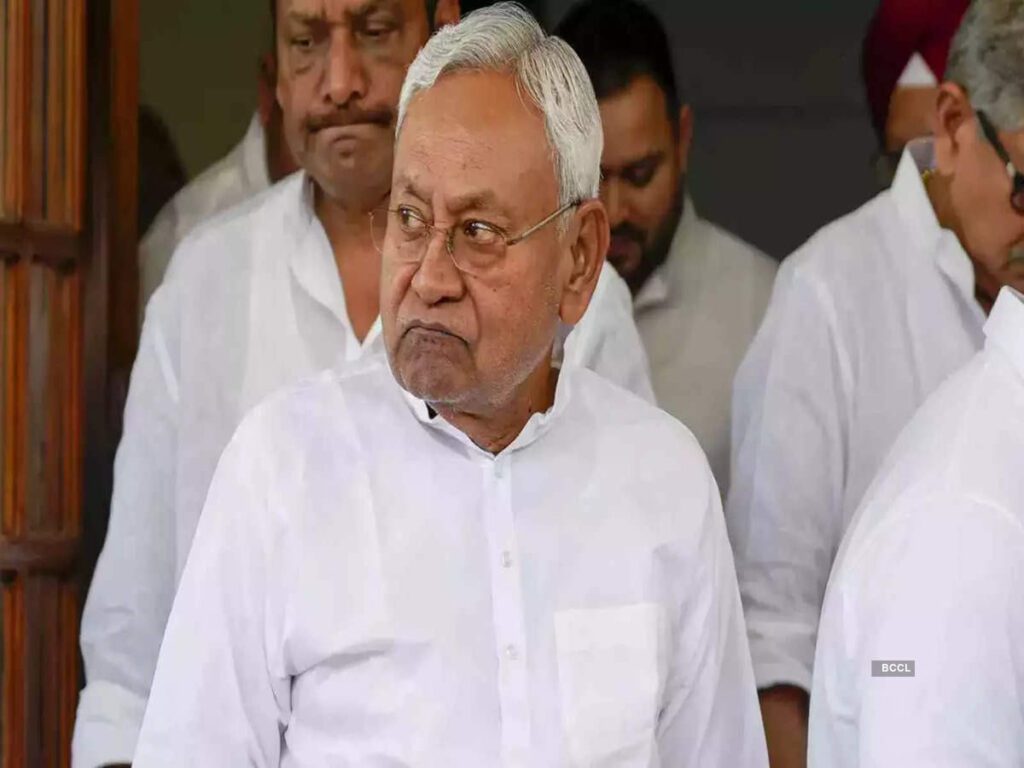
Bihar witnessed a record voter turnout, which analysts believe strongly influenced the direction of the election. Historically, higher participation has coincided with shifts in political mood, and this election seemed no different. Women played a decisive role by turning out in greater numbers than men, especially in the second phase. Many credited Nitish Kumar’s women-centric welfare schemes for this surge. Exit polls had already predicted an NDA edge, and the early counting trends reinforced the idea that Nitish Kumar was likely to secure yet another term as chief minister.
Also read: Dhanashree Verma Responds to Chahal’s Denial, Says She Caught Him Cheating Early On
Key Contests and Voter Turnout Shape Results
Combined exit polls projected a comfortable victory for the NDA, placing them well beyond the majority mark. The Mahagathbandhan was expected to fall short of the numbers needed to mount a serious challenge. Jan Suraaj, despite significant pre-election attention, seemed unable to convert visibility into seats. Several high-profile contests drew statewide attention, including Tejashwi Yadav in Raghopur and Tej Pratap in Mahua. Races involving leaders like Samrat Choudhary and Vijay Kumar Sinha also shaped the political narrative, with each constituency contributing to the emerging electoral pattern.
As trends solidified, it became increasingly evident that the NDA was heading toward a decisive victory. Nitish Kumar stood poised to return as chief minister, supported by a well-coordinated campaign and the boosted performance of alliance partners. The BJP’s push for parity with JD(U) appeared to have worked, reflecting its expanding influence in the state. Meanwhile, RJD and Congress confronted disappointing numbers, prompting renewed questions about their organisational strength. With youth and women voting in large numbers, the overall turnout signaled a clear shift that benefited the ruling coalition.
Also read: Sources: Mohsin Naqvi Presents Trophy to UAE Board as BCCI Considers Impeachment Action



More Stories
Rahul Gandhi’s Convoy Cars Collide With Ambulance on UP Expressway
Jio Platforms IPO Sets Global Record With Over 1 Crore Applications
Maharashtra Man Chased, Run Over and Beaten to Death on Busy Road; CCTV Captures Brutal Murder