




The Delhi government placed student welfare at the core of its 2026-27 budget and rolled out major initiatives to expand educational access and digital learning. By announcing free bicycles for schoolgirls and laptops for high-achieving students, the government highlighted its focus on inclusive growth. Chief minister Rekha Gupta presented a ₹1.03 lakh crore budget in the Assembly, calling it a “green budget” and allocating over 21% of the outlay to environmental programmes.
The government committed to providing free bicycles to nearly 1.3 lakh Class IX girls studying in government schools, setting aside ₹90 crore for the scheme. It also earmarked ₹10 crore to distribute laptops to meritorious students to boost digital literacy and academic performance. Education received the largest sectoral allocation of over ₹19,000 crore, including funds for new school buildings, classroom expansion, smart-class setups, and technical education. These measures reflect the government’s push to upgrade learning infrastructure and outcomes.
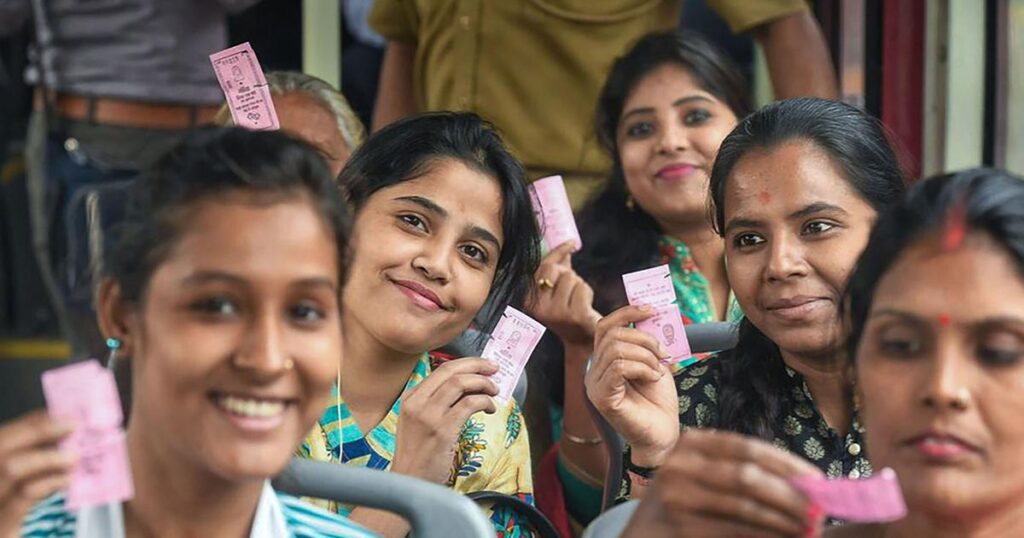
The budget expanded welfare initiatives that support families and ease daily expenses. The government allocated ₹450 crore for free bus travel for women and transgender persons, a move expected to directly help students and reduce commuting costs. Other welfare provisions include ₹260 crore for free LPG cylinders and ₹128 crore for the Lakhpati Beti Yojana. Overall, the government earmarked ₹62,550 crore for schemes and projects and ₹41,150 crore for revenue and capital expenditure.
Also Read : Girls Lead the Way with 94.90 Percent Pass Rate, Surpassing Boys
Delhi’s Revenue Plans and Sector-Wise Allocations
Officials estimated that the government would mobilise ₹43,500 crore from GST and ₹74,000 crore from its own tax revenues, supplemented by centrally sponsored schemes and market borrowings. Sector-wise, the budget allocated ₹13,034 crore for health, ₹12,613 crore for transport and roads, ₹11,572 crore for housing and urban development, ₹10,537 crore for social security, and ₹9,000 crore for water and sanitation.
In infrastructure development, the government set aside ₹11,266 crore for the Municipal Corporation of Delhi, ₹5,921 crore for the Public Works Department, and ₹7,887 crore for urban development. The plans include the redevelopment of 750 km of roads and an ₹800 crore allocation for unauthorised colonies. The health sector received boosts such as ₹150 crore for ICU and hospital projects, ₹787 crore for medicines, ₹202 crore for the expansion of the Ayushman scheme, and a proposal to set up more than 750 new health centres.
For transport, the government assigned ₹8,374 crore to expand the public transport network and introduce 6,130 electric buses, aiming to raise the total fleet to 7,500 by 2027. Metro expansion received ₹2,885 crore, and the EV policy got ₹200 crore. To improve governance and employment, the government planned 13 mini secretariats, digitisation of land records, MSME training for 32,000 enterprises, and new semiconductor and drone policies. Officials said the budget integrates welfare, infrastructure, and environmental goals to build a more accessible and future-ready ecosystem for Delhi’s youth.
Also Read : US Iran Back Channel Talks: Egypt, India, Turkey Role



More Stories
Jio Platforms IPO Sets Global Record With Over 1 Crore Applications
Jio Platforms IPO में निवेशकों की भारी दिलचस्पी, तीसरे दिन सब्सक्रिप्शन 6 गुना के पार पहुंचा
अरुणाचल सीमा पर चीन की नई चाल, कई जगह तनाव बढ़ा