





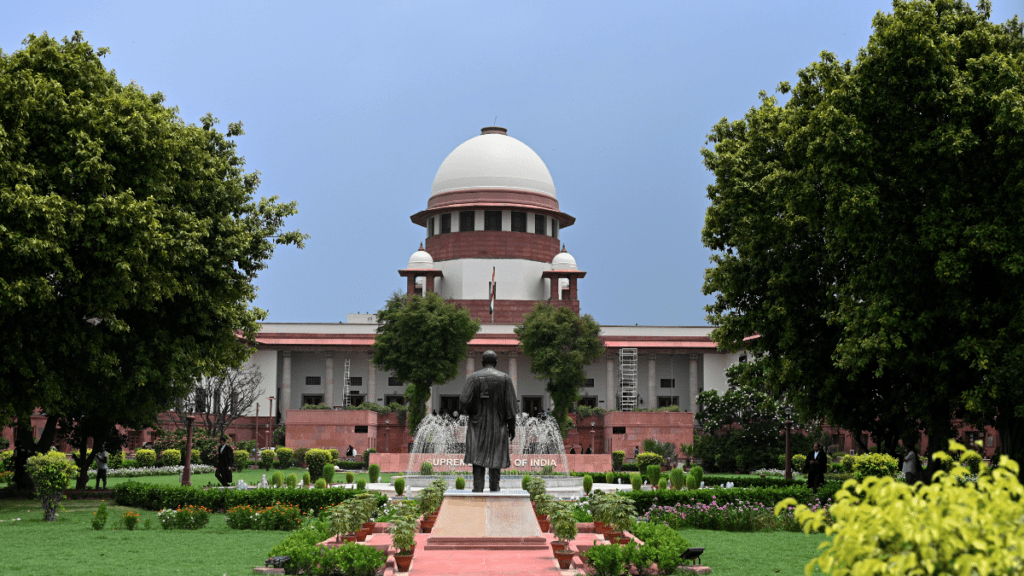
Chief Justice of India Surya Kant strongly objected to portions in a newly released NCERT Class 8 social science textbook that discuss alleged corruption in the judiciary, stating that he would not allow any attempt to tarnish the institution’s integrity. He emphasized that protecting the credibility of the judicial system remains a priority and assured members of the legal fraternity that appropriate steps would follow. Reports highlighted that the textbook described judicial corruption and case backlogs as major systemic challenges, which triggered concern among several stakeholders.
Also Read: Trump Administration Considers Forcing Banks to Verify Customers’ Citizenship
Legal Fraternity Flags NCERT Issue
Senior Advocate Kapil Sibal, accompanied by Dr Abhishek Manu Singhvi, formally raised the issue before the Chief Justice, expressing deep concern that young students were being taught about corruption within the judiciary without broader institutional context. They argued that the selective focus created an unfair perception and questioned why similar references to corruption in politics, bureaucracy, or other public institutions did not appear in the material. Their intervention reflected growing unease within both the Bar and the Bench.
Several members of the legal community voiced their concerns publicly and urged education authorities to review the chapter carefully to ensure that it presents a balanced and constitutionally sound perspective. They emphasized that while academic discussions on institutional challenges remain important, textbook content must avoid creating sweeping generalisations that could influence young minds without adequate context.
Court Initiates Action
Responding to the concerns, the Chief Justice confirmed that he had already taken cognisance of the matter and initiated suo motu proceedings, assuring that the judiciary would address any content that undermines constitutional values. He stated that several High Court judges had also expressed discomfort over the chapter’s framing and reiterated that the law would take its course regardless of the source involved Justice Bagchi additionally remarked that the textbook appeared to overlook constitutional integrity within its broader structure, further intensifying the debate around academic responsibility and institutional respect.
Meanwhile, the development has sparked wider discussion about how educational material should address sensitive institutional issues while maintaining balance, accuracy, and constitutional perspective. In addition, the court will examine the academic context, intent, and drafting process behind the chapter to determine whether it maintains constitutional balance and institutional neutrality. The bench may also seek responses from the concerned authorities to clarify how officials approved the content and whether they consulted subject experts and legal scholars before publication.
Also Read: AI Disruption of Indian IT: How Anthropic Surpassed TCS, Infosys, Wipro and HCL




More Stories
केरलम: ब्रेकअप से नाराज प्रेमी ने प्रेमिका की पत्थर से कुचलकर हत्या की, शव जलाया
3 साल की बेटी पर झपटा तेंदुआ तो पिता बना ढाल, पीछे से दबोच लिया; ड्रोन और पिंजरे भी रहे बेअसर
Gold Prices May Fall This Diwali as Diamonds Gain Popularity in India