





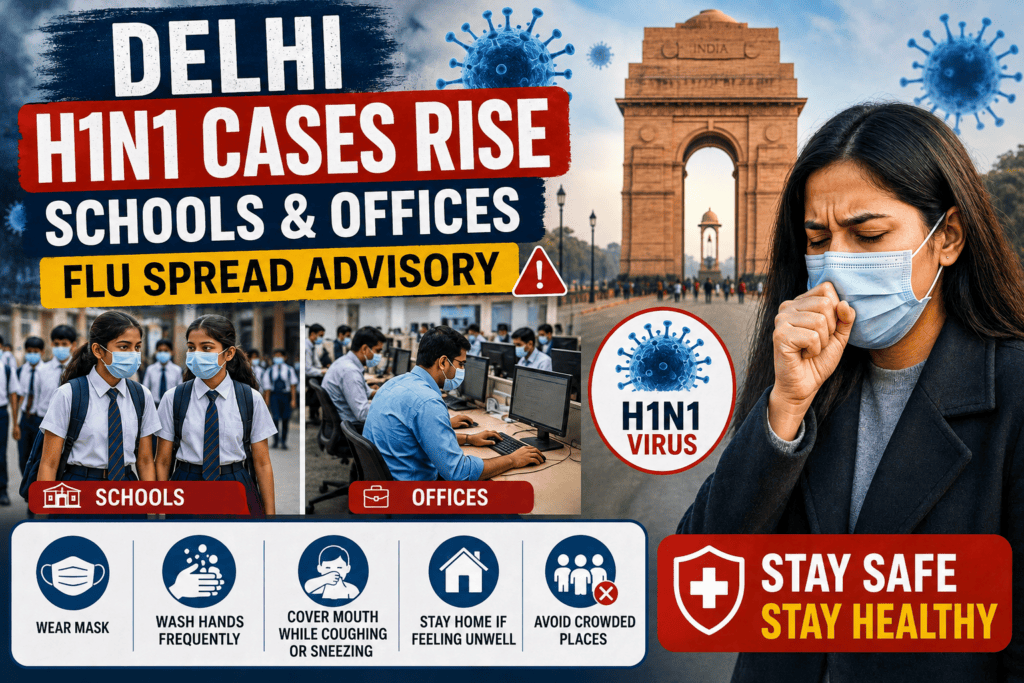
Delhi has strengthened precautions against seasonal influenza, including H1N1, as cases increase in the capital and other parts of the country. The Directorate of Education has directed government and private schools to raise awareness among students and staff and adopt a “Healthy School-Healthy Community” approach. Schools will promote respiratory hygiene and preventive measures through classroom discussions, morning assemblies, notice boards, parent communication and digital delhi platforms. Delhi Education Minister Ashish Sood has urged people not to panic, saying the situation does not indicate an emergency. He has asked residents to remain alert and follow health guidelines. Health officials have listed cough, sore throat, fever, chills, headache, body ache, fatigue and breathing difficulties among the symptoms associated with seasonal flu. The advisory focuses on preparedness, awareness and timely preventive action to control the spread of infection.
Why Crowded Schools and Offices Can Accelerate Flu Transmission
The Directorate of Education has asked schools to teach students and staff basic hygiene practices to prevent influenza transmission. Students and employees should cover their nose and mouth while coughing or sneezing and dispose of used tissues properly. Authorities have also advised people to avoid touching their eyes, nose and mouth unnecessarily because this habit can transfer germs. Regular handwashing can further reduce the risk of infection, especially after coughing, sneezing or touching shared objects. The education department has also instructed schools to discourage self-medication. Students and staff should not take antibiotics or other medicines without medical advice. Schools will also extend awareness campaigns beyond classrooms by using parent communication channels and digital platforms. These measures can help families understand basic precautions and encourage children to follow healthier habits. Consistent hygiene practices can reduce opportunities for influenza to spread among students, teachers and their families.
Also read :NIT Durgapur Students Dance to ‘Chikni Chameli’, Professor Reacts: ‘Is This a Joke’
Schools and offices often bring large groups of people together indoors for several hours, creating conditions that can support flu transmission. Infected people can release respiratory droplets and smaller particles when they cough, sneeze, talk or breathe. These particles can reach others, particularly in crowded classrooms, meeting rooms and shared workplaces. Students frequently interact with classmates during lessons, games and group activities. Office employees also share workspaces, attend meetings and use common facilities throughout the day. Poor ventilation can increase the risk because fresh air helps reduce the concentration of respiratory particles indoors. Closed windows and inadequate airflow can allow these particles to remain in the surrounding air for longer periods. Schools and offices can reduce this risk by improving ventilation and limiting overcrowding. Better air circulation can help reduce exposure and create a safer indoor environment for students, teachers and employees.
Delhi Schools Step Up Hygiene Measures Amid Rising H1N1 Cases
Frequent contact with shared objects can also create additional opportunities for infection. Students and teachers regularly touch desks, classroom equipment, door handles and other commonly used surfaces. Employees frequently handle keyboards, phones, lift buttons, desks and office doors. People can transfer germs from these surfaces to their eyes, nose or mouth when they touch their faces. Close contact between people can further increase transmission, especially when they spend several hours together. Children may also touch their faces frequently and may not always follow hygiene practices correctly. Another major concern arises when students or employees attend school or work despite having flu symptoms. Infected individuals can expose classmates and colleagues and potentially spread the virus to their families. People who develop flu-like symptoms should therefore stay home when possible and limit close contact with others until they recover.
Schools and workplaces can adopt several simple measures to reduce the spread of seasonal influenza. People with symptoms should stay home when possible and avoid unnecessary close contact with others. Regular handwashing, proper cough and sneeze etiquette, improved ventilation and frequent cleaning of high-touch surfaces can help reduce exposure. Schools can reinforce these habits through morning assemblies, classroom activities and regular communication with parents. Offices can also encourage employees to work from home or take leave when they develop flu symptoms. Health authorities recommend influenza vaccination as another important measure to lower the risk of infection and serious complications. People should also avoid unnecessary close contact with individuals who have flu-like symptoms during periods of increased activity. Anyone experiencing concerning or worsening symptoms should seek medical advice. Authorities continue to promote awareness and preparedness while urging residents to take sensible precautions instead of panicking.




More Stories
Jio Platforms IPO Sets Global Record With Over 1 Crore Applications
Maharashtra Man Chased, Run Over and Beaten to Death on Busy Road; CCTV Captures Brutal Murder
Jio Platforms IPO में निवेशकों की भारी दिलचस्पी, तीसरे दिन सब्सक्रिप्शन 6 गुना के पार पहुंचा