



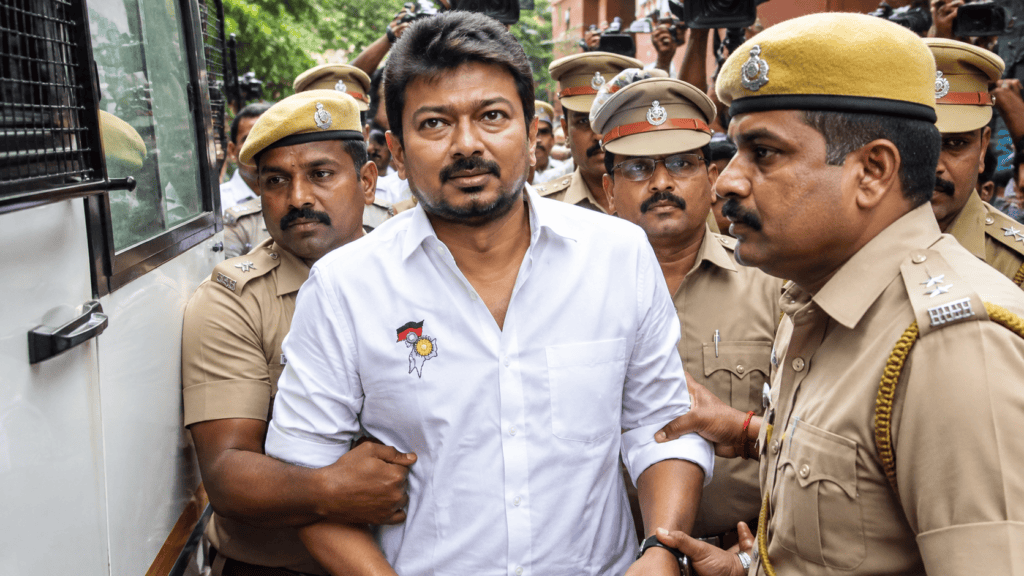
Tamil Nadu Police detained Leader of Opposition Udhayanidhi Stalin on Tuesday after registering a case over remarks made during a protest concerning the Cauvery water dispute. The comments, widely interpreted by critics as referring to actor Trisha through a double entendre, triggered a political storm across the state. Soon after the FIR was filed, police personnel reached Stalin’s residence in Chennai and took him into custody. Stalin later approached the Madras High Court seeking anticipatory bail, with the matter scheduled for hearing later in the day. While being escorted by police, he defended his speech, insisting that he had not named anyone except Chief Minister Vijay and maintained that he had committed no wrongdoing. He described the police action as politically motivated and urged that the judiciary should decide the matter. The detention immediately intensified political tensions and drew widespread public attention.
Also Read : U.S. Launches More Strikes on Iran as Tensions Rise; Bangkok Pub Fire Kills 27
Tamil Nadu Police Detain Udhayanidhi Stalin After Controversial Remarks During Cauvery Protest
The controversy began during a public meeting on the Cauvery issue, where Udhayanidhi Stalin criticized the Tamil Nadu government over water-sharing concerns. During his address, members of the audience shouted actor Trisha’s name, prompting Stalin to respond with remarks that opponents described as vulgar and disrespectful. The comments quickly spread across social media, attracting criticism from several political parties and women’s groups. Authorities subsequently registered an FIR under multiple provisions of the Bharatiya Nyaya Sanhita, including charges related to insulting the modesty of a woman, intentional insult, criminal conspiracy, criminal intimidation, and promoting enmity. The case also invoked provisions of the Tamil Nadu Prohibition of Harassment of Women Act and the Information Technology Act. The legal action transformed the political controversy into a criminal investigation, placing Stalin under increasing legal and political pressure.
The ruling TVK launched a strong attack against Stalin, accusing him of lowering the standard of public discourse through inappropriate language. Senior party leaders argued that elected representatives should maintain dignity while addressing public gatherings and condemned the remarks as offensive to women. BJP leaders also criticized the speech, demanding strict legal action and an unconditional public apology to actor Trisha. Several opposition leaders described the comments as unacceptable and urged political leaders to exercise greater responsibility during public speeches. They argued that personal remarks targeting women have no place in democratic politics and weaken public confidence in elected representatives. The controversy also revived memories of earlier political disputes involving comments about actor Trisha, highlighting the recurring debate over respectful political communication in Tamil Nadu.
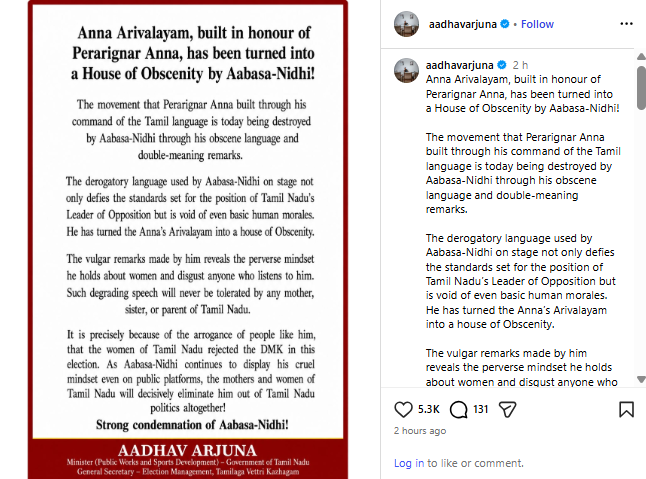
DMK Defends Leader as TVK and BJP Intensify Criticism Over Trisha Remark
The DMK strongly defended Udhayanidhi Stalin and accused the state government of using police action to silence the opposition before the upcoming Assembly session. Party leaders claimed the controversy was deliberately amplified to divert public attention from the Cauvery water dispute and the concerns of farmers. They argued that political opponents had selectively interpreted Stalin’s speech for electoral advantage rather than addressing the state’s pressing issues. Senior DMK leaders described the detention as an act of political vendetta intended to prevent Stalin from raising uncomfortable questions inside the Assembly. They insisted that democratic institutions should protect free political expression while allowing the courts to examine the legal aspects of the case. The party maintained that the government’s response reflected political insecurity rather than genuine concern.
The incident has intensified political confrontation in Tamil Nadu, with legal proceedings and public debate expected to continue in the coming days. The Madras High Court’s decision on Stalin’s anticipatory bail plea could significantly influence the next stage of the case. Meanwhile, the controversy has shifted public attention from the Cauvery water issue to broader questions surrounding political accountability, freedom of speech, and respectful public conduct. Political observers believe the dispute may shape campaign narratives ahead of future elections as parties continue exchanging allegations. The case also highlights the growing impact of public speeches, social media discussions, and legal scrutiny on political leaders. As investigations continue, all sides are preparing for both courtroom proceedings and an increasingly intense political battle across Tamil Nadu.
Also Read : U.S. Launches More Strikes on Iran as Tensions Rise; Bangkok Pub Fire Kills 27

More Stories
Jio Platforms IPO Sets Global Record With Over 1 Crore Applications
Maharashtra Man Chased, Run Over and Beaten to Death on Busy Road; CCTV Captures Brutal Murder
Jio Platforms IPO में निवेशकों की भारी दिलचस्पी, तीसरे दिन सब्सक्रिप्शन 6 गुना के पार पहुंचा