
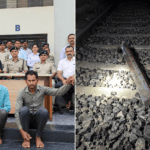



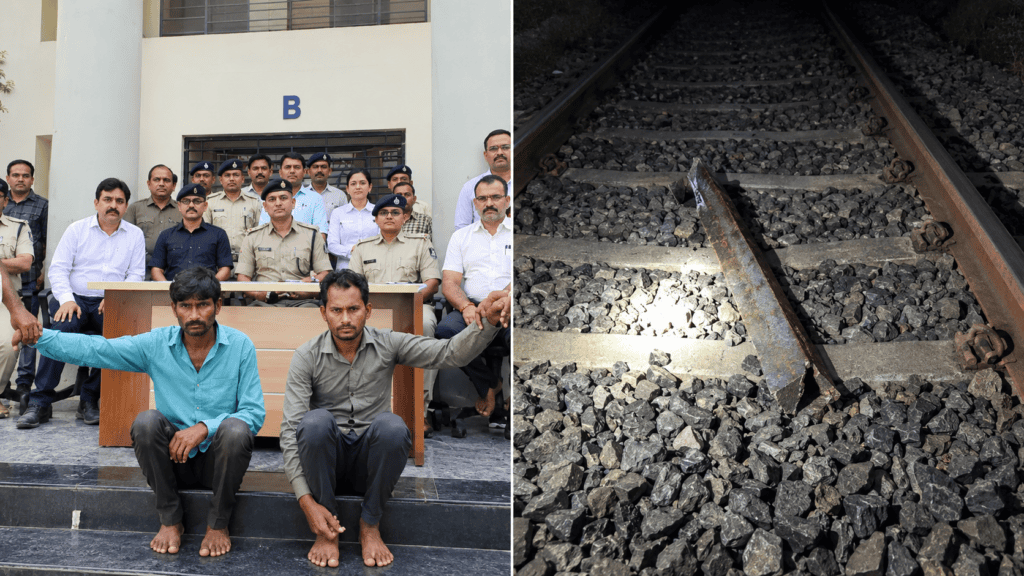
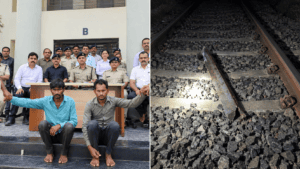
A court in Botad, Gujarat, has sentenced two farm labourers to life imprisonment after convicting them of attempting to derail a passenger train. Judge Manishsahay J. Parashar delivered the verdict against Ramesh, 57, and Jayesh, 26, over an incident that occurred in September 2024. The case began when the Okha-Bhavnagar Express encountered a dangerous obstruction on the railway tracks near Kundli. Investigators discovered that someone had placed a four-foot metal piece between the tracks at an angle, forcing the train to stop. The incident immediately raised concerns about railway safety and possible sabotage. Authorities launched an extensive investigation to identify those responsible and determine their motives. Initially, investigators considered several possibilities, including terrorism and revenge against the Railways. However, the investigation eventually ruled out a terror-related motive and focused on identifying the individuals who had allegedly placed the obstruction.
Also read :Kochi Mercedes Crash: Victim’s Daughter Accuses Judge of Evidence Tampering
Train Stopped After Hitting Metal Obstruction
The incident occurred at approximately 2:58 am on September 25, 2024, when the Okha-Bhavnagar Express encountered a metal obstruction near Kundli. Investigators found a four-foot piece of discarded metre-gauge railway material positioned between the tracks at an angle of approximately 45 degrees. The obstruction caused the locomotive to lose pressure and forced the train to stop. Officials later explained that workers commonly used similar metal components as boundary markers. The incident attracted immediate attention because authorities had discovered missing fish plates near Surat just four days earlier. These metal components connect sections of railway tracks, and their removal can create serious safety risks. The repeated incidents raised fears of deliberate railway sabotage. Local police, railway police and the Railway Protection Force reached the scene and began investigating. Authorities registered a case at Ranpur police station and initiated efforts to identify the people responsible.
Investigators faced several challenges while examining the railway sabotage case. Heavy rain washed away potentially important evidence before police could properly inspect the location, which they reached shortly after 6 am. The isolated area also lacked CCTV cameras, leaving investigators without clear visual evidence of the incident. Police therefore explored several possible motives and examined numerous suspects. Gujarat Police Inspector G. M. Jadeja, who served with the Special Operations Group in Botad, told The Indian Express that central investigative agencies joined the investigation because railway sabotage raised national security concerns. The National Investigation Agency and the Anti-Terrorism Squad provided additional support. Investigators used mobile phone triangulation to identify people who might have been present near the location. The analysis generated information about more than 1,800 possible suspects. Police then formed teams to examine the data and narrow the investigation to individuals connected with the incident.
Also read :Cancer Drug Prices Slashed: New Rates Effective November 9
Investigators Examined Possible Revenge Motives
During the investigation, police examined several possible explanations for the attempted train derailment. Investigators reviewed people who had attracted the attention of security agencies, including individuals connected with online messaging groups. They also examined people who used platforms such as Telegram and Imo, although such associations alone did not establish involvement in the crime. Another person under consideration had previously faced arrest over diesel theft involving the Railways. Investigators also explored whether someone might have targeted the railway system because of personal resentment or a dispute with railway authorities. For example, officials considered whether the demolition of illegal encroachments could have triggered a revenge attack. However, investigators needed reliable evidence before connecting any individual to the sabotage attempt. The absence of CCTV footage and the destruction of some physical evidence made the investigation particularly difficult. Police continued analysing mobile phone records and other available information to identify the suspects.
After examining a large volume of mobile phone data and pursuing several leads, investigators eventually focused on two local farm labourers, identified in the report as Ramesh and Jayesh. The two men reportedly knew each other, worked together in farming and were also related through marriage. Investigators established that both men had been in the area before the train encountered the obstruction. Their presence attracted police attention as officers worked to reconstruct the events surrounding the incident. The investigation ultimately led to their prosecution, and the court convicted them of attempting to derail the passenger train. Judge Manishsahay J. Parashar subsequently sentenced both men to life imprisonment. The case highlights the serious legal consequences of deliberately interfering with railway infrastructure, which can endanger passengers and railway employees. It also demonstrates the challenges investigators face when remote locations, limited surveillance and weather conditions complicate efforts to collect evidence in railway sabotage cases.
Also read :Delhi Man Stabbed to Death After Asking for Extra Chole


More Stories
7 साल तक संदीप समझकर सलमान के साथ रही युवती, तीन बच्चों के बाद आधार कार्ड से खुला राज
Kochi Mercedes Crash: Victim’s Daughter Accuses Judge of Evidence Tampering
इंस्टाग्राम पर शुरू हुई लव स्टोरी का दर्दनाक अंत, शादी के 9 महीने में तलाक को लेकर विवाद, पत्नी को जिंदा जलाने के आरोप में पति गिरफ्तार