





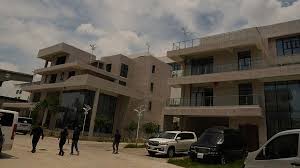
Thai soldiers led reporters through the dark, damaged halls of Royal Hill Casino in O Smach, Cambodia, revealing a giant scam compound hidden behind ordinary doors. Inside, workers had built fake settings that looked like a Vietnamese bank, an Australian police station, and even a Brazilian law office. Scattered fake cash, police uniforms, and motivational slogans showed how carefully the scammers staged their operations. The site once held thousands of workers who targeted victims around the world. After Thai airstrikes during the border conflict in December, the workers fled and left the compound frozen in chaos.
The compound operated like a tightly controlled machine, and bosses forced workers to scam people under brutal conditions. Documents found inside showed that supervisors punished workers who failed to attract new victims, sometimes beating them with canes. Former worker Wilson from Uganda said recruiters tricked him with promises of a digital marketing job in Malaysia. Instead, managers forced him to work long hours, use scripts, and pose online as wealthy women seeking love. He explained that the scammers emotionally manipulated mostly older victims before pushing them into fake investments. Even during nearby bombings, bosses ordered workers back to their desks.
Also Read: Nandigram voter row 95% of deleted names in SIR list are Muslims
Scammers posed as police and soldiers to trap victims
The scammers used elaborate props and scripts to deceive people in multiple countries. In one section, fake Brazilian police summons and handwritten Portuguese notes helped workers threaten victims with money-laundering charges. Soundproof booths allowed callers to carry out scams without distraction. Staff had to ask permission even to use the toilet, and records tracked every bathroom break. These details showed how the compound treated workers like prisoners while training them to trap others. The operation blended psychological abuse, surveillance, and technology into a highly organized fraud business.
Cambodia’s scam industry grew out of casino networks that expanded along border towns over the past three decades. Wealthy tycoons built these casinos after gaining land and influence through close ties to the ruling elite. When Cambodia banned online gambling in 2019 and Covid disrupted travel, criminal syndicates shifted from betting to online fraud. They lured young people from different countries with false job offers and then forced many into scam work. Royal Hill’s owner, Lim Heng, kept a low public profile, unlike other well-known casino figures already accused or sanctioned abroad. Yet investigators now see his casino as part of the same wider criminal ecosystem.
Fraudsters used fake police and soldiers identities
Under growing pressure from the US, China, and other governments, Cambodia has recently begun cracking down on scam compounds. Police have raided dozens of sites, and Prime Minister Hun Manet has promised to shut the industry down completely. Authorities also arrested and extradited powerful businessman Chen Zhi, sending a warning that even elite figures may no longer stay protected. Still, many observers remain skeptical because major tycoons linked to scam operations continue to live freely in Cambodia. While thousands of foreign workers have reportedly gone home, experts believe many compounds may simply reopen elsewhere under new names.




More Stories
दिल्ली में विपक्ष के मार्च के बीच BJP का प्रदर्शन, कांग्रेस सांसद पर यौन शोषण का गंभीर आरोप, बांसुरी स्वराज ये बोलीं
राहुल के प्रदर्शन से पहले दिल्ली पुलिस अलर्ट, सुरक्षा के किए कड़े इंतजाम
CJI Surya Kant Warns Against Politicising Supreme Court Amid Delhi Protests