




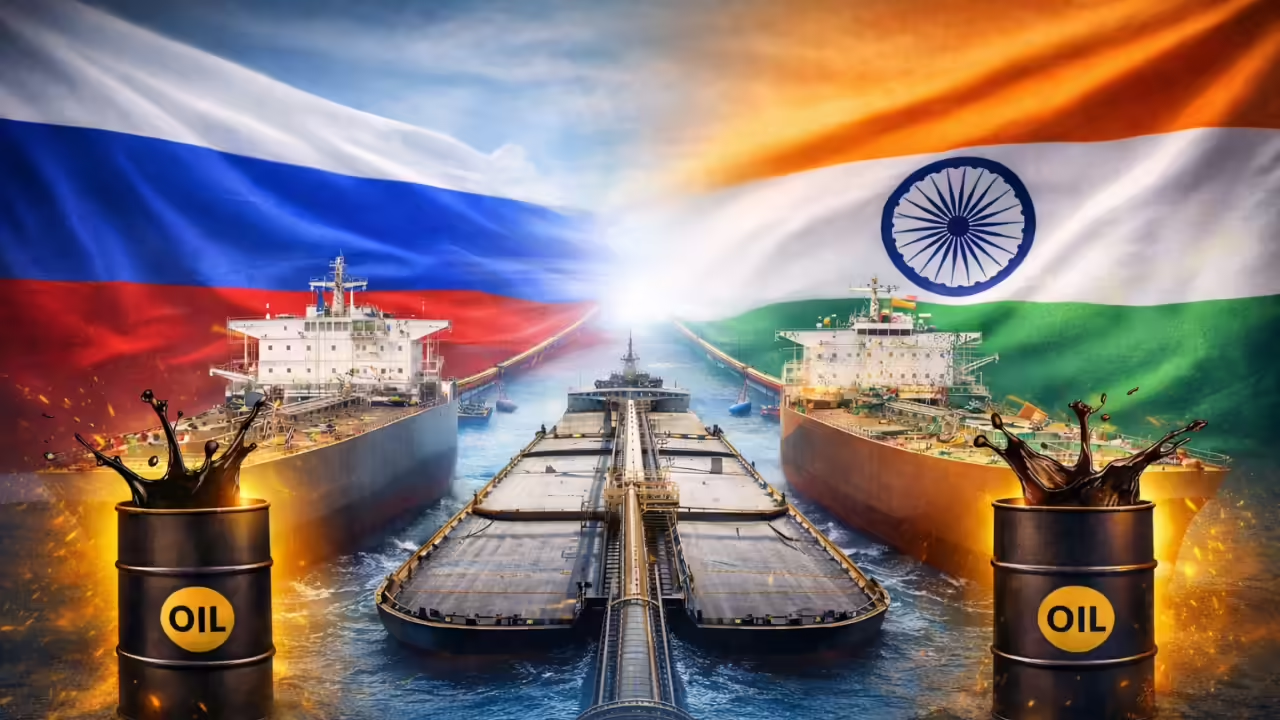
Global energy markets witnessed another policy shift after the US administration allowed India to temporarily resume purchases of Russian oil despite earlier pressure to halt such imports. The move came less than a month after both countries agreed on a trade understanding that included India reducing its dependence on Russian crude supplies. However, rising global oil prices and growing supply disruptions have forced Washington to reconsider its stance. As tensions in the Middle East continue to disrupt traditional supply routes, policymakers in the United States now believe that allowing limited purchases could stabilize global energy markets while preventing sudden price shocks.
Also Read: Elnaaz Norouzi on Iran’s Liberation: If I Return, They’ll Kill Me
US Explains Temporary Sanctions Relief for Russian Oil
The US government recently announced a 30-day waiver that permits Indian refiners to import Russian crude that had already been loaded onto vessels before March 5. Officials explained that the step aims to address short-term supply gaps caused by geopolitical tensions and disruptions in the global oil trade. According to US Treasury Secretary Scott Bessent, the waiver acts as a temporary measure designed to ease pressure on global markets without significantly boosting Moscow’s financial resources. He also suggested that Washington may consider easing restrictions on additional Russian oil shipments already stranded at sea if global supply conditions continue to tighten.
This decision marks a noticeable change in Washington’s earlier approach. When former US President Donald Trump and Indian Prime Minister Narendra Modi announced a trade agreement recently, India had committed to gradually reducing its purchases of Russian oil. At that time, global prices remained relatively stable, making it easier for India to find alternative suppliers in the Middle East. However, recent geopolitical tensions, particularly conflicts affecting the Strait of Hormuz and disruptions in regional oil production, have driven prices sharply higher. As a result, policymakers fear that strict sanctions without flexibility could worsen shortages and push prices even further upward.
Impact on India and Global Energy Markets
Energy analysts believe that the temporary relief could offer immediate benefits for Indian refiners that rely heavily on imported crude. India remains the world’s third-largest oil importer and typically holds limited strategic reserves, meaning supply disruptions can quickly affect domestic fuel markets and refinery operations. Moreover, nearly half of India’s crude imports pass through the Strait of Hormuz, making the country particularly vulnerable to geopolitical instability in the Middle East. Because of this exposure, energy experts argue that maintaining diverse sources of crude supply remains essential for India’s long-term energy security.
Some analysts also note that the policy shift might not significantly change Russia’s long-term oil revenues. Countries such as China and other Asian buyers have already continued purchasing Russian crude at discounted prices. Therefore, even if India resumes limited imports, it may simply redirect existing shipments rather than increase total global demand. Nevertheless, the broader debate continues. Critics argue that repeatedly easing restrictions during market disruptions could weaken the credibility of sanctions policies. Supporters, however, believe that stabilizing global energy prices remains a practical priority during periods of geopolitical crisis.

More Stories
Two Lok Sabha MPs Refuse Salary: Meet the Lawmakers Who Decline Pay
IT कंपनियों पर बढ़ सकते हैं साइबर हमले NASSCOM ने सुरक्षा बढ़ाने की दी सलाह
US-Iran conflict impact: Market turmoil and protests in Parliament