





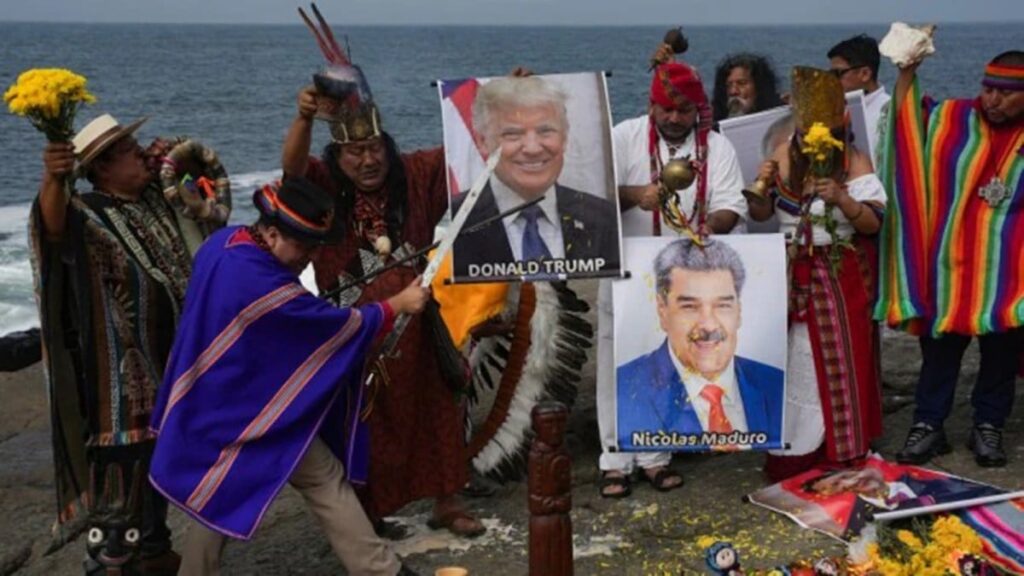
The arrest of Nicolás Maduro and the swearing-in of a military-backed successor has pushed Venezuela from chronic crisis into acute confrontation. U.S. President Donald Trump’s threats of regime change have escalated tensions, framing the situation as a matter of drug enforcement and national security. Yet these dynamics are neither new nor unique in Latin America, reflecting patterns that have repeated for decades. Understanding the crisis requires historical memory, regional perspective, and awareness of how interventionist logic develops, justifies action, and faces resistance.
Decades of U.S. policy, often framed as security, law enforcement, or humanitarianism, have destabilized the region. Such interventions have driven migration, state collapse, and authoritarian backlash. As Trump labels Venezuela a “narco-terrorist regime” to justify unilateral action, historical patterns show that these narratives frequently produce humanitarian crises rather than stability. Readers need context to see how today’s rhetoric fits long-standing interventionist strategies.
Also Read: Maduro’s Arrest Hurts China but Chinese Netizens See a Model for Taiwan
From Chronic Crisis to Confrontation: How Historical U.S. Policies Shape Today’s Venezuela Turmoil
Alan McPherson’s concise history details U.S. military and quasi-military interventions from the 19th century to the drug war era. His framework—examining causes, consequences, contestation, collaboration, and context—clarifies whether current actions resemble law enforcement or continuation of historical patterns. Similarly, Thomas Schoultz highlights the paternalistic assumptions underpinning U.S. policy toward Latin America, showing how dismissive rhetoric often translates into coercive policies. These insights help explain current U.S. approaches to Venezuela and Colombia.
Walter LaFeber’s analysis demonstrates that efforts to suppress leftist movements often generate the instability they aim to prevent. Unintended consequences, backlash, and prolonged conflicts are common outcomes of U.S. interventions. Eduardo Galeano critiques U.S. extraction of Latin American resources, particularly oil, explaining the deep regional resentment toward such interventions. Trump’s references to Venezuelan oil echo these extractive logics, connecting today’s crisis to historical patterns of resource-driven interference.
Reading these works alongside contemporary reporting provides essential context for understanding Venezuela’s current crisis. They reveal how interventionist strategies, framed as law enforcement or humanitarianism, have repeatedly fueled instability. Recognizing these patterns enables a deeper comprehension of regional responses, resistance, and outrage. Historical perspective clarifies that Venezuela’s situation is part of a broader, recurring dynamic in U.S.-Latin America relations. Awareness of this context is key to interpreting the ongoing political, economic, and cultural conflict.
Also Read: Madhuri Dixit’s Mrs Deshpande surpasses Stranger Things Season 5 in viewership



More Stories
कौन हैं मोजतबा ख़ामेनेई, जिन्हें अगल सुप्रीम लीडर माना जा रहा है
RSP Leads Nepal Election 2026
Nitish Kumar’s Rajya Sabha Decision Triggers Unease In JD(U), Leaders Seek Review