



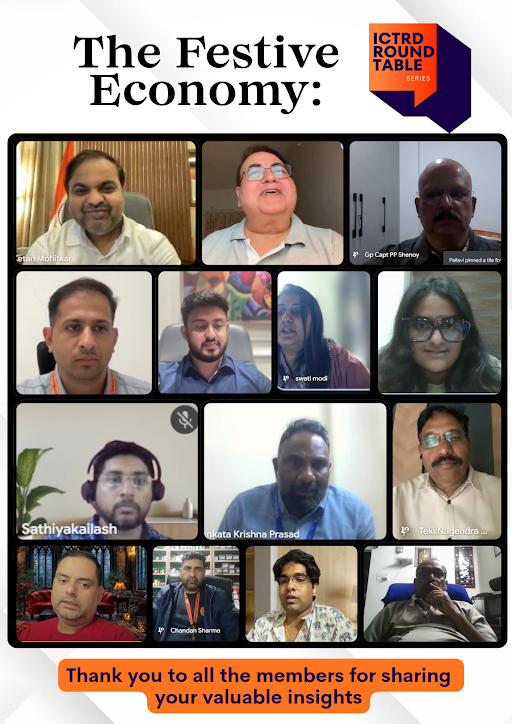
The Indian Council for Technical Research & Development (ICTRD) organised its Working Committee Members’ Virtual Round Table Meeting 10 on 30 October 2026, bringing together industry leaders, academicians, researchers, entrepreneurs and professionals to explore an important aspect of India’s economic landscape: how Diwali and other festivals contribute to the country’s growth story.
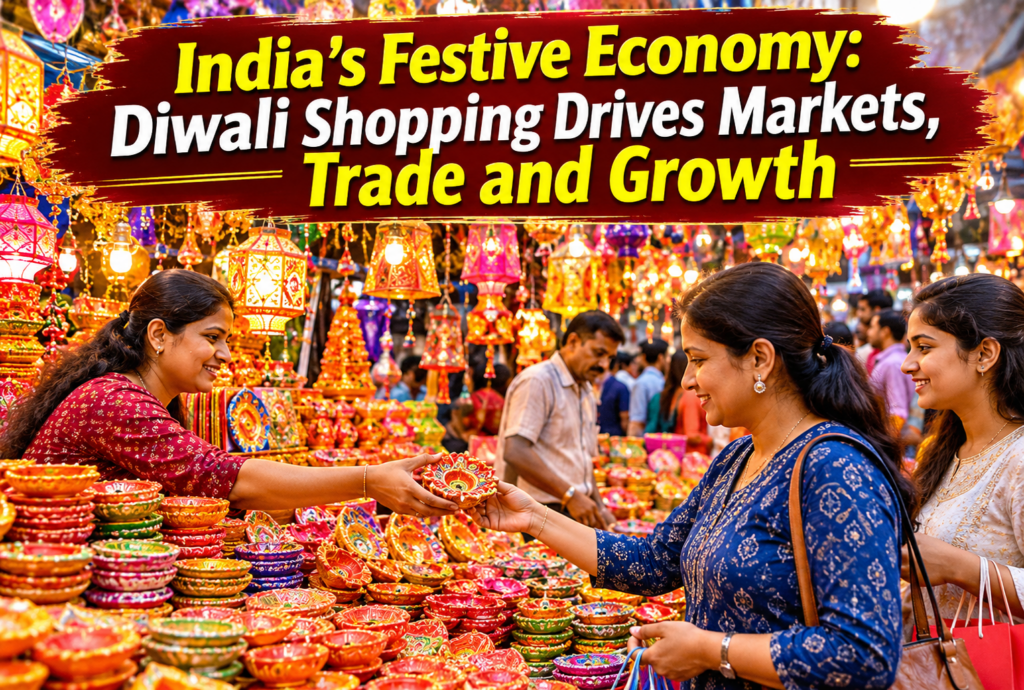
In India, festivals are much more than occasions for celebration. They bring communities together, preserve traditions and create opportunities for millions of people. From local artisans and sweet makers to manufacturers, retailers, transport providers and digital businesses, the festive season sets an entire economic chain in motion.
With changing consumer preferences, the growing use of digital payments, emerging technologies and evolving business practices, the festive economy is also undergoing a transformation. The discussion explored how India can build on this seasonal momentum to strengthen local enterprises, generate employment, encourage entrepreneurship and create opportunities for sustainable economic growth.
Festivals: Beyond Celebration, A Driver of Economic Activity
Opening the session, Mr. Siddharth Roy, Director of Communication, ICTRD, highlighted how India’s diverse festivals, including Diwali, Dussehra, Navratri, Onam and Pongal, create economic opportunities across different sectors.
He explained that festive spending does not benefit only the business where a purchase is made. It supports a much wider network involving manufacturers, suppliers, distributors, logistics providers, retailers and several other service providers. Increased demand for products across sectors such as textiles, electronics, automobiles and retail creates opportunities for businesses of different sizes.
Dr. Ketan Mohitkar, Member Secretary, ICTRD, further emphasised that behind every festive celebration are millions of people whose work contributes to the economy. Referring to the efforts of local shopkeepers, potters, artisans, sweet makers, manufacturers and delivery professionals, he highlighted how festivals support livelihoods while keeping traditional industries active.
He also encouraged the participants to look beyond seasonal sales and consider how digital technologies, education and entrepreneurship can help small businesses reach wider markets. Strengthening traditional businesses and helping Indian products compete in larger markets, he noted, are important steps towards making the festive economy more inclusive.
Strengthening Local Producers and Traditional Businesses
One of the key discussions centred on ensuring that the economic benefits of festive spending reach the people who actually create the products.
Mr. Sathiyakailash Suryanarayanan, Director – India R&D, Miratech India Private Limited, highlighted that festivals should not be viewed simply as periods of increased consumption. They can also serve as opportunities to strengthen India’s production capabilities, improve local earnings and create long-term economic value.
He explained how festive demand influences the entire supply chain. While retailers prepare for higher sales, manufacturers increase production and transport operators manage larger volumes of goods. However, many small businesses still struggle with demand forecasting, working capital, raw material availability and timely delivery.
He emphasised that better use of AI and digital infrastructure could help businesses anticipate demand, manage inventory and improve coordination across the supply chain. Easier access to finance and stronger digital market connections could also help local producers reach customers beyond their immediate markets.
Drawing attention to India’s traditional products, Mr. Suryanarayanan referred to Pongal pottery and the well-known halwa of Tirunelveli, Tamil Nadu. These products represent generations of skill and craftsmanship, yet their producers do not always receive a fair share of the value created through their work.
He highlighted the importance of strengthening producer collectives, improving procurement and warehousing facilities, developing skills and connecting artisans with e-commerce platforms, institutional buyers and export markets. He also suggested exploring opportunities through corporate gifting and cultural tourism.
The larger message was clear: festivals can create lasting economic value when local producers are supported with the right resources, market access and business opportunities.
Building Stronger Supply Chains and Promoting IndianProducts
The discussion also explored the challenges faced by traditional manufacturers and local artisans when competing with larger businesses and imported products.
Mr. Janmejay Rai, Associate Director – Program and Project Management, LTM Limited (A Larsen & Toubro Group Company), highlighted the importance of strengthening India’s local production ecosystem.
Referring to Diwali, he drew attention to the growing availability of imported decorative lights compared with traditional handmade diyas produced by local artisans. While demand for festive products increases, small producers often struggle to fulfil bulk orders because of limited production capacity, inventory constraints and logistical challenges.
He emphasised that improving manufacturing capacity, ensuring regular product availability and strengthening transportation networks are essential for helping Indian businesses respond to festive demand. Better coordination between artisans, manufacturers, retailers and customers can also reduce supply chain gaps and improve market access.
Mr. Rai also brought attention to the role of consumers in supporting local businesses. He encouraged people to give preference to Indian-made products, appreciate the effort behind traditional craftsmanship and avoid unnecessary bargaining with small vendors.
At the same time, he highlighted the importance of responsible spending. While festive purchases contribute to economic activity, consumers should remain mindful of their financial limits and avoid excessive dependence on credit.
He also recognised the contribution of digital payment systems such as UPI in making transactions easier and more accessible. Greater adoption of digital payments can help local businesses manage transactions efficiently and connect more directly with customers.
Technology and Changing Consumer Behaviour
As businesses adapt to changing markets, technology is becoming an increasingly important part of the festive economy.
Mrs. Swati Mistry, Head of Operations, Missar Systems, highlighted how India’s year-round festival calendar creates opportunities across sectors such as retail, textiles, jewellery, food and tourism. Referring to celebrations such as Navratri,
Diwali, Uttarayan and the Gujarati New Year, she explained how each occasion brings its own consumer demand and business opportunities.
She emphasised the potential of Artificial Intelligence in helping businesses understand customer preferences, forecast demand and manage inventory more effectively. These tools can help businesses prepare for seasonal demand while reducing unnecessary stock and operational challenges.
She also highlighted the importance of making digital solutions accessible to small and medium enterprises. E-commerce platforms, digital payments and online marketing can help local businesses reach customers beyond their immediate locations.
However, she noted that the growth of the festive economy should also consider its environmental impact. Better demand planning, reusable packaging, eco-friendly decorations and improved waste management can help businesses adopt more responsible practices.
Referring to Uttarayan, she highlighted the importance of safer kite-flying practices and awareness initiatives to protect birds and wildlife. Her broader perspective was that festivals should create opportunities not only for business growth but also for responsible consumption and environmental awareness.
She emphasised that the future of India’s festive economy will depend on its ability to turn consumption into production, productivity and prosperity.
Understanding the Scale of India’s Festive Economy
The economic potential of India’s festive season was further explored by Dr. C. B. Venkata Krishna Prasad, Assistant Professor (Senior Grade), ICFAI Foundation for Higher Education.
Drawing on figures shared during his presentation, he highlighted the scale of festive business activity in India. He noted that festive sales in the previous year were estimated at approximately ₹6 lakh crore, reflecting around 25% growth. He also shared that the current festive season was expected to generate approximately 50 lakh temporary employment opportunities.
His presentation highlighted the continued importance of traditional retail, with physical stores accounting for approximately 85% of festive sales. Rural markets also represented a significant share, contributing close to 30% of festive sales.
While these figures point towards strong business opportunities, Dr. Prasad also drew attention to the financial challenges faced by Micro, Small and Medium Enterprises (MSMEs).
Referring to the NeoGrowth Festive Outlook 2026 report, he noted that around 80% of MSMEs expected improved business performance compared with the previous year. Within this group, approximately 39% anticipated sales growth of more than 50%. However, nearly 66% of MSMEs required additional short-term funding to manage inventory and operational expenses.
He explained that access to timely finance remains a major concern for small businesses. Traditional lending processes can involve lengthy documentation and collateral requirements, while some digital lending options may carry interest rates ranging from 15% to 24% annually. Such borrowing costs can reduce the profits businesses earn during the festive season.
Dr. Prasad also highlighted the growing adoption of digital payments among MSMEs, with more than 74% reportedly using advanced digital payment systems. However, AI adoption still has considerable room to grow, with approximately 16% having integrated AI and another 35% reportedly ready to adopt it.
Local Markets, Regional Opportunities and Practical Solutions
To demonstrate how local businesses can turn challenges into opportunities, Dr. Prasad shared the example of T. Nagar in Chennai.
He explained that the Aadi season in Tamil Nadu was traditionally considered a slower period for certain businesses. Despite lower sales, shopkeepers still had to manage regular expenses such as rent and employee salaries.
To address this, local merchants came together to introduce promotional offers and substantial discounts during the season. Over time, these efforts transformed a traditionally slow business period into a major shopping opportunity. He mentioned that T. Nagar attracts approximately two lakh customers in a single day during this shopping season.
The example highlighted how business communities can identify local challenges and develop solutions based on regional consumer behaviour. Dr. Prasad emphasised that strategies successful in one market may not necessarily work in another, making local collaboration and region-specific planning essential.
The importance of strengthening local market systems was also highlighted by Dr. Teki Nagendra Rao, Technical Consultant, Freelance Consultancy. Referring to Hyderabad’s Rythu Bazaar model, he explained how farmers bring fresh produce to designated markets and how local arrangements can help redirect unsold produce to another market the following day.
His example demonstrated how community-led coordination, better demand forecasting and practical supply chain arrangements can help reduce wastage while supporting local producers.
Also Read: Union Budget 2026–27: Growth & Reform Insights from ICTRD Round Table
Responsible Consumption and Sustainable Festive Growth
As the festive economy expands, the need to balance business growth with responsible practices also becomes important.
Dr. Suneet Mathur, Adjunct Professor, Dr. Ambedkar Memorial Institute of Management Science, drew attention to the environmental impact of festive packaging and the importance of responsible waste disposal. He also discussed how rising gold and silver prices, geopolitical tensions, increasing energy costs and global trade tariffs can influence consumer spending and business decisions.
He highlighted the importance of strengthening India’s export opportunities through Free Trade Agreements and supporting industries in navigating changing global economic conditions.
Adding another perspective, Mr. Chaxu Mistry, Proprietor of Missar Systems, discussed the relationship between India’s traditional business practices and its festive calendar. Referring to Gujarat’s tradition of closing accounting books during Diwali and beginning a new financial cycle with Chopda Pujan on the Gujarati New
Year, he highlighted how festivals have long been connected with business and trade.
He also emphasised the importance of strengthening domestic manufacturing,reducing dependence on imported products and promoting Indian-made goods in international markets. India’s cultural heritage, he noted, can also create opportunities for tourism by encouraging international visitors to experience regional festivals and purchase locally produced products.
Mr. Viral Patel, Chief Executive Officer, Radha Lifescape LLP, further highlighted the opportunities festivals offer to startups, MSMEs and local entrepreneurs. He emphasised the role of AI-based demand forecasting, sustainable products, energy conservation and environmentally responsible business practices. He also noted that festive discounts and promotional activities can help businesses attract customers while creating healthy competition in the marketplace.
Connecting Local Businesses with Wider Markets
The discussion also explored ways to give Indian products greater visibility and access to customers across the country.
Mr. Chandan Sharma, Founder-Director, Vichar Biotec OPC Private Limited, proposed developing a nationwide network of stores supported by an online platform to promote Indian-made festive and traditional products.
He suggested that such a platform could provide better market access to local producers, startups and MSMEs while reducing dependence on imported products. Referring to regional celebrations such as Kullu Dussehra in Himachal Pradesh, he also highlighted the potential of connecting local festivals, cultural tourism and organised retail.
His proposal included the possibility of establishing approximately 565 stores across different regions of India, creating a wider platform for locally produced goods and traditional businesses.
The idea reflected a broader opportunity: India’s regional products and cultural traditions can reach larger markets when supported by organised networks, digital platforms and stronger promotional efforts.
Key Takeaways
The discussion brought forward several important priorities for strengthening India’s festive economy.
● Support local artisans, manufacturers and traditional businesses through better market access.
● Strengthen supply chains, logistics and production capabilities to meet seasonal demand.
● Use AI and digital tools for demand forecasting, inventory management and business planning.
● Improve access to affordable and timely finance for MSMEs.
● Encourage responsible consumer spending and fair pricing for locally produced goods.
● Promote Indian-made products through retail networks, e-commerce and export opportunities.
● Connect regional festivals with cultural tourism and local economic development.
● Adopt sustainable packaging, responsible waste management and environmentally conscious practices.
A recurring theme throughout the session was that the benefits of festive growth should extend beyond increased sales. Stronger local enterprises, better livelihoods, wider market access and responsible business practices are equally important to building a resilient economy.
Conclusion
The ICTRD Virtual Round Table highlighted that India’s festivals hold economic potential far beyond the celebrations themselves. Every festive purchase, traditional product and local business represents an opportunity to support livelihoods, encourage entrepreneurship and strengthen the country’s economic ecosystem.
From empowering artisans and improving MSME financing to adopting digital technologies, promoting Indian products and building sustainable supply chains, the discussion explored how festive momentum can be converted into long-term economic value.
Ultimately, India’s festive economy will grow stronger when the people behind every product and service are given the opportunity to grow with it. By bringing together technology, local enterprise, responsible consumption and collaboration across sectors, India’s festivals can continue to contribute not only to its cultural identity but also to a more inclusive and sustainable growth story.
Also Read: Beyond Degrees: ICTRD Leads the Conversation on Employable Education



More Stories
Indian Seafarer Killed in Aerial Strike on Cargo Ship Off Oman; MEA Responds
तिरुवनंतपुरम में प्रेम प्रसंग के चलते 17 वर्षीय लड़के की हत्या, बोरे में मिला शव; गर्लफ्रेंड समेत 3 हिरासत में
20-Year-Old Learjet Co-Pilot Made Mayday Call Before Florida Crash