





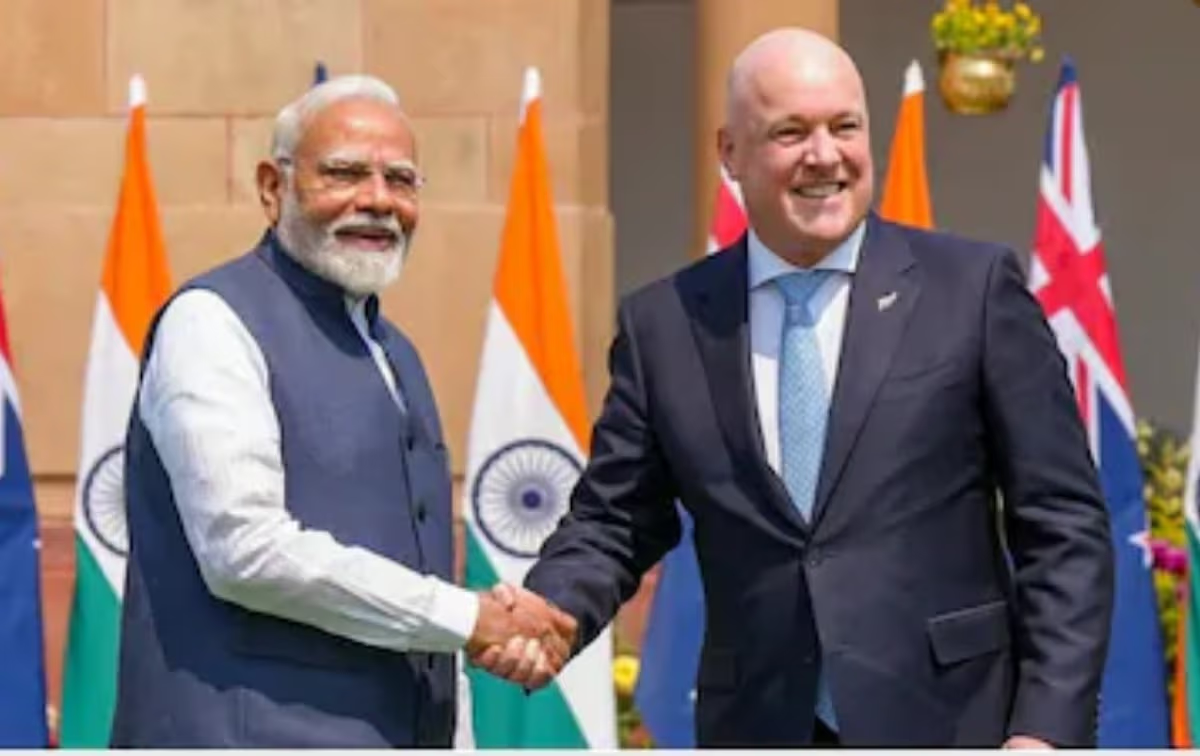
India and New Zealand have officially signed a long-awaited Free Trade Agreement (FTA), aiming to significantly boost bilateral trade and strengthen economic ties over the coming years.
Officials from both nations finalised the agreement at Bharat Mandapam in New Delhi, where Piyush Goyal and Todd McClay signed the deal. The agreement will likely come into force later this year after New Zealand completes its parliamentary ratification process, which includes committee review, public consultation, and final approval.
Leaders have described the pact as a transformative step that will open new opportunities for exporters and investors. Christopher Luxon highlighted that the deal could provide unprecedented access to India’s vast market, while also strengthening long-term economic cooperation between the two countries.
Also Read: Supreme Court lauds peaceful Bengal Phase 1 voting turnout
India Trade Pact Unlocks Market Access and Growth
India will gain significant advantages under the agreement, as exporters will receive duty-free access to more than 8,000 products in the New Zealand market. Additionally, around 70 percent of Indian goods, including textiles, handicrafts, and leather products, will initially enter without tariffs, boosting competitiveness and export potential.
At the same time, New Zealand will reduce or remove tariffs on key exports such as wool, wood, fruits, and wine, encouraging growth in its agricultural and export sectors. However, India has strategically excluded sensitive sectors like dairy, sugar, and edible oils from tariff reductions to protect domestic industries and farmers.
Importantly, both countries aim to double bilateral trade to nearly $5 billion within the next five years. This ambitious target reflects a strong commitment to expanding economic engagement and diversifying trade opportunities.
Investment, Jobs and Mobility Opportunities Expand
India will also benefit from increased foreign investment, as New Zealand has committed to investing up to $20 billion over the next 15 years across sectors like technology, manufacturing, and services. This investment is expected to create jobs, enhance infrastructure, and improve overall economic growth.
Furthermore, the agreement introduces new mobility provisions, allowing 5,000 Indian professionals to access work opportunities annually in sectors such as IT, healthcare, and construction. In addition, 1,000 work-and-holiday visas will be issued each year, enabling cultural exchange and skill development.
The FTA also expands post-study work opportunities for Indian students, making New Zealand a more attractive destination for education and career growth. While concerns remain regarding potential competition in sectors like dairy, experts believe that safeguards will protect local industries while encouraging higher efficiency.
Overall, the agreement marks a major step forward as both nations actively strengthen trade relations, promote investment, and create new opportunities for businesses and professionals alike.
Also Read: Lee Cronin’s film “The Mummy” fails to resurrect the franchise



More Stories
Will ( AI ) Artificial intelligence Replace Jobs? What Tech Leaders and Employees Say About the Future
बच्चे को पीठ पर बांधकर ड्यूटी करती मां का वीडियो वायरल, लोग बोले- ‘आधुनिक झांसी की रानी’
Trump U-Turn: US to Buy Russian Diesel as Zelenskyy Calls Move a ‘Gift to Putin’