




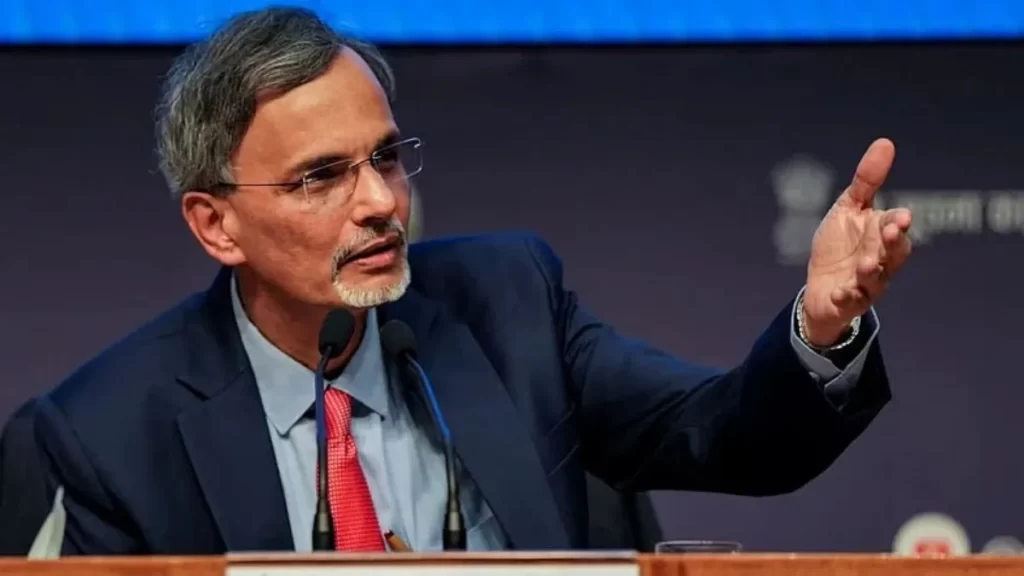
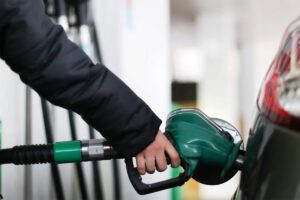
India’s Chief Economic Adviser V Anantha Nageswaran has suggested bringing back lower-ethanol fuel options for older vehicles. He said petrol stations could offer E10 alongside E20 to address concerns among vehicle owners. India introduced E20 petrol nationwide from April 1, 2025, making it the standard fuel available at petrol pumps. Nageswaran said a lower-blend option could protect older vehicles without reversing the country’s ethanol policy. He believes this approach could ease consumer concerns while supporting the existing E20 programme.
Also Read : Vande Mataram Dispute: Complaint Calls for FIR Against Sonia Gandhi, Rahul Gandhi
Ethanol Policy Faces Food and Water Concerns
Nageswaran and Department of Economic Affairs consultant Akash Poojari highlighted the difficulties faced by older two-wheelers. India has around 75 to 80 million pre-BS4 two-wheelers that use carburettor-based systems. These vehicles may struggle to adjust to the higher oxygen content in ethanol-blended petrol. Older rubber components can also deteriorate after prolonged exposure to ethanol. The authors said retrofitting these vehicles would require significant time and money due to the size of the existing fleet.
The government has previously opposed the idea of offering several petrol grades at the same time. Officials have cited additional logistical challenges and higher costs as major concerns. They have also acknowledged that vehicles designed for E10 fuel could see a 3 to 5 per cent reduction in efficiency when using E20. However, the government maintains that there is no conclusive evidence that E20 causes major engine damage. Despite this, concerns over vehicle performance and component durability continue to generate debate among consumers.
Questions Over Higher Ethanol Blending Targets
The opinion piece also raised concerns about plans to increase ethanol blending beyond E20. Nageswaran and Poojari warned that targets such as E27 or E30 could create pressure on food supplies. They noted that maize now contributes nearly half of India’s ethanol supply. Since farmers also use maize for food and other agricultural purposes, higher demand could affect the broader food system. The authors therefore called for a detailed cost-benefit assessment before the government adopts higher blending targets.
The authors also highlighted the growing pressure on India’s water resources. They said policymakers should distinguish between rainfall-based “green water” and irrigation-dependent “blue water”. Sugarcane cultivation in states such as Maharashtra and Karnataka already consumes substantial amounts of blue water. Therefore, the authors argued that policymakers should focus on efficient water management instead of relying only on ethanol-blending targets. They also questioned whether ethanol beyond E20 would deliver clear environmental benefits after considering the complete production cycle.
Also Read : Vande Mataram Dispute: Complaint Calls for FIR Against Sonia Gandhi, Rahul Gandhi


More Stories
Will Trump’s Russia Oil Move Make Petrol and Diesel Cheaper in India?
1050 फीट गहरे बोरवेल में गिरा 9 साल का बच्चा, 39 घंटे बाद मौत
Prakash Raj Says India Is Neither Bangladesh Nor Nepal, Calls for Democratic Regime Change