





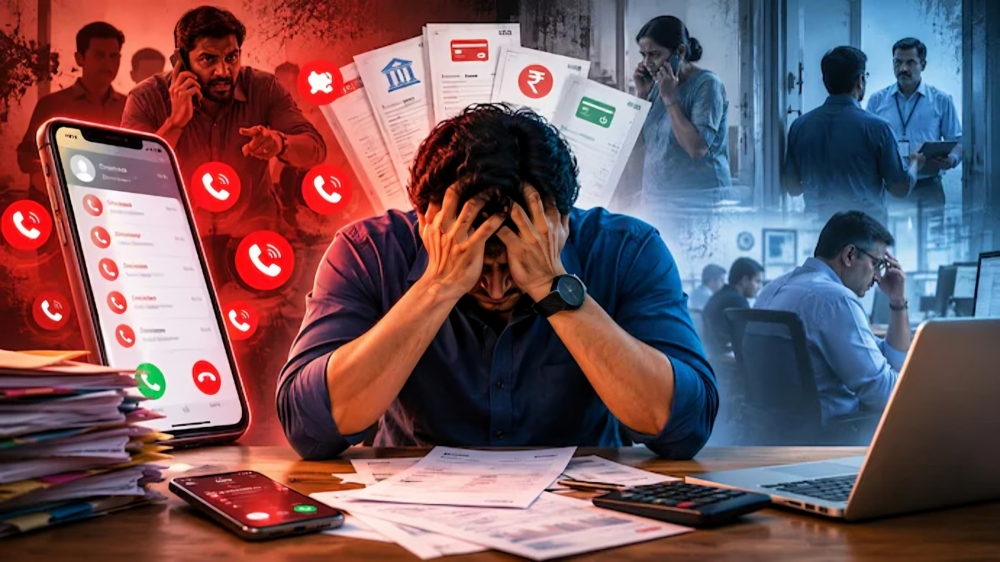
A missed EMI can quickly turn into intense pressure for borrowers. Many people report repeated calls, threats, abusive language and recovery agents visiting their homes or workplaces. Some agents also contacted relatives, employers and neighbours, increasing the stress faced by borrowers.
RBI Rules Bar Harassment, But Recovery Practices Remain a Concern
Vikram had five loans worth nearly ₹8.3 lakh and struggled to maintain multiple EMIs. He received continuous calls from different lenders demanding repayment. After debt-resolution negotiations, his loans were reportedly settled at about 45% of the outstanding amount, and the recovery pressure stopped. Other borrowers described similar experiences, including more than 300 calls a day, repeated messages and visits to their homes. Data shared by a debt-resolution firm showed that 39% of its cases involved recovery calls or abusive language, while 28% involved frequent contact from multiple lenders.
The RBI has strict rules for recovery practices. Banks and their agents cannot intimidate or harass borrowers, publicly shame them, invade family members’ privacy or contact them outside permitted hours. However, distressed borrowers often struggle to understand their rights or identify where they can complain. Job losses, reduced salaries, medical emergencies and heavy EMI burdens often push borrowers into debt traps. Experts warn that using fresh loans or credit cards to repay existing debt can worsen the situation. They recommend maintaining emergency savings and monitoring total debt repayments against household income.
Also Read : U.S. Launches More Strikes on Iran as Tensions Rise; Bangkok Pub Fire Kills 27




More Stories
अलवर में मां ने दो बच्चों की हत्या कर की आत्महत्या, बचाने आई बहन घायल
Mona Agarwal, Avani Lekhara Win Gold and Silver for India at Asian Para Games
Economist Who Predicted 2008 Financial Crisis Warns India Must Accelerate Growth to Create Jobs